
What to know first
- 10,000mAh capacity is a practical “all-day backup” size for a phone without feeling bulky.
- Two device outputs: 1 USB-C and 1 USB-A.
- USB-C output is rated up to 15W max (fine for everyday charging, not the fastest class).
- You can recharge the power bank via USB-C or Micro-USB (inputs are 5V/2A).
- Has a trickle-charging mode for low-power devices like earbuds and Bluetooth speakers.
What the Anker 313 Power Bank (PowerCore 10K) is
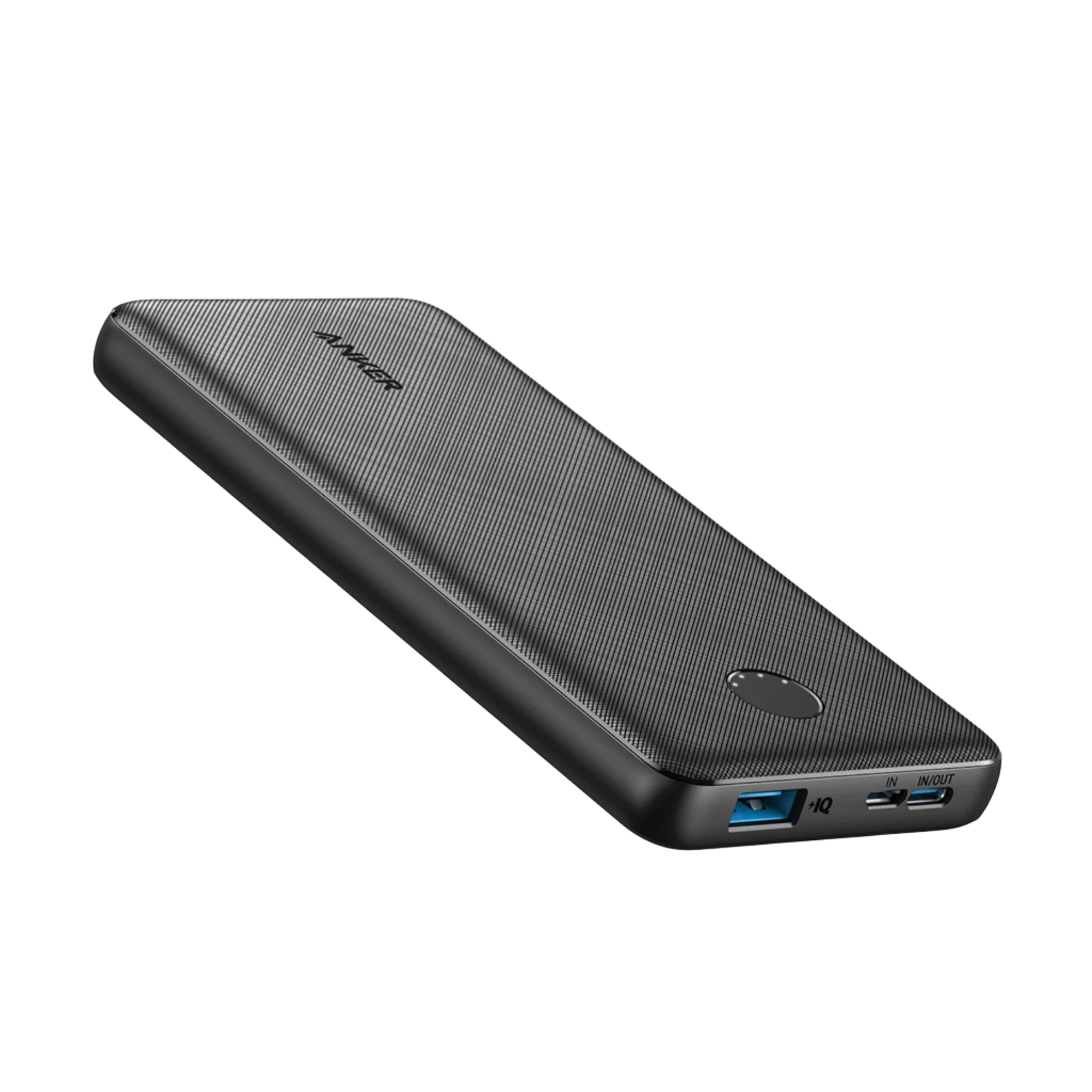
The Anker 313 Power Bank (PowerCore 10K) is a slim, 10,000mAh portable battery meant to keep your phone (and other small devices) alive when you are away from a wall outlet. Think of it as the backup plan you toss in a backpack and forget about until your battery hits 10% during last period or on the bus ride home.
This model is built around a simple port setup: one USB-C port and one USB-A port for charging devices. For recharging the power bank itself, you can use either USB-C or Micro-USB. That matters in real life because it lets you use whatever cable you already have on hand, especially if your household still has older Micro-USB cords floating around.
It is also physically slim for the category. Anker lists it at about 5.89 x 2.70 x 0.57 inches, which is the difference between “I will carry this every day” and “this stays in a drawer until a trip.”
Why it stands out
The main reason to buy the Anker 313 Power Bank (PowerCore 10K) is that it hits the most useful capacity for school and everyday life. At 10,000mAh, it is designed to deliver a solid phone refill and then some, without the bulk of larger packs. Anker also states it can charge a phone up to three times and most tablets once, which is exactly the kind of “get through the day” buffer most students need.
The port mix is another practical win. You get USB-C and USB-A outputs, so you can charge newer USB-C devices while still supporting older cables and accessories. The USB-C output is rated up to 15W max, which is a good match for steady phone charging and topping off smaller gear.
It also includes a dedicated trickle-charging mode for low-power devices like Bluetooth earphones and speakers. That is useful because some small accessories can be finicky with higher-output chargers, and a low-power mode is a simple way to avoid charging interruptions.
Finally, it is easy to find and buy through major U.S. Retailers, including Anker directly. For a back-to-school item, availability matters because you do not want to hunt around for a discontinued model when you need it quickly.
What it is like to own
Day to day, the Anker 313 is the kind of power bank you can keep in a backpack side pocket or a small tech pouch without thinking about it. The slim shape is the point. It is built to be carried, not just stored for emergencies.
Charging is straightforward. Plug your phone into either the USB-C or USB-A output, and recharge the power bank later using USB-C or Micro-USB input. One important detail from Anker: the USB-C input port has no output function, and the two input ports cannot be used at the same time. In plain English, you can recharge it with USB-C, but you cannot treat that same USB-C input as a second USB-C output.
If you charge small accessories like earbuds, you can switch on trickle-charging mode by pressing the power button twice or pressing and holding for 2 seconds until the LED indicator turns green. That is a nice quality-of-life feature for a school bag setup where you might be topping off an earbuds case between classes.
What to know before you buy
Do not buy this expecting the fastest charging standards. Anker is clear that it does not support Qualcomm Quick Charge. The USB-C output is listed at 15W max, which is fine for everyday charging, but if your priority is the quickest possible USB-C fast charging, you will want a different model.
Also plan on using your own cables and wall adapter. Anker notes that a USB-C cable, Lightning cable, and AC adapter are not included. For many people that is not a problem, but it is worth knowing before you toss it in a cart for back-to-school.
Finally, pay attention to the USB-C port roles. This product supports USB-C input and USB-C output, but Anker also notes the USB-C input port has no output function. If you are specifically shopping for a power bank with multiple USB-C outputs, this is not it.
The specs that matter
This is the classic “all-day backup” size. It is meant to give you at least one meaningful phone refill without carrying a heavy, oversized pack.
You can charge a newer USB-C device and still support older USB-A cables. It is a practical mix for families with a lot of different gear.
15W is solid for everyday phone charging and top-offs. It is not the fastest tier of USB-C charging, but it is enough to make a dead phone usable quickly between classes.
You can recharge the power bank with either a modern USB-C cable or an older Micro-USB cable. That flexibility is handy when you are borrowing cables or using whatever is already in your bag.
Slim dimensions are what make a power bank realistic for daily carry. This is sized to fit in a pocket or small pouch instead of taking over a backpack.
Under half a pound is a comfortable carry for school. You get useful capacity without feeling like you are hauling a brick around all day.
If you charge small accessories like earbuds, a low-power mode can help keep charging steady instead of cutting in and out.
Who this product fits
Middle or high school student with a long day and no outlet access
You charge the Anker 313 overnight, toss it in your backpack, and use it for a phone top-off between classes or after practice. It is slim enough that you will actually bring it every day.
Student who carries both old and new cables
You can charge devices from USB-C or USB-A, and you can recharge the power bank itself with USB-C or Micro-USB. That makes it easier to share cables with friends or use whatever is already in your bag.
Earbuds and small accessories that need gentle charging
Trickle-charging mode is designed for low-power devices like Bluetooth earphones and speakers, so you can top off an earbuds case without fussing over whether it will charge reliably.
Anker 313 Power Bank (PowerCore 10K) FAQ
Is the Anker 313 Power Bank (PowerCore 10K) allowed in a school backpack?
Yes, it is designed as a compact portable charger for everyday carry. Its slim size and moderate weight make it a realistic backpack item for school days.
How many times can the Anker 313 Power Bank (PowerCore 10K) charge a phone?
Anker states it can charge a phone up to three times and most tablets once. Real-world results vary by phone battery size and charging conditions, but the intent is multiple phone top-offs from a full power bank.
Does the Anker 313 Power Bank (PowerCore 10K) support Qualcomm Quick Charge?
No. Anker explicitly notes that it does not support Qualcomm Quick Charge.
Can I recharge the Anker 313 with USB-C?
Yes. It supports USB-C input at 5V/2A, and it also supports Micro-USB input at 5V/2A. Anker notes the two input ports cannot be used at the same time.
Does the Anker 313 Power Bank (PowerCore 10K) come with cables or a wall charger?
No. Anker notes that a USB-C cable, Lightning cable, and AC adapter are not included, so plan to use what you already have.
Should you buy the Anker 313 Power Bank (PowerCore 10K)?
If you want a slim, dependable 10,000mAh power bank for school, the Anker 313 Power Bank (PowerCore 10K) is an easy yes. It is sized for daily carry, gives you the ports most people actually use (USB-C and USB-A), and adds a low-power mode for smaller accessories.
Skip it if your main goal is faster charging standards or more USB-C outputs. But for the core back-to-school job of keeping a phone alive all day without adding bulk, the Anker 313 Power Bank (PowerCore 10K) is a practical buy.