Pickori
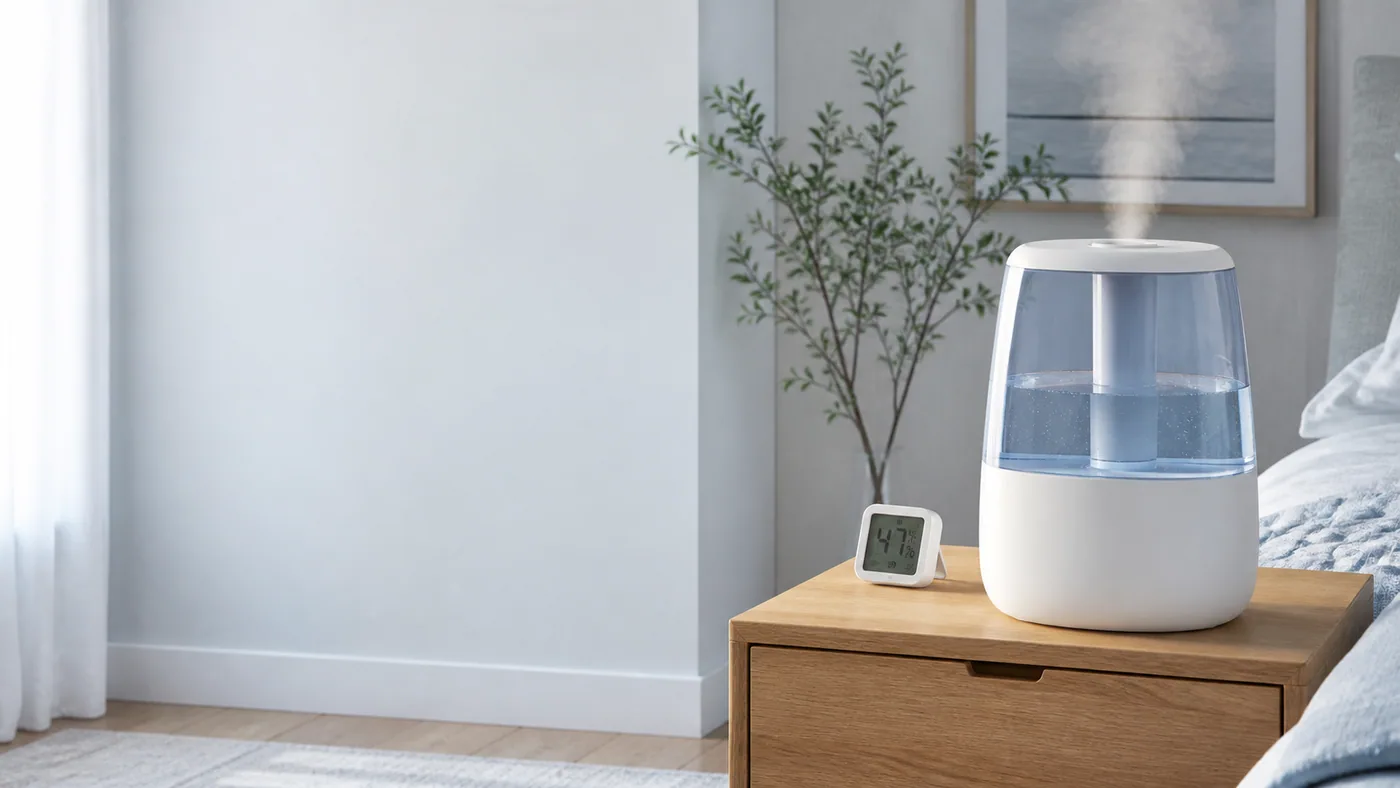
Quiet humidifier adding a fine mist to a bright modern bedroom

Humidifier Research

Humidifiers

Choose a humidifier by room size, mist type, noise, cleaning effort, water quality, and the level of humidity you actually need. Compare Pickori's buying guides and full reviews, then learn what setup, cleaning, water quality, and daily care involve.

Humidifiers put moisture back into dry rooms so they feel comfortable again

A humidifier can make a dry bedroom, nursery, or heated home feel more comfortable, but more moisture is not always better. The right machine needs enough output for the room, controls that keep humidity in a sensible range, and a tank and base you will actually clean.

Mist type, tank access, humidistat behavior, noise, mineral residue, replacement parts, and daily refill effort usually matter more than a long feature list. Start with the room and your water, then decide how much maintenance fits your routine.

Types of humidifiers

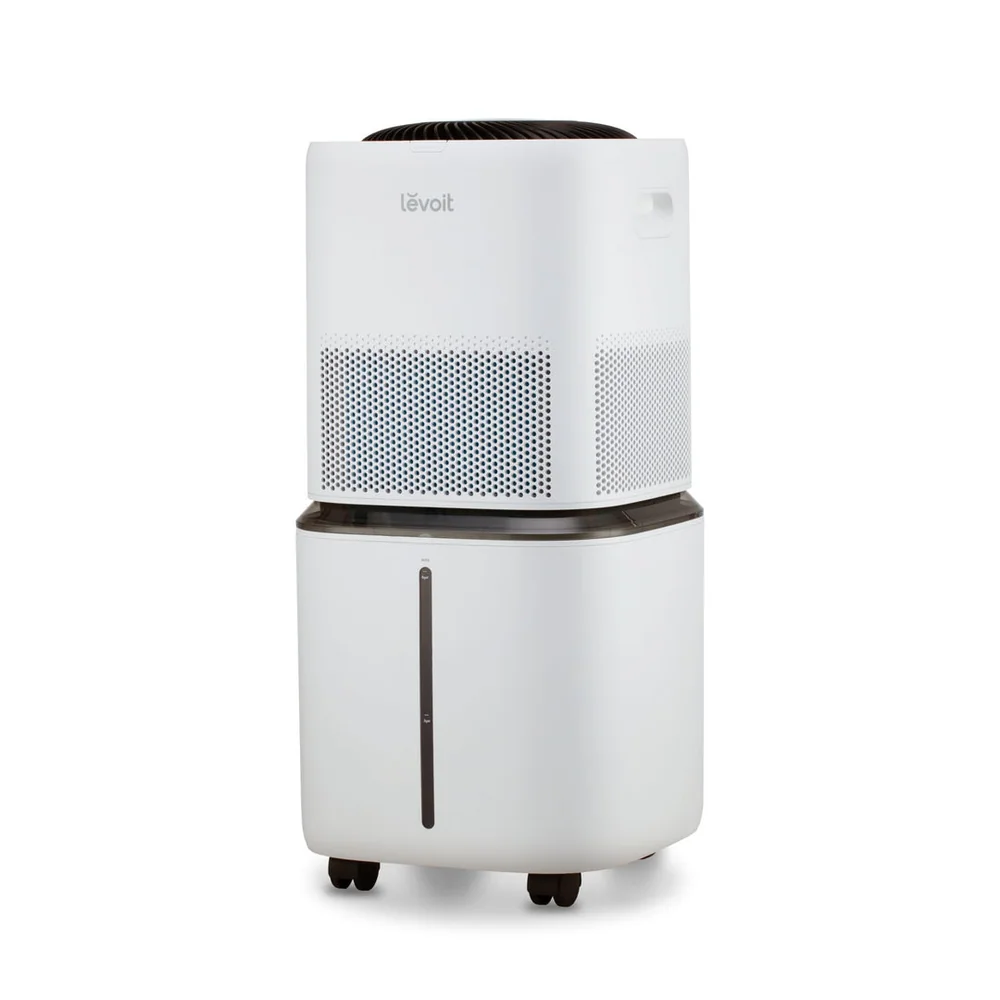
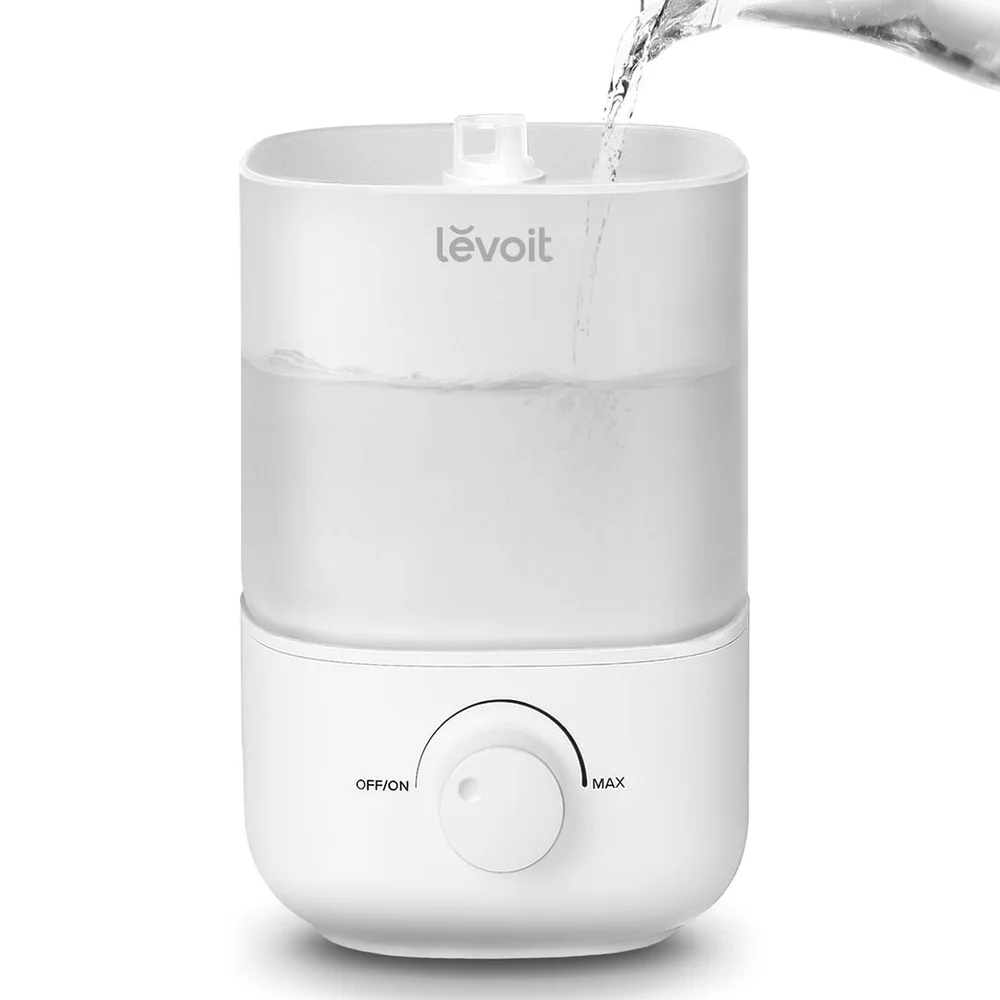
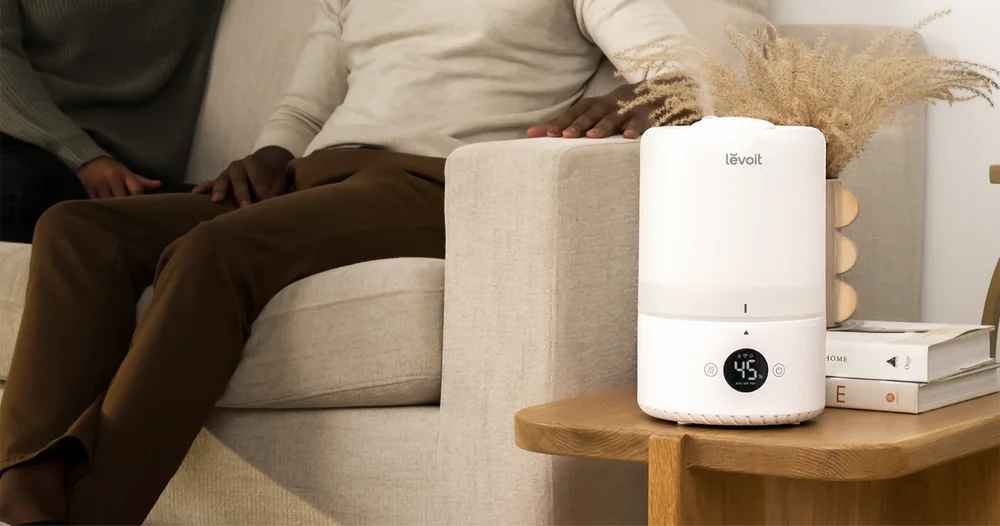
Levoit Top-Fill Ultrasonic Humidifier

Ultrasonic humidifiers

A vibrating plate turns water into a visible cool mist.

Best for: Quiet bedrooms and shoppers willing to manage mineral dust with distilled water or filtration.
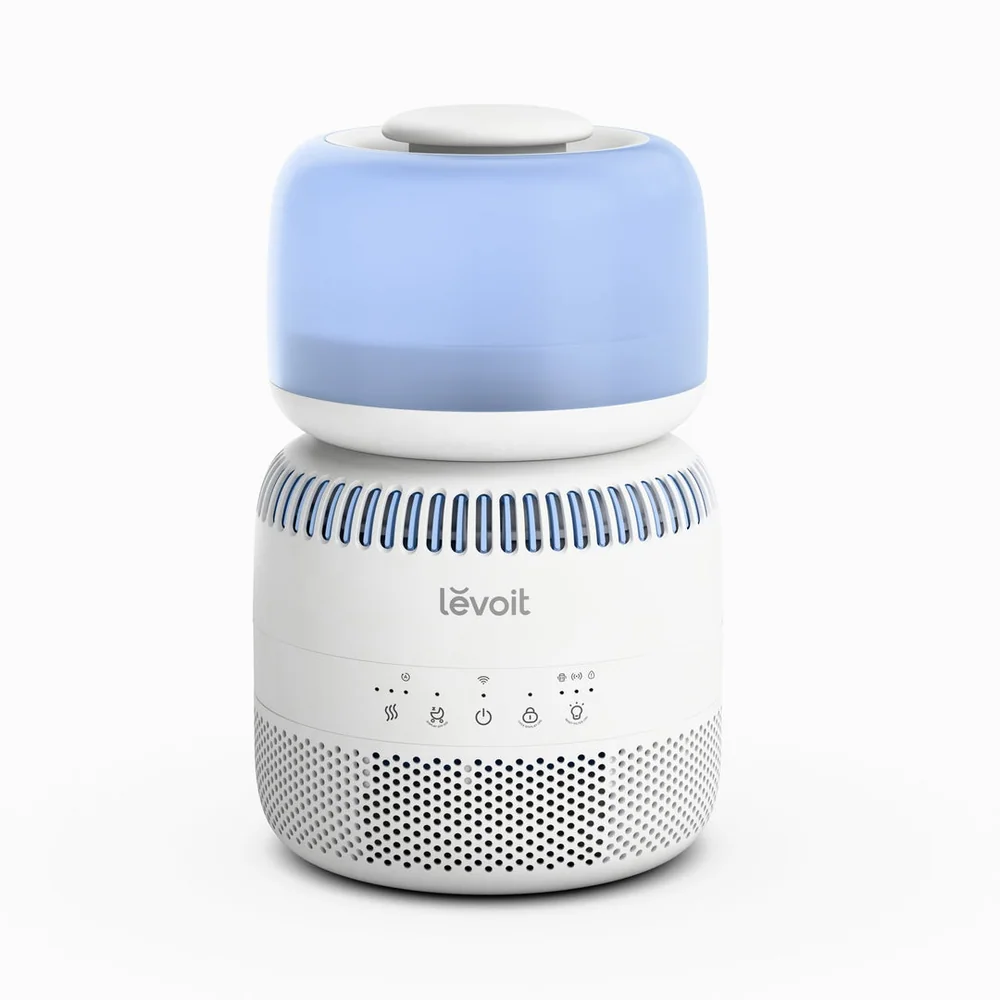
Levoit Sprout Humidifier

Evaporative humidifiers

A fan pulls air through a wet wick so evaporation limits output as humidity rises.

Best for: Larger rooms and homes where white mineral dust is a concern.
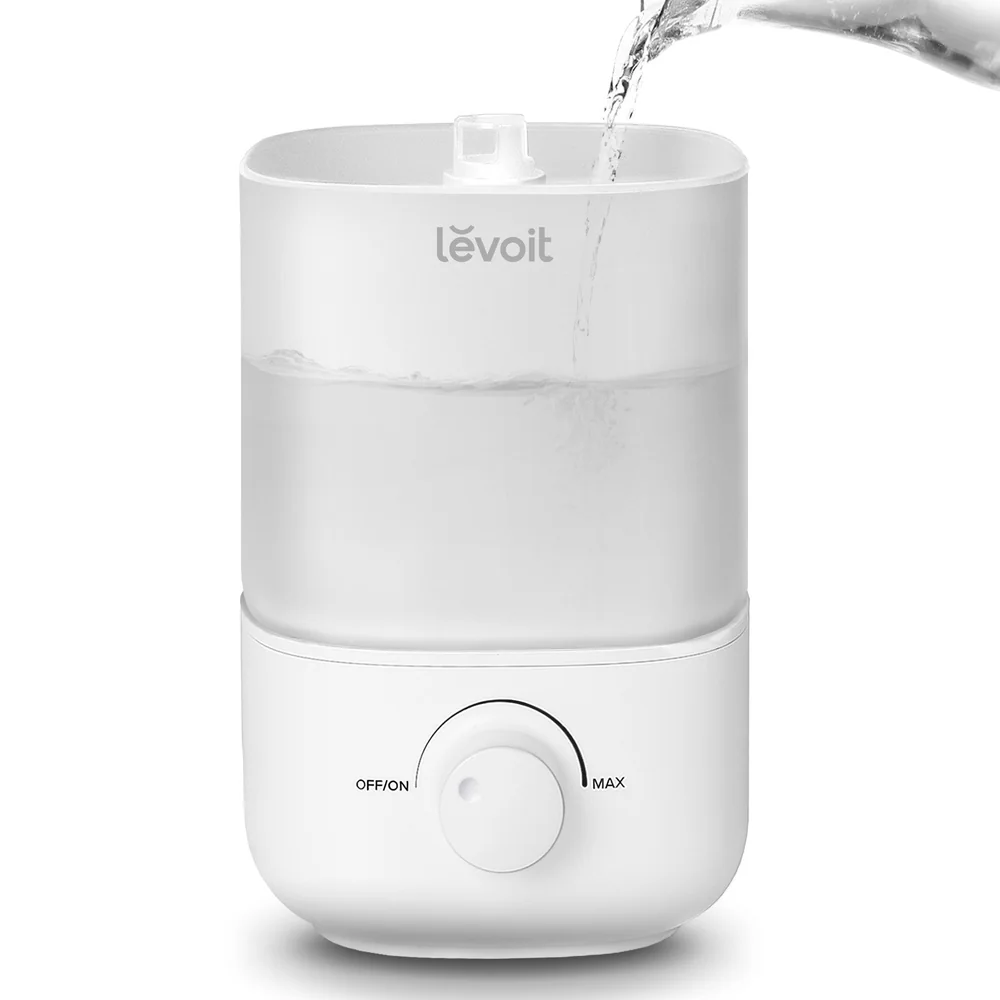
Levoit Top-Fill Humidifier

Warm-mist humidifiers

A heating element boils water before releasing warm vapor.

Best for: Adults who prefer warm vapor and accept higher energy use and burn precautions.
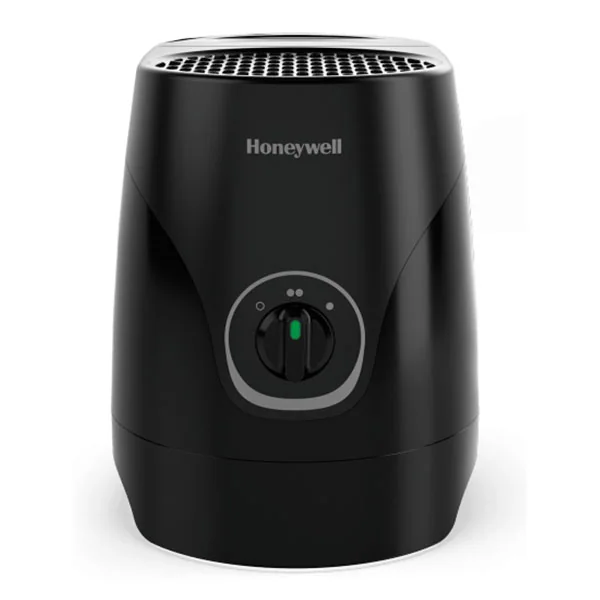
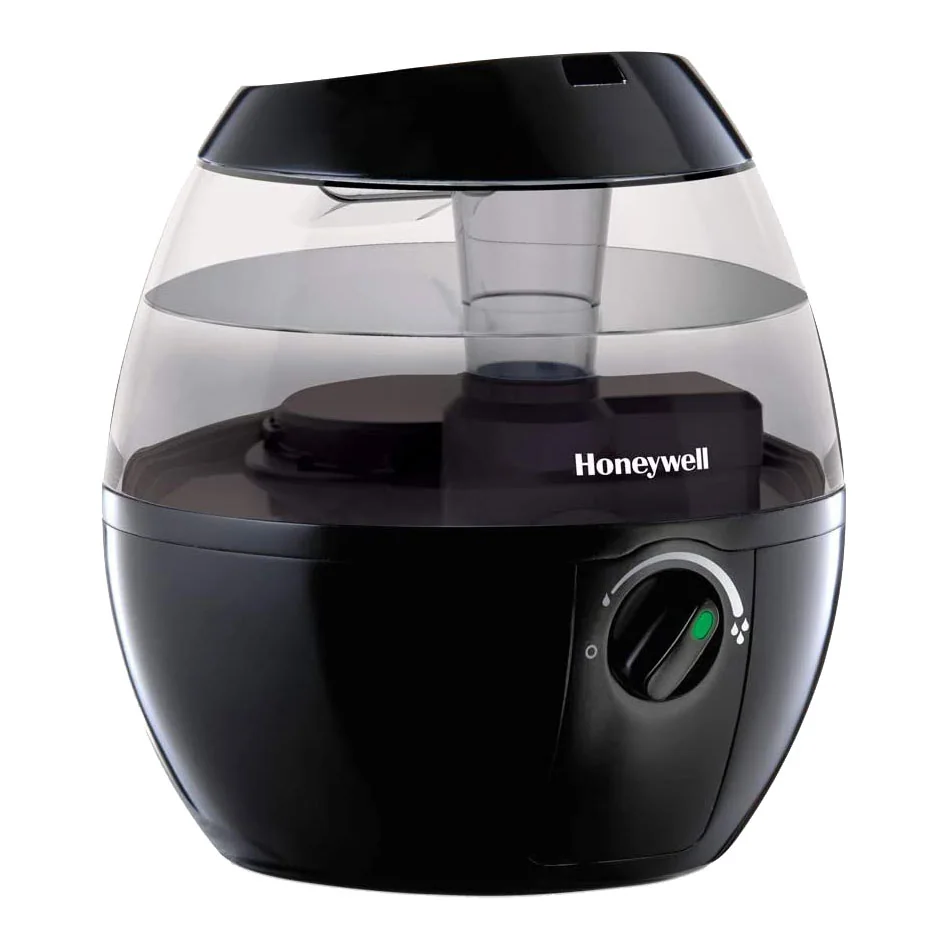
Honeywell Cool Moisture Humidifier

Whole-room and console humidifiers

Larger tanks and higher output support broader living areas.

Best for: Open rooms and households that want fewer refills than a compact bedside unit.
Humidifier Buying Guides and Comparisons

Product reviews

In-Depth Humidifier Reviews

Read the full reasoning, important specifications, ownership details, and alternatives for every product covered in this research.
Browse all 28 in-depth humidifier reviewsEvery full product review, organized by brandView complete archive

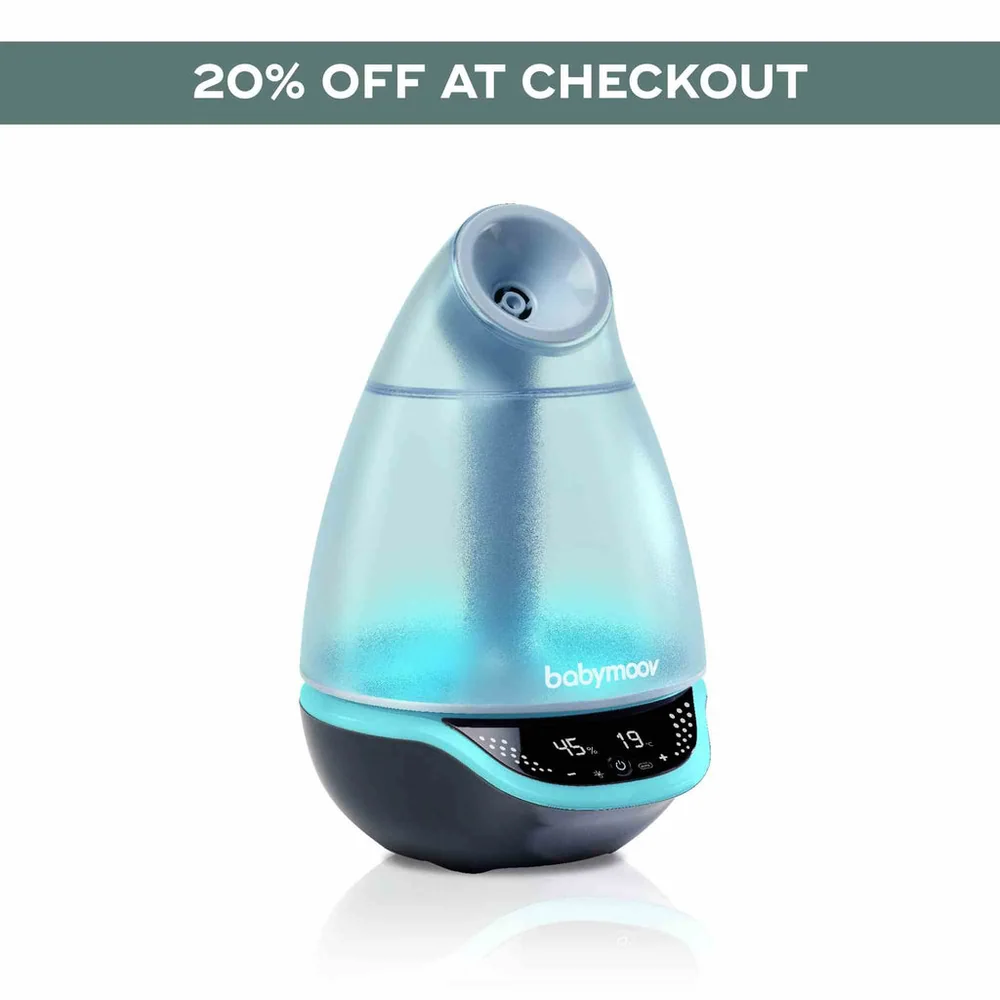
Babymoov1 review

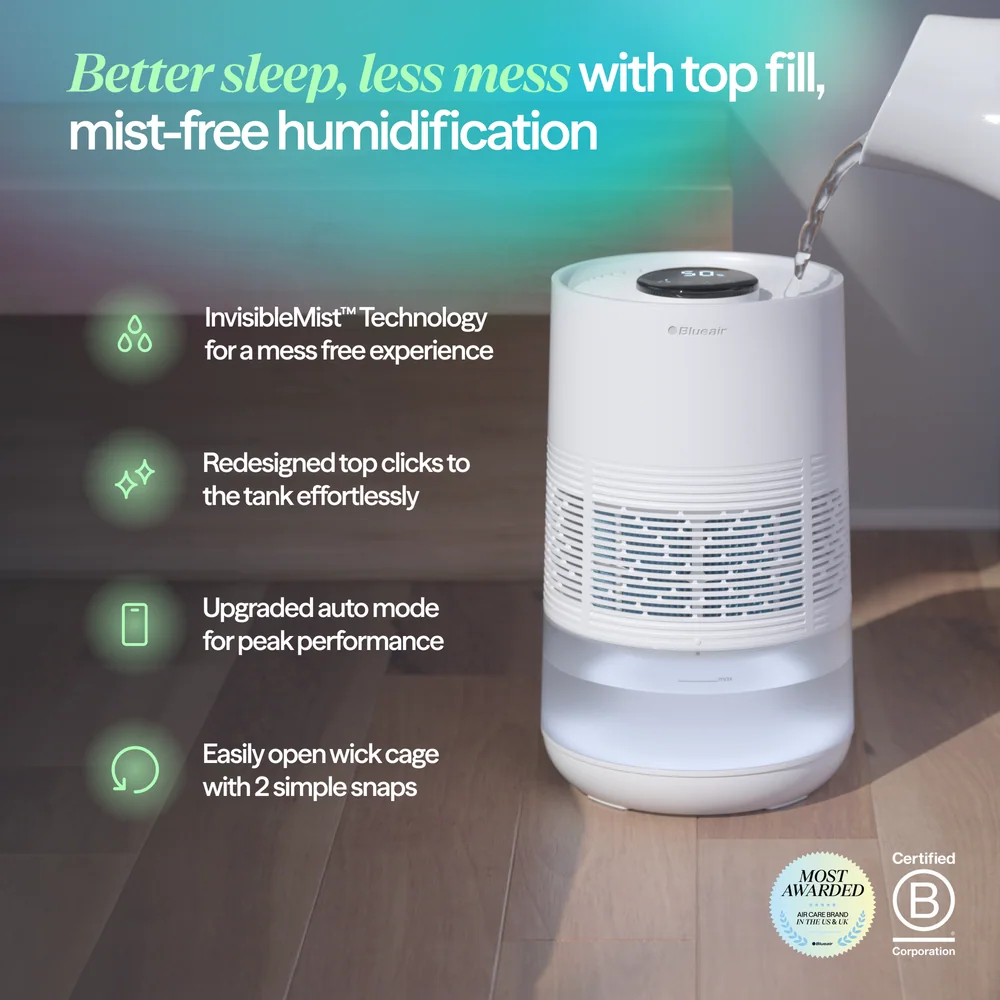
Blueair2 reviews

Carepod1 review

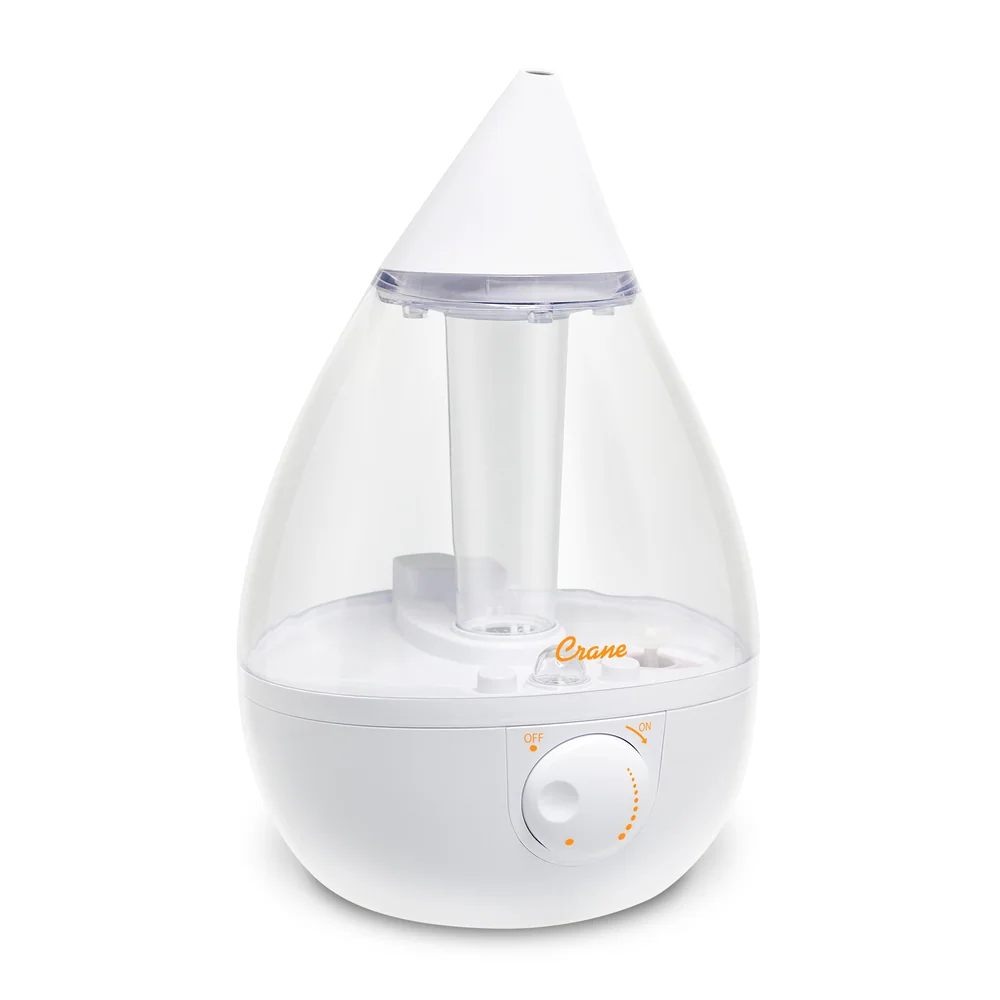
Crane2 reviews

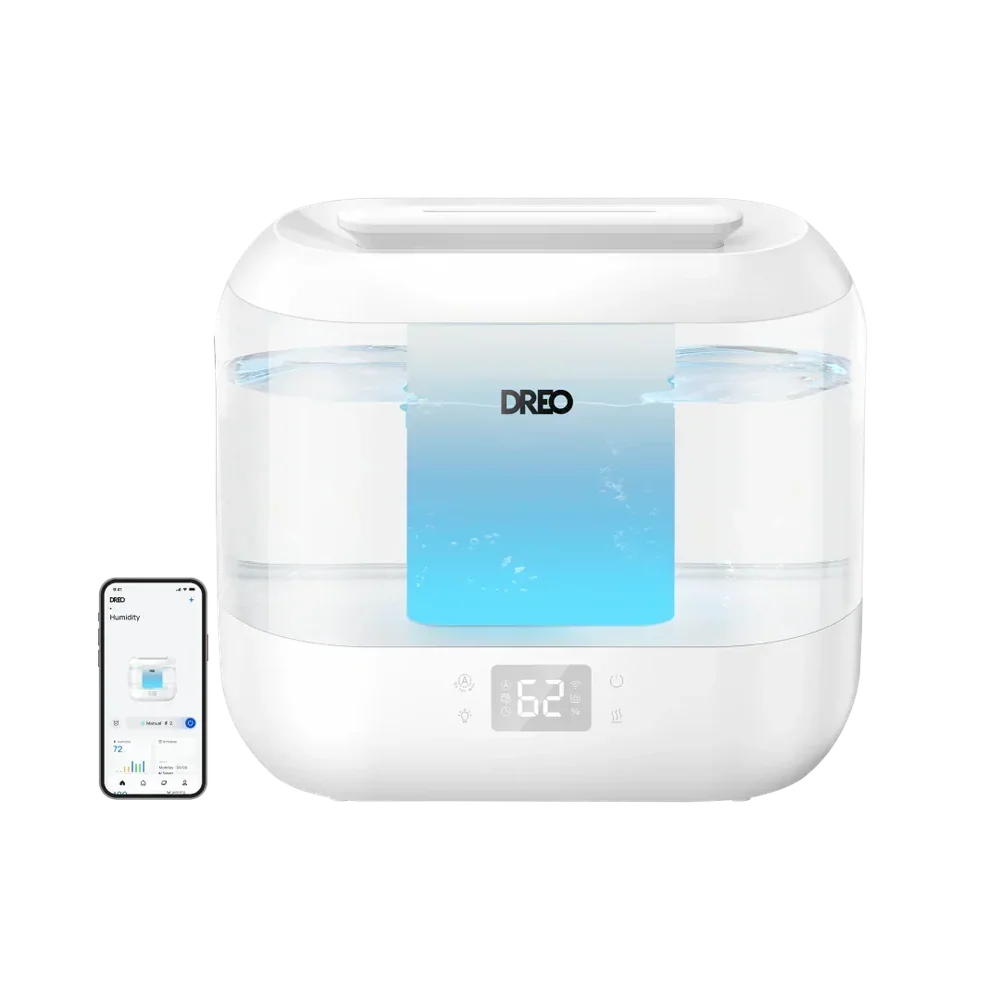
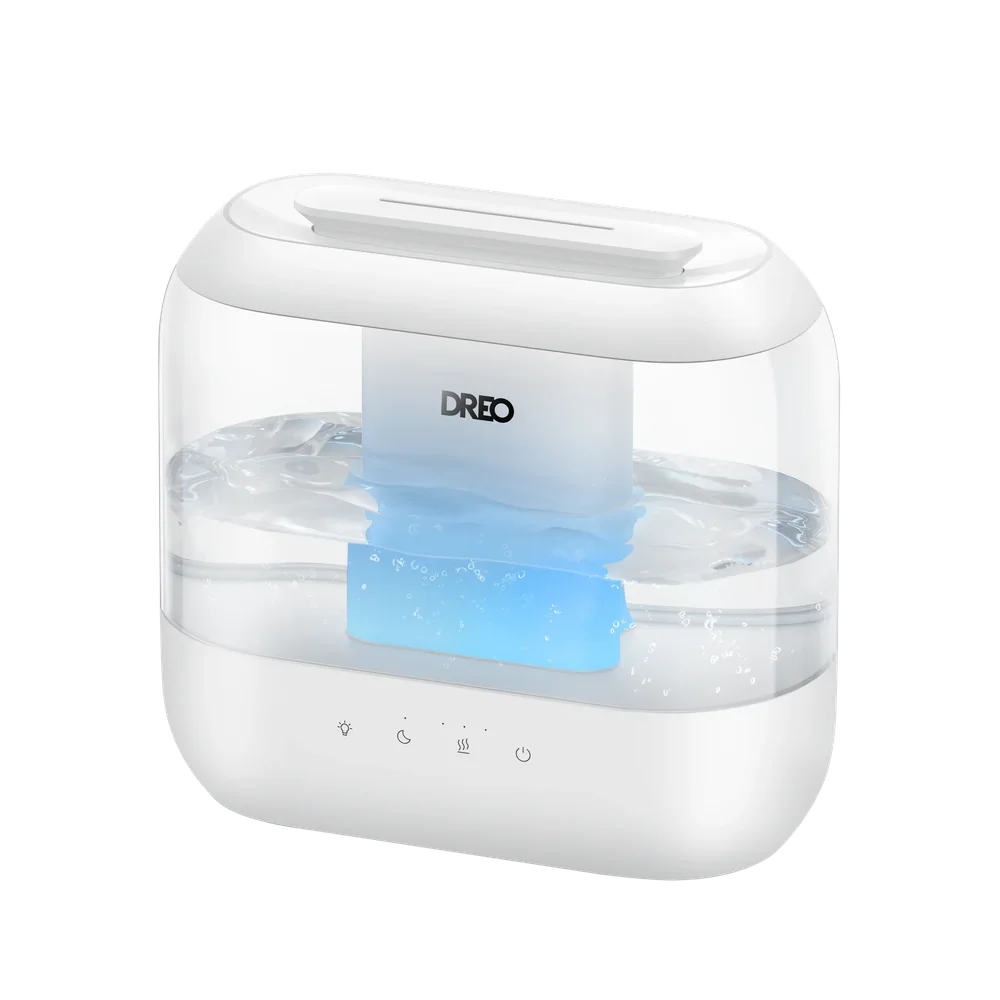
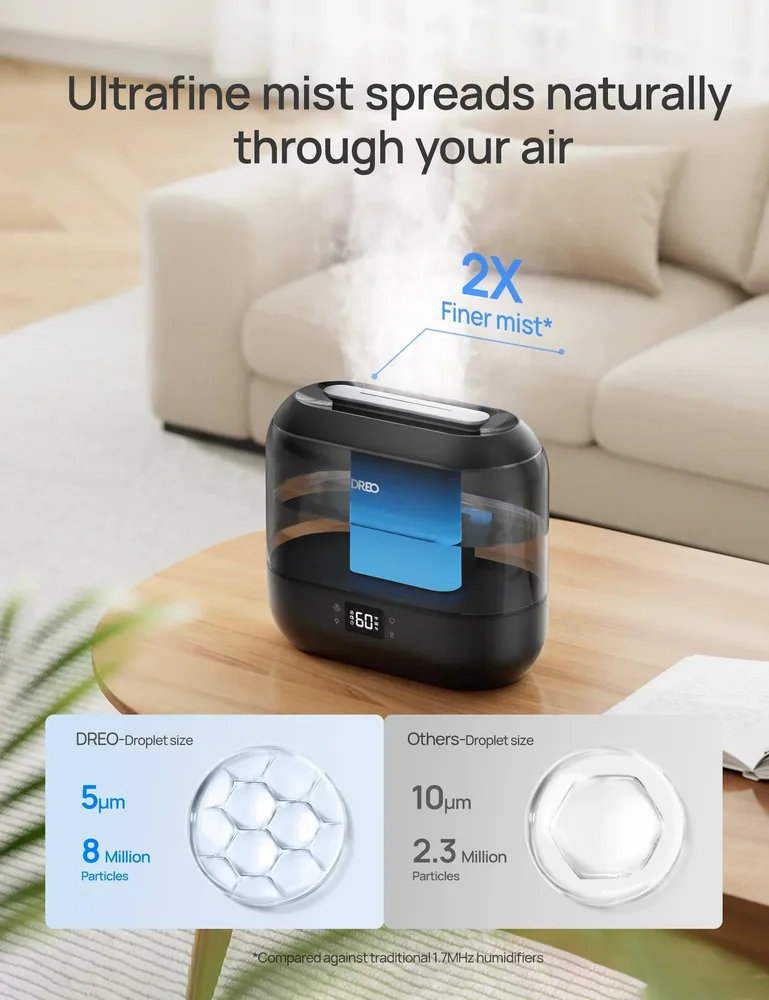
Dreo3 reviews

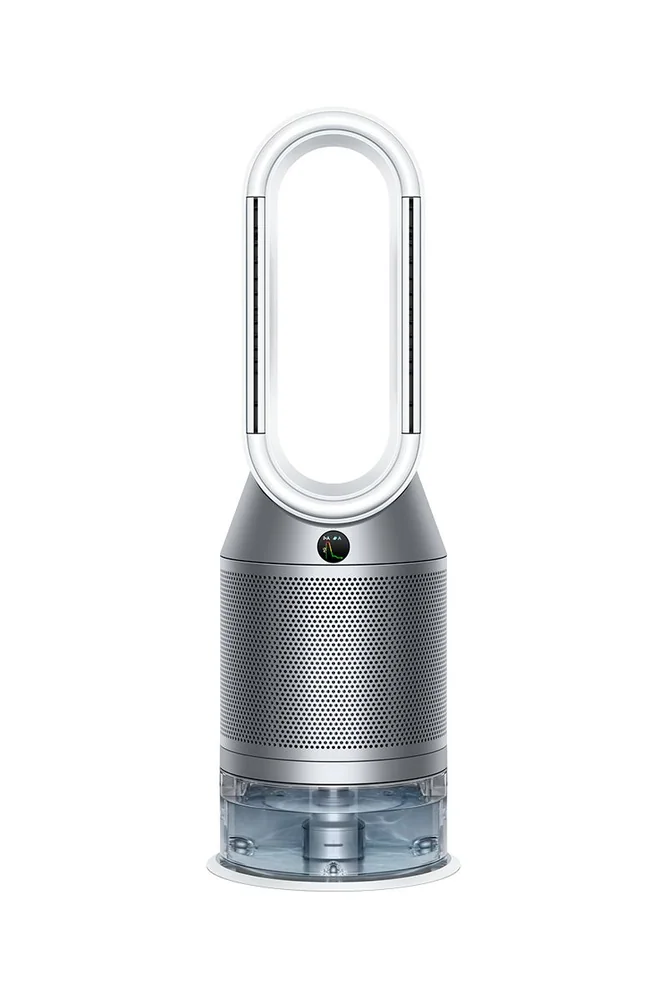
Dyson1 review

Honeywell3 reviews

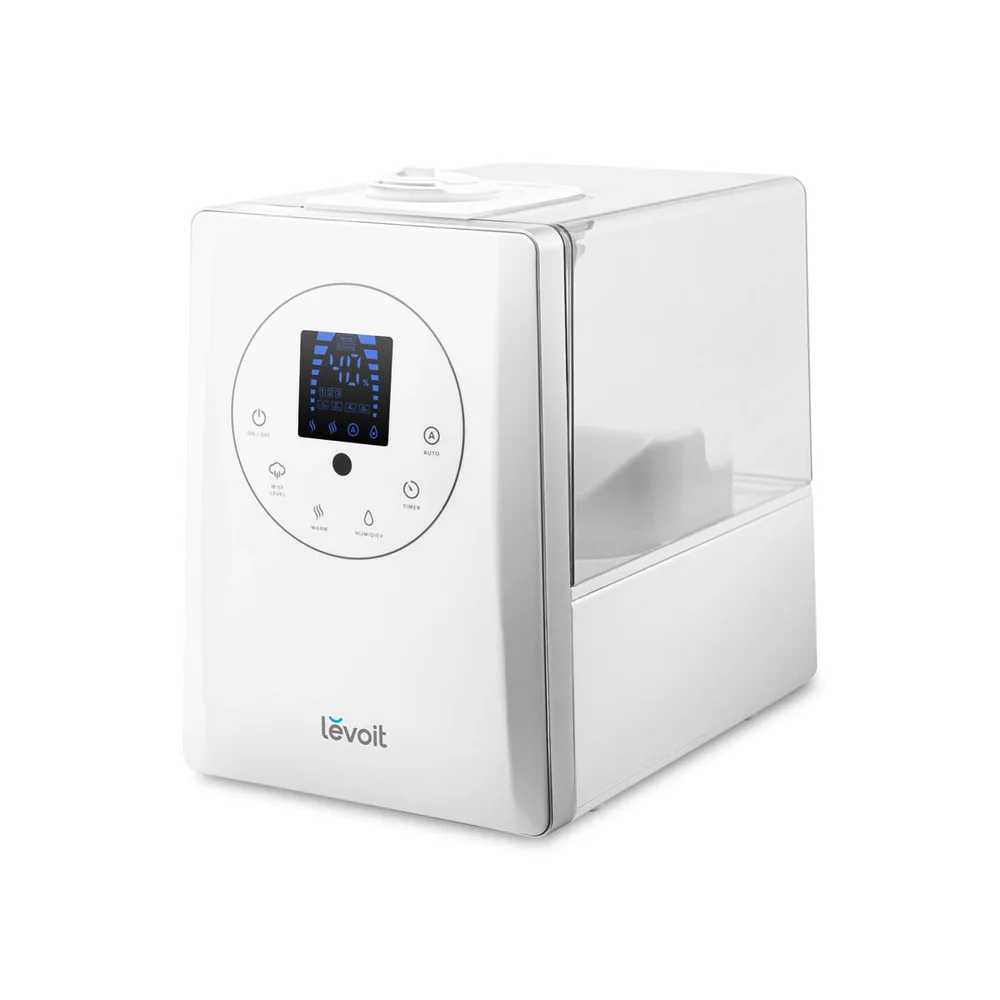
Levoit7 reviews

LEVOIT1 review

Pure1 review

Raydrop1 review

Vicks2 reviews

Vornado2 reviews

Xiaomi1 review

Practical ownership help

Humidity guides for healthier everyday use

Cleaning, water choice, placement, and the target humidity matter as much as the humidifier itself.
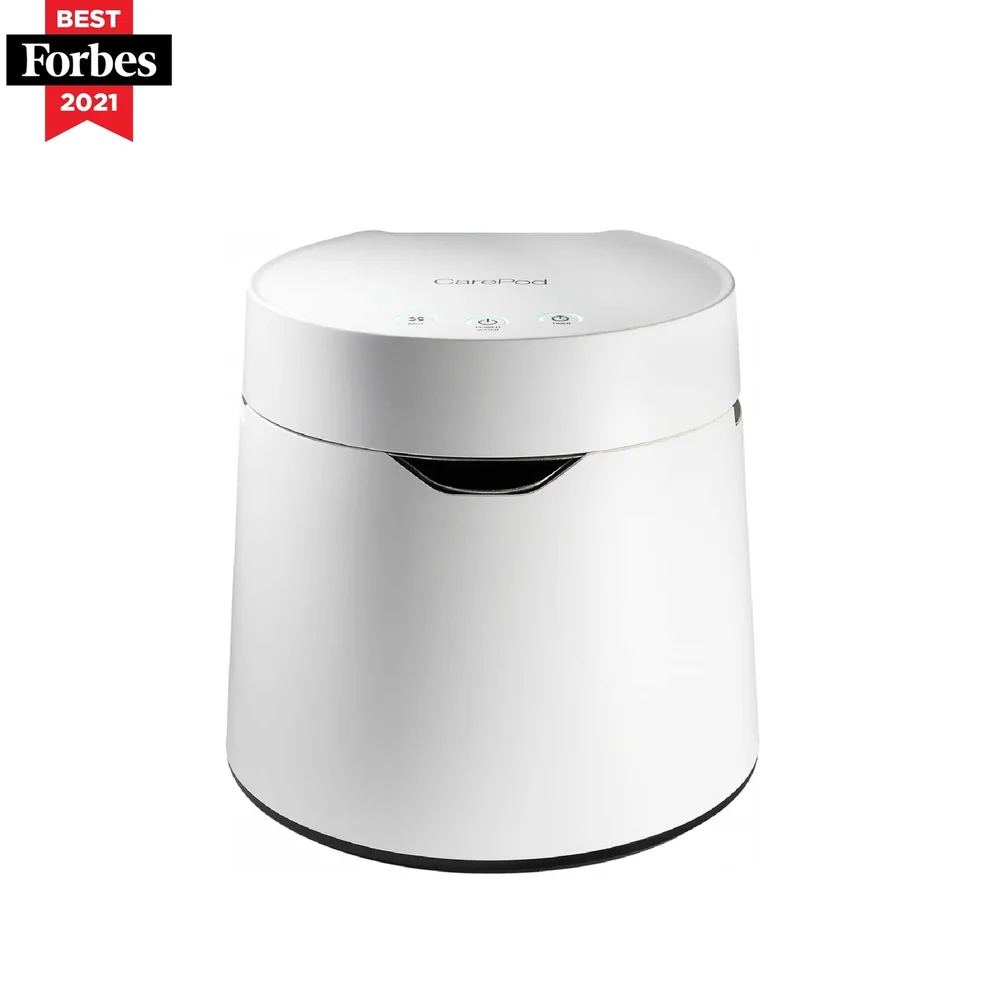
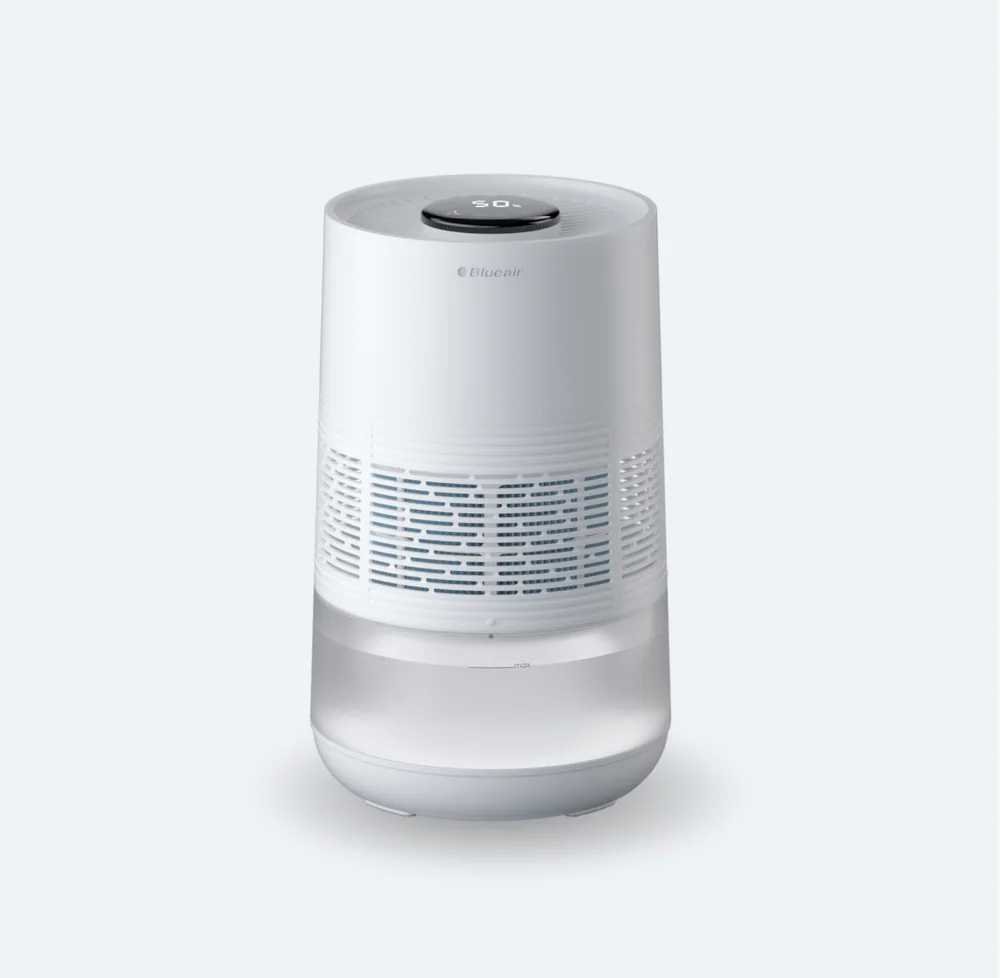
Carepod One
Cleaning guide How to Clean and Descale a Humidifier A simple routine keeps a humidifier from spreading odors, minerals, and grime into the air you breathe. Read the guide →
Blueair InvisibleMist Humidifier
Humidity guide What Humidity Level Should You Use at Home? A simple humidity target helps you feel comfortable without creating condensation and dampness problems. Read the guide →
Levoit Top-Fill Ultrasonic Humidifier
Nursery guide Using a Humidifier Safely in a Nursery The safest nursery setup focuses on cool mist, careful placement, and strict cleaning so moisture does not create new problems. Read the guide →
LEVOIT Superior 6000S Smart Evaporative Humidifier
Troubleshooting How to Stop White Dust from an Ultrasonic Humidifier White dust is usually dried minerals from tap water, and you can reduce it by changing the water you use, adding mineral control, and cleaning buildup before it flakes into the mist. Read the guide →
Levoit LV600HH
Ownership guide How to Use a Humidifier Without Encouraging Mold Prevent mold by controlling humidity with measurements, watching for condensation, keeping the humidifier clean, and fixing moisture sources a humidifier cannot solve. Read the guide →
Levoit LV600HH
Setup guide A Better Bedroom Humidifier Routine A simple nightly routine helps you get comfortable humidity without wet bedding, noisy surprises, or a dirty tank. Read the guide →
Carepod One
Plant-care guide How to Use a Humidifier Around Houseplants Use a humidifier to raise the air humidity your plants live in, without creating wet surfaces, mineral dust, or mold-friendly corners. Read the guide →
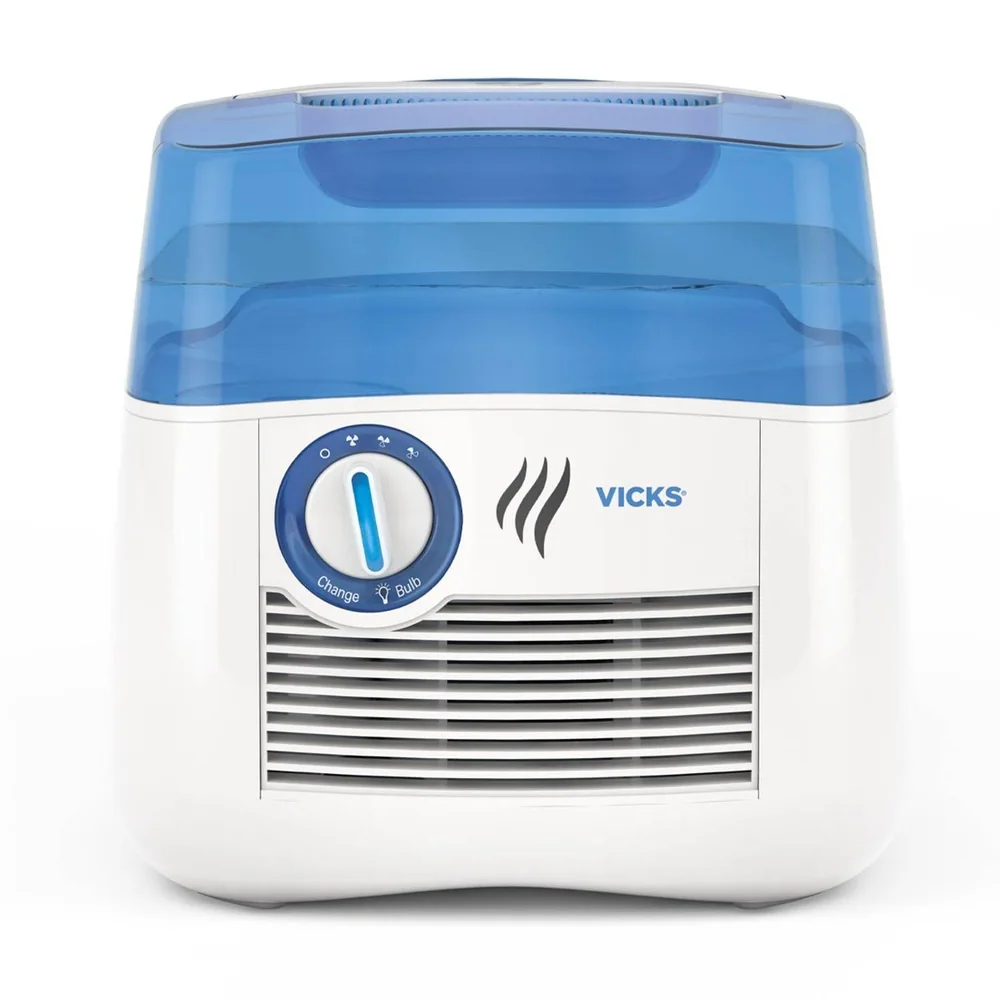
Vicks V3900 Cool Mist Humidifier
Storage guide How to Store a Humidifier Between Seasons Store a humidifier clean, dry, and unsealed so it does not grow odors, scale, or mold while it sits unused. Read the guide →

Learn the Category

Understand Humidifiers Before You Buy

Plain-English guides to sizing, features, setup, maintenance, and the category questions that change the decision.

Levoit Dual 200S Humidifier
Category guide How to Size a Humidifier for a Room Sizing a humidifier is mostly about moisture output and room conditions, not the biggest square-foot number on the box. Read the guide →
LEVOIT Superior 6000S Smart Evaporative Humidifier
Category guide Evaporative vs. Ultrasonic Humidifiers Evaporative and ultrasonic humidifiers add moisture in different ways, which changes noise, residue, maintenance, and how steady the humidity stays. Read the guide →
Vicks V3900 Cool Mist Humidifier
Category guide Cool Mist vs. Warm Mist Humidifiers Cool mist and warm mist humidifiers can both raise humidity, but they differ in safety, energy use, and how they fit into a bedroom routine. Read the guide →
Blueair InvisibleMist Humidifier
Category guide Humidistats and Hygrometers Explained Learn what humidifier sensors can and cannot tell you, and how to hit a comfortable humidity range without creating condensation problems. Read the guide →
Blueair InvisibleMist Humidifier
Category guide The Real Cost of Humidifier Water and Filters Understand how water type, mineral buildup, and consumables drive the long-term cost and mess of owning a humidifier. Read the guide →
Blueair InvisibleMist Humidifier
Category guide What Makes a Humidifier Quiet Enough for Sleep? Learn where humidifier noise really comes from and how to choose settings and placement that stay sleep-friendly. Read the guide →
Blueair InvisibleMist Humidifier
Category guide Humidifier Safety: What Actually Matters Humidifier safety comes down to preventing burns, avoiding excess humidity, and keeping standing water from turning into a hygiene problem. Read the guide →
LEVOIT Superior 6000S Smart Evaporative Humidifier
Category guide Choosing a Humidifier for Houseplants The right plant humidifier is sized for your growing area, controls humidity reliably, and does not create constant mineral mess or wet surfaces. Read the guide →
Carepod One
Category guide Choosing a Humidifier for a Nursery A nursery humidifier should be easy to clean, hard to tip, quiet enough for sleep, and able to hold a conservative humidity level. Read the guide →
Blueair InvisibleMist Humidifier
Category guide Humidifier Maintenance Without the Guesswork A practical schedule for keeping a humidifier clean, efficient, and less likely to leave residue or odors. Read the guide →

Category Knowledge

How Humidifiers Work

The technical details below explain why products behave differently and which differences shoppers are likely to notice.

Category knowledge

How to Size a Humidifier for a Room

Sizing a humidifier is mostly about moisture output and room conditions, not the biggest square-foot number on the box.

Most humidifiers are sold with a room size claim, but that number is only a starting point. What actually determines comfort is whether the unit can add enough moisture to keep your room in a sensible humidity range without running nonstop. A small bedroom with the door closed behaves very differently than an open living area connected to a hallway and kitchen. A good target for many homes is a comfortable middle range that does not cause window fogging or damp surfaces. The easiest way to stay honest is to use a separate hygrometer (a small humidity meter) placed across the room from the humidifier. If the room never reaches your target, you need more output or less air leakage. If it overshoots and you see condensation, you need less output or better control.

Square footage ignores ceiling height, and ceiling height changes the amount of air you are trying to humidify. A 150 square foot bedroom with an 8 foot ceiling holds less air than the same floor area with a vaulted ceiling. More air volume usually means you need more moisture output to move the humidity number on your hygrometer. Measure length and width, then note whether the ceiling is standard, tall, or vaulted. Also look at how the room is used. A bedroom with the door shut at night is easier to humidify than a family room that stays open to the rest of the house. If you humidify an open area, you are often humidifying the hallway too, which can make a "large room" claim feel optimistic.

Moisture output is how much water a humidifier can put into the air over time. It is the spec that actually raises humidity. Tank size only tells you how long the unit might run before a refill. A big tank paired with low output can run a long time while barely changing the room's humidity. When comparing models, treat "runs up to X hours" as a convenience spec, not a sizing spec. If you want fewer refills, you need both enough output for the space and enough tank capacity to support that output. Otherwise you get the worst combination: a unit that still needs frequent refills because you run it on high, yet it struggles to keep up.

What this means when shopping: Moisture output is how much water a humidifier can put into the air over time. It is the spec that actually raises humidity. Tank size only tells you how long the unit might run before a refill. A big tank paired with low output can run a long time while barely changing the room's humidity. When comparing models, treat "runs up to X hours" as a convenience spec, not a sizing spec. If you want fewer refills, you need both enough output for the space and enough tank capacity to support that output. Otherwise you get the worst combination: a unit that still needs frequent refills because you run it on high, yet it struggles to keep up.

Category knowledge

Evaporative vs. Ultrasonic Humidifiers

Evaporative and ultrasonic humidifiers add moisture in different ways, which changes noise, residue, maintenance, and how steady the humidity stays.

Evaporative humidifiers use a fan to pull air through a wet wick (a filter-like pad), and the water evaporates into the air. Ultrasonic humidifiers use a vibrating plate to turn water into a visible cool mist. Both can make a room feel more comfortable, but they behave differently once you live with them day to day. The biggest practical differences are mineral residue, consumables, and how forgiving the unit is if you forget to adjust settings. Ultrasonic models can spread minerals from tap water as fine white dust, while evaporative models usually trap minerals in the wick. Evaporative models often have more fan noise and require wick replacements, but they tend to self-limit output as humidity rises.

Evaporative humidifiers have a built-in braking effect. As the room gets more humid, evaporation slows down naturally, so output tends to taper even if the fan keeps running. That makes evaporative units more forgiving in bedrooms and larger spaces where humidity can creep up overnight. Ultrasonic humidifiers can keep producing mist at a steady rate regardless of the room's current humidity unless a humidistat tells them to cycle off. That can be great for quickly raising humidity in a dry room, but it also means you rely more on good controls and good habits. Without a reliable humidistat and a separate hygrometer check, it is easier to overhumidify and create condensation on windows or nearby surfaces.

Ultrasonic humidifiers are often chosen for bedrooms because they can be very quiet mechanically. Even so, you can still hear bubbling, dripping, or occasional clicks from controls. If the unit has a small tank opening or awkward handle, refilling at night can also be noisier and messier than you expect. Evaporative humidifiers use a fan, so there is usually a steady airflow sound that increases on higher settings. Some people find that consistent fan noise easier to sleep with than intermittent water noises, while others prefer near-silence. If you are sensitive to sound, look for multiple fan speeds and plan to run a larger unit on a lower setting rather than a small unit on high.

What this means when shopping: Ultrasonic humidifiers are often chosen for bedrooms because they can be very quiet mechanically. Even so, you can still hear bubbling, dripping, or occasional clicks from controls. If the unit has a small tank opening or awkward handle, refilling at night can also be noisier and messier than you expect. Evaporative humidifiers use a fan, so there is usually a steady airflow sound that increases on higher settings. Some people find that consistent fan noise easier to sleep with than intermittent water noises, while others prefer near-silence. If you are sensitive to sound, look for multiple fan speeds and plan to run a larger unit on a lower setting rather than a small unit on high.

Category knowledge

Cool Mist vs. Warm Mist Humidifiers

Cool mist and warm mist humidifiers can both raise humidity, but they differ in safety, energy use, and how they fit into a bedroom routine.

Cool mist humidifiers release room-temperature mist, usually made by ultrasonic vibration or by evaporation with a fan. Warm mist humidifiers heat water and release warm vapor. Both add moisture to the air, but the experience of owning them is different, especially around safety, cleaning, and where you place the unit. Warm mist can feel soothing in a chilly room, but it uses more electricity and introduces a hot surface and hot water risk. Cool mist avoids the burn concern and is often preferred around kids and pets, but it can leave dampness on nearby surfaces if it is aimed poorly or run too high. Your household setup often matters more than the mist temperature itself.

Warm mist humidifiers heat water, which means the unit can have hot components and can produce hot steam. That changes where you can safely place it. A stable surface out of reach is important, and you should think through nighttime movement in the room. A bumped warm mist unit can spill hot water, and curious hands or paws can get too close. Cool mist humidifiers remove the burn concern, which is why they are commonly chosen for nurseries and kids' rooms. The tradeoff is that cool mist can dampen nearby items if the unit is too close to a wall, crib, or curtains. Place it where the mist can disperse into open air, and keep it away from electronics and wood furniture that can swell or spot from repeated moisture.

Warm mist units use a heating element, so they generally draw more power than cool mist units. In a small bedroom, the added heat is usually modest, but it can still matter if you run it for long stretches. If you are trying to keep energy use down, cool mist is typically the easier choice. In terms of humidity, both types can raise the room's moisture level. Warm mist may feel more noticeable because the vapor is warm when it leaves the unit, while cool mist can feel like a draft if it blows toward you. Neither type should be used to push humidity high enough to cause window condensation. Comfort comes from maintaining a steady, moderate humidity, not from making the air feel wet.

What this means when shopping: Warm mist units use a heating element, so they generally draw more power than cool mist units. In a small bedroom, the added heat is usually modest, but it can still matter if you run it for long stretches. If you are trying to keep energy use down, cool mist is typically the easier choice. In terms of humidity, both types can raise the room's moisture level. Warm mist may feel more noticeable because the vapor is warm when it leaves the unit, while cool mist can feel like a draft if it blows toward you. Neither type should be used to push humidity high enough to cause window condensation. Comfort comes from maintaining a steady, moderate humidity, not from making the air feel wet.

Category knowledge

Humidistats and Hygrometers Explained

Learn what humidifier sensors can and cannot tell you, and how to hit a comfortable humidity range without creating condensation problems.

A humidistat is the sensor and control inside a humidifier that measures humidity and turns the mist on and off around a target. A hygrometer is a separate meter that measures humidity in the room. Some humidifiers include a humidistat, but many people still add a small hygrometer because it helps you see what the room is actually doing, not just what the machine thinks is happening right next to it. Humidity is not perfectly even across a room. It changes near the humidifier, near a heating vent, by a cold window, and even at pillow height. That is why two readings can disagree without either device being "broken." The goal is not a perfect number. The goal is a stable, sensible range that feels comfortable and does not leave moisture on surfaces.

A humidifier's humidistat usually sits inside the unit, so it measures the air right around the machine. That air can be wetter than the rest of the room because mist is being produced inches away. If the sensor is "seeing" higher humidity than the bed area, the humidifier may shut off early and the room can still feel dry. The opposite can happen if the sensor is in a drafty spot inside the housing, it may keep running even when the room is already humid.

A separate hygrometer helps you judge the room where people actually breathe. Place it away from the humidifier's direct mist plume, away from windows, and away from supply vents. A good starting point is across the room at about head height when you are sitting or sleeping. If you want to be thorough, move it for a day: one night near the bed, another night near the window. You will quickly learn where your home tends to be driest or most condensation prone.

Target numbers are useful, but they are not magic. Comfort often improves as humidity rises from very dry levels, but too much moisture can show up as fogged windows, damp sills, or a clammy feeling. Those are practical warning signs that matter more than chasing a specific display reading. If you see condensation, lower the target or run the humidifier less, even if the screen says you are still below your goal.

Accuracy claims can be marketing-heavy because the sensor is small and the environment is messy. What matters is repeatability and control behavior. If you set a target and the humidifier cycles in a steady pattern, that is usually more valuable than a perfect number. Use your hygrometer as the tie breaker. If the humidifier says 45 percent but the room meter says 35 percent, treat the room meter as your comfort reference and adjust the humidifier target until the room meter lands where you want it.

What this means when shopping: Accuracy claims can be marketing-heavy because the sensor is small and the environment is messy. What matters is repeatability and control behavior. If you set a target and the humidifier cycles in a steady pattern, that is usually more valuable than a perfect number. Use your hygrometer as the tie breaker. If the humidifier says 45 percent but the room meter says 35 percent, treat the room meter as your comfort reference and adjust the humidifier target until the room meter lands where you want it.

Specs That Matter When Choosing Humidifiers

These are the measurements and ownership details that change which humidifiers make sense.

Moisture output

Output describes how much water a humidifier can release over time.

Why it matters: A large tank does not guarantee that a machine can raise humidity in a large or very dry room.

Humidistat and controls

A humidistat measures nearby humidity and can cycle the machine around a target.

Why it matters: Reliable control helps avoid both dry air and the condensation, dust mites, and mold risk that come with overhumidifying.

Tank access and cleaning

Openings, seams, removable parts, and dishwasher-safe pieces determine how easy the wet surfaces are to reach.

Why it matters: Standing water requires routine cleaning, so awkward designs are more likely to be neglected.

Water and consumables

Ultrasonic models can spread tap-water minerals; evaporative models usually rely on replacement wicks.

Why it matters: Water quality and filter cost can change both the mess and the long-term ownership cost.

Claims that need context

Covers a very large room: Check moisture output and the conditions behind the claim, not only square footage.

Whisper quiet: Pump, fan, bubbling, and control sounds can still matter beside a bed.

Germ-free mist: No claim removes the need to empty, rinse, descale, and clean wet parts on schedule.

Brands in the Category

Humidifier Brands Explained

Use the brand overview as a starting point, then open the linked product reviews for the model-specific decision.

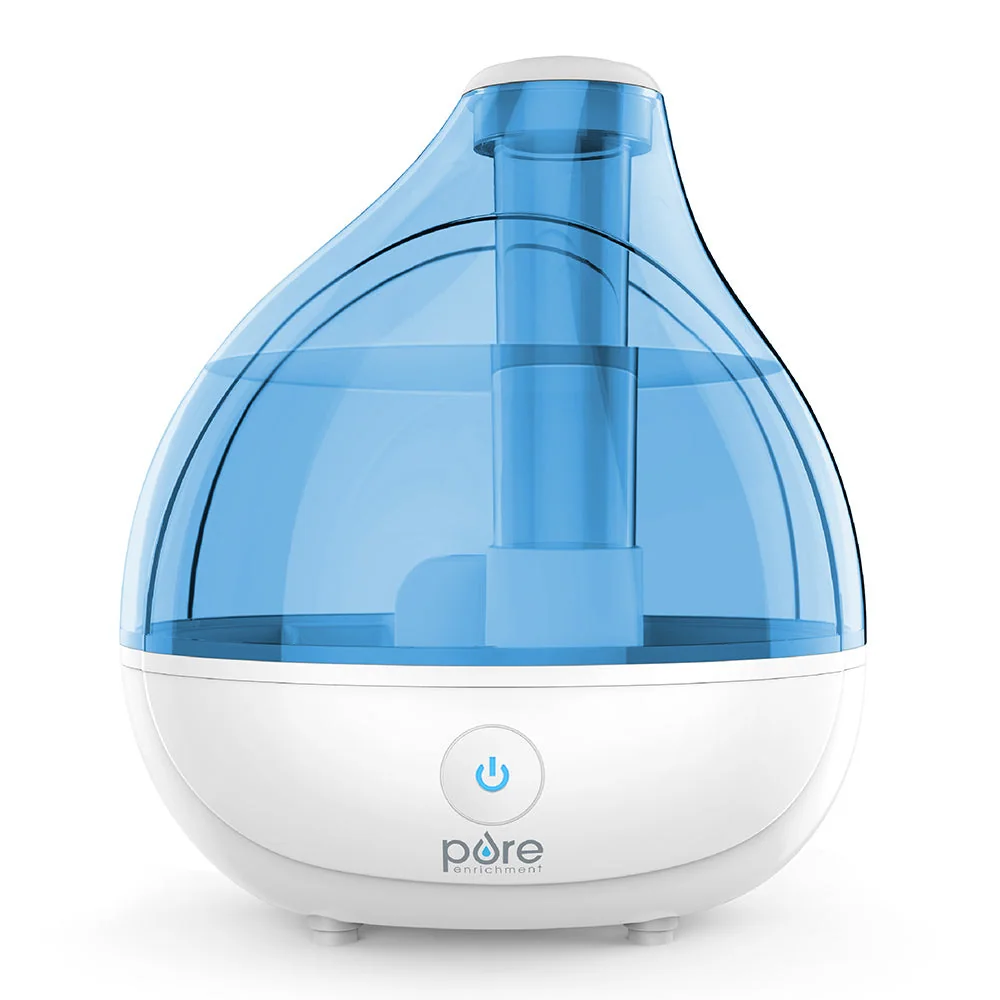
Pure Enrichment MistAire Humidifier
Brand guide

Pure

Pure Enrichment MistAire Humidifier is a practical choice for plant shelves and humidity-sensitive indoor plants, where you want a simple small-room humidifier you can run without fuss.

What to know: 1 Pure model appears across the current guides and reviews.

Carepod One
Brand guide

Carepod

Carepod One fits parents who want a nursery humidifier they will actually keep clean.
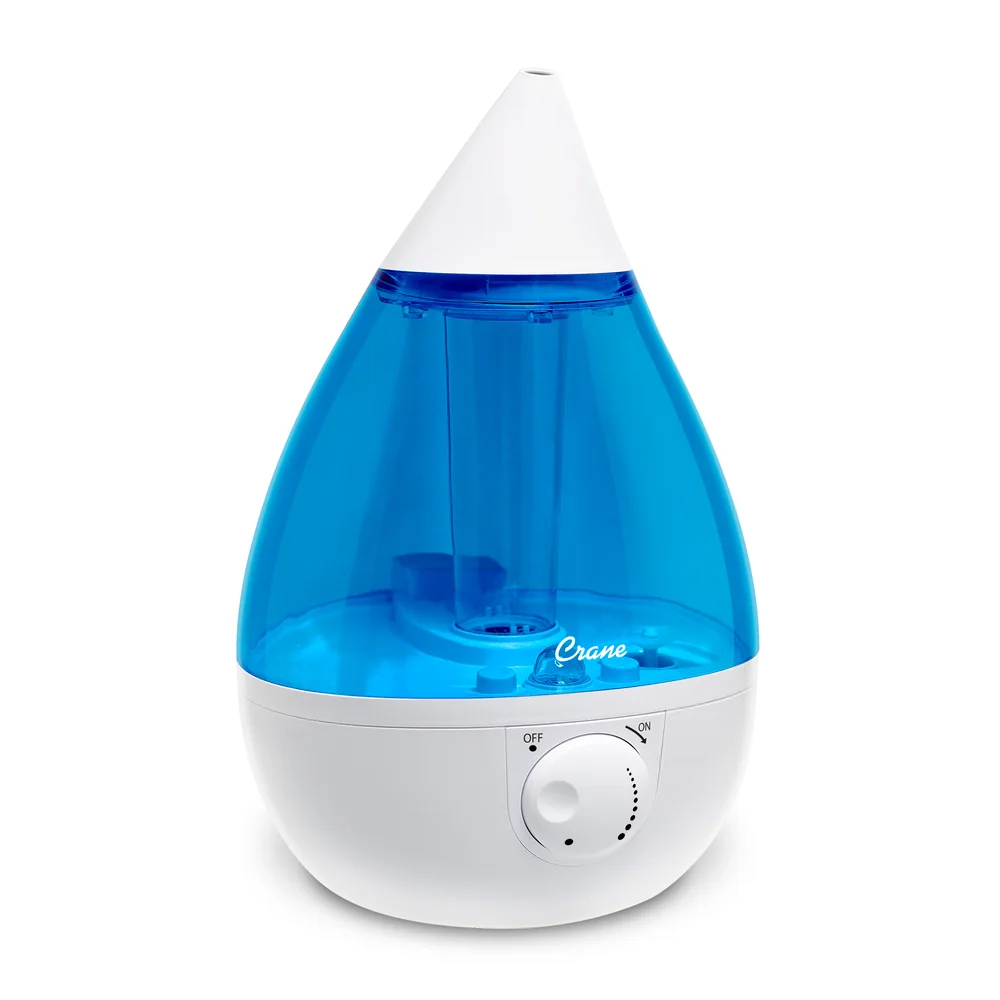
What to know: 1 Carepod model appears across the current guides and reviews.

How to Choose a Humidifier

  • Moisture output: A large tank does not guarantee that a machine can raise humidity in a large or very dry room.
  • Humidistat and controls: Reliable control helps avoid both dry air and the condensation, dust mites, and mold risk that come with overhumidifying.
  • Tank access and cleaning: Standing water requires routine cleaning, so awkward designs are more likely to be neglected.
  • Water and consumables: Water quality and filter cost can change both the mess and the long-term ownership cost.

Humidifiers FAQ

Which humidifier is easiest to keep clean?

Blueair H35i Humidifier. The water tank is dishwasher-safe, it breaks down into four parts for easier cleaning, and it includes a UV filter.

What is the best budget humidifier that still works well in most rooms?

Dreo HM311 Humidifier. It is a no-frills model that is easy to operate and is positioned specifically as a strong value choice for everyday humidifying.

Which humidifier makes the most sense for a bedroom or nighttime use?

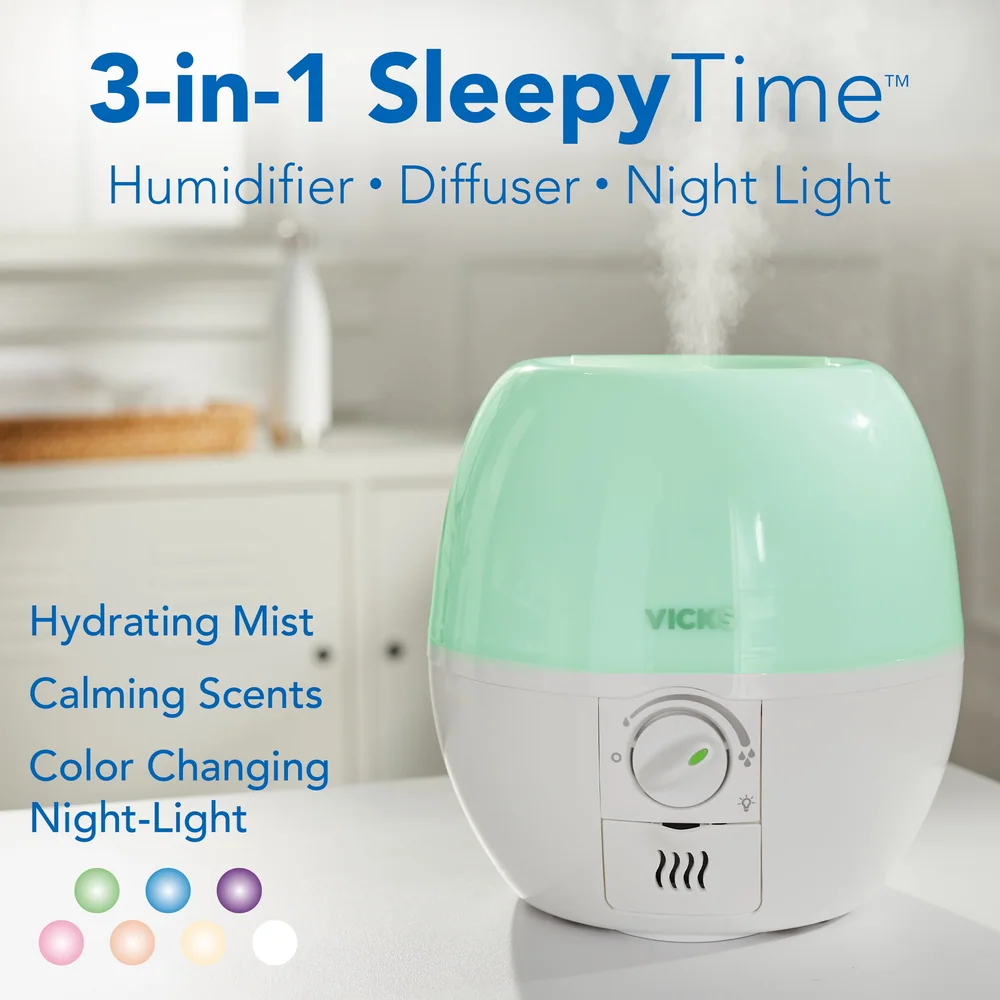
Vicks 3-in-1 SleepyTime Humidifier. It is built around bedroom comfort and is commonly associated with dry-air relief during sleep-season routines.

What should I buy for a small room if I want ultrasonic mist?

Levoit Dual 200S Humidifier. It is a compact ultrasonic model with a 3 L format that fits better on a nightstand or dresser.

Is there a humidifier on this list that is especially good for indoor plants?

Pure Enrichment MistAire Humidifier. It is a small-room unit that is specifically tied to plant-shelf and humidity-sensitive plant use.