Start with room volume, not just square footage
Square footage ignores ceiling height, and ceiling height changes the amount of air you are trying to humidify. A 150 square foot bedroom with an 8 foot ceiling holds less air than the same floor area with a vaulted ceiling. More air volume usually means you need more moisture output to move the humidity number on your hygrometer. Measure length and width, then note whether the ceiling is standard, tall, or vaulted. Also look at how the room is used. A bedroom with the door shut at night is easier to humidify than a family room that stays open to the rest of the house. If you humidify an open area, you are often humidifying the hallway too, which can make a "large room" claim feel optimistic.
Understand moisture output and why tank size can mislead
Moisture output is how much water a humidifier can put into the air over time. It is the spec that actually raises humidity. Tank size only tells you how long the unit might run before a refill. A big tank paired with low output can run a long time while barely changing the room's humidity. When comparing models, treat "runs up to X hours" as a convenience spec, not a sizing spec. If you want fewer refills, you need both enough output for the space and enough tank capacity to support that output. Otherwise you get the worst combination: a unit that still needs frequent refills because you run it on high, yet it struggles to keep up.
Account for air leakage, heating, and weather
Dryness is not only about room size. Forced air heat, a fireplace, and cold outdoor air can all lower indoor humidity. Leaky windows, drafty doors, and older construction constantly swap your humidified air with drier air, which increases the moisture your humidifier must add just to maintain a steady reading. Use simple clues. If you feel drafts, if the room is over a garage, or if the HVAC runs often, plan on needing more output than the box suggests. If you see window condensation even with a modest humidifier setting, that is a sign the room is holding onto moisture and you should back off. The goal is comfort without wet surfaces.
Use a hygrometer and placement to fine-tune sizing
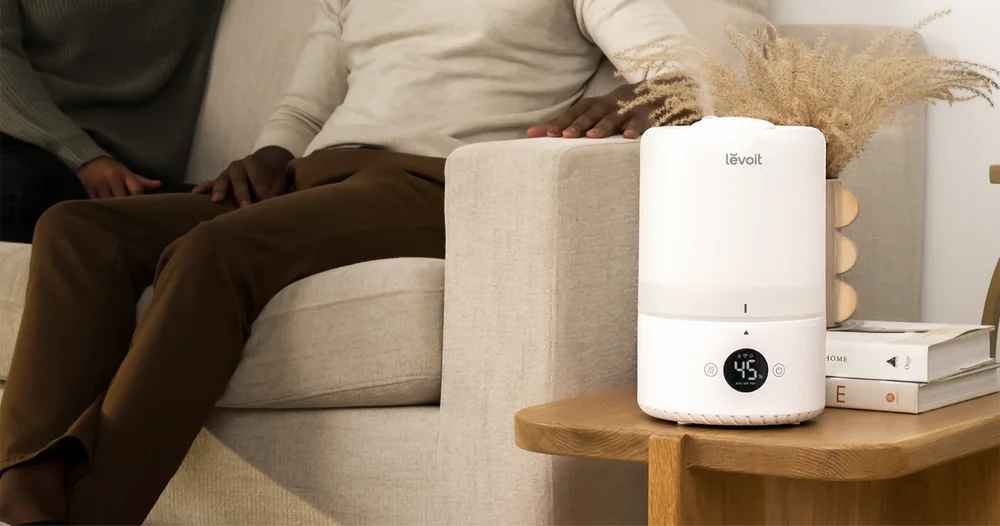
A built-in humidistat (a sensor that cycles the humidifier around a target) is helpful, but it measures humidity where the unit sits, not necessarily where you sleep or sit. A separate hygrometer across the room tells you what the room is actually experiencing. If the humidifier shuts off but the far side of the room still feels dry, the sensor location or airflow pattern may be the issue. Place the humidifier on a stable, water-resistant surface, a few feet from the bed and away from walls, curtains, and electronics. Aim the mist away from surfaces so you do not create a damp corner that looks like "extra output" but is really just poor placement. If you cannot reach your target without fogging windows or dampening nearby items, you likely need a different type of humidifier or a smaller target.