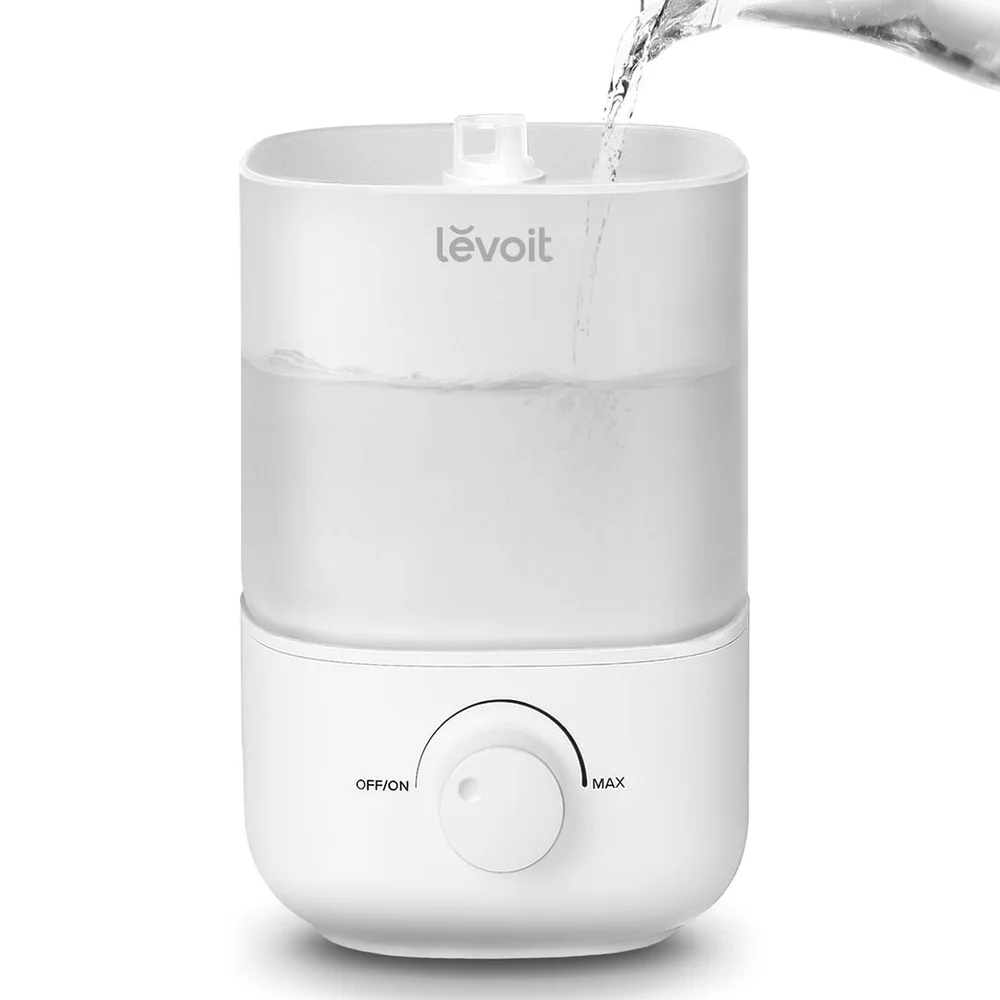
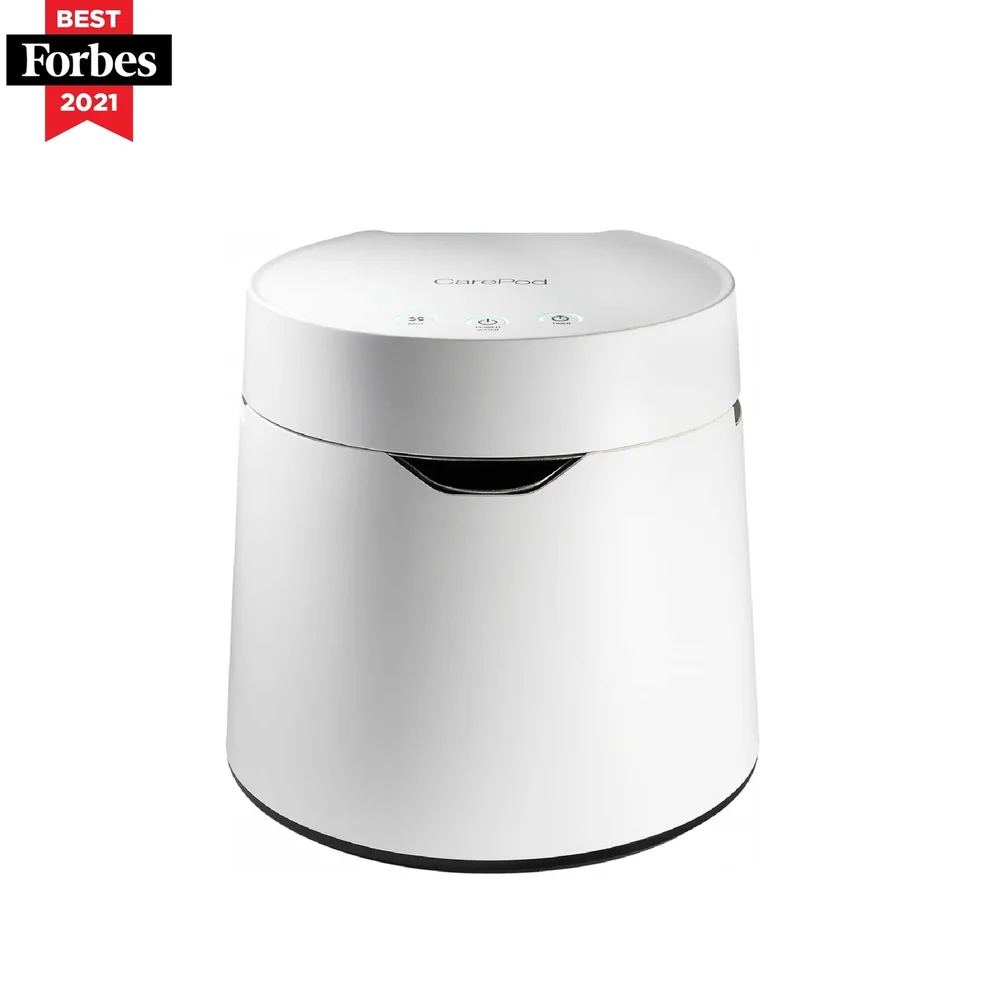
Choose cool mist
For nurseries, cool mist is the default choice because it avoids the burn risk of warm-mist units. Warm-mist humidifiers heat water to create steam, and the hot water and hot surfaces are a hazard in a room where you may be carrying a baby while tired or moving quickly in the dark. Cool mist can be made by ultrasonic or evaporative designs. Ultrasonic units are often very quiet, while evaporative units tend to reduce white mineral dust.
Your water choice matters more in a nursery than many people expect. Ultrasonic humidifiers can spread minerals from tap water as fine dust that settles on furniture and can irritate some people. Using distilled water can reduce that residue. Evaporative humidifiers use a wick (a filter-like paper element) that traps minerals, but the wick needs regular replacement. Pick the style that matches what you can maintain consistently.
Place it out of reach
Put the humidifier on a stable surface where it cannot be pulled down, tipped, or bumped. Keep it well away from the crib, changing table, and any spot where mist could land directly on bedding. Direct mist can dampen fabrics and nearby surfaces, which is the opposite of what you want in a sleep space. A good rule is to aim the mist into open room air, not at walls, curtains, or the crib area.
Cord safety is part of placement. Route the cord so it does not hang where a child could grab it later, and so an adult will not trip during nighttime checks. Avoid running the cord under rugs where heat can build up. Use only the power setup the humidifier is designed for, and keep the plug and outlet area dry. If the humidifier leaks or drips during filling, wipe it up right away before plugging it back in.
Keep the room from getting damp
The goal is moderate humidity, not maximum output. Use a hygrometer in the nursery and aim for a practical range (often around 30 to 50 percent relative humidity). If your humidifier has a humidistat, set a target and confirm it with the hygrometer placed across the room, not right next to the machine. Nurseries can be small, and humidity can climb faster than you expect with the door closed overnight.
Watch for early signs of too much moisture: fogged windows, damp window sills, clammy-feeling sheets, or a musty smell. If you see any of these, turn the humidifier down or off and let the room dry out. Also check where the mist is landing. Even a correct humidity reading does not help if the mist stream is soaking a wall or curtain. Moisture on surfaces can lead to staining and mold over time.
Clean it on schedule
Nursery use demands a strict cleaning routine because the humidifier is running near a sleeping baby for long stretches. Empty and rinse the tank and base daily. Once a week, wash the parts that get wet, and descale mineral buildup as needed. If the humidifier ever smells musty or was left with water sitting, follow the manufacturer's disinfecting instructions for that model, then rinse thoroughly so no chemical residue remains.
Plan for the ongoing supplies your humidifier needs. Evaporative models need replacement wicks, and those wicks can get stiff or discolored as they trap minerals. Ultrasonic models may need cartridges, and they often benefit from distilled water to reduce dust and scale. If you cannot easily reach all the wet surfaces to clean them, choose a different design. In a nursery, easy cleaning is not a bonus feature, it is a safety feature.