
What to know first
- Designed for large rooms and open spaces where smaller purifiers feel underpowered
- High smoke CADR is the spec that matters most for wildfire season and general particle cleanup
- Smart features and sensors support auto mode and app control
- Quiet operation is part of the appeal, especially for a large-room machine
- The side-table form factor can fit a living room better than a tall tower or big boxy unit
- Replacement filters are a real part of the ownership cost, so plan for them
What the Blueair Blue Signature Large is
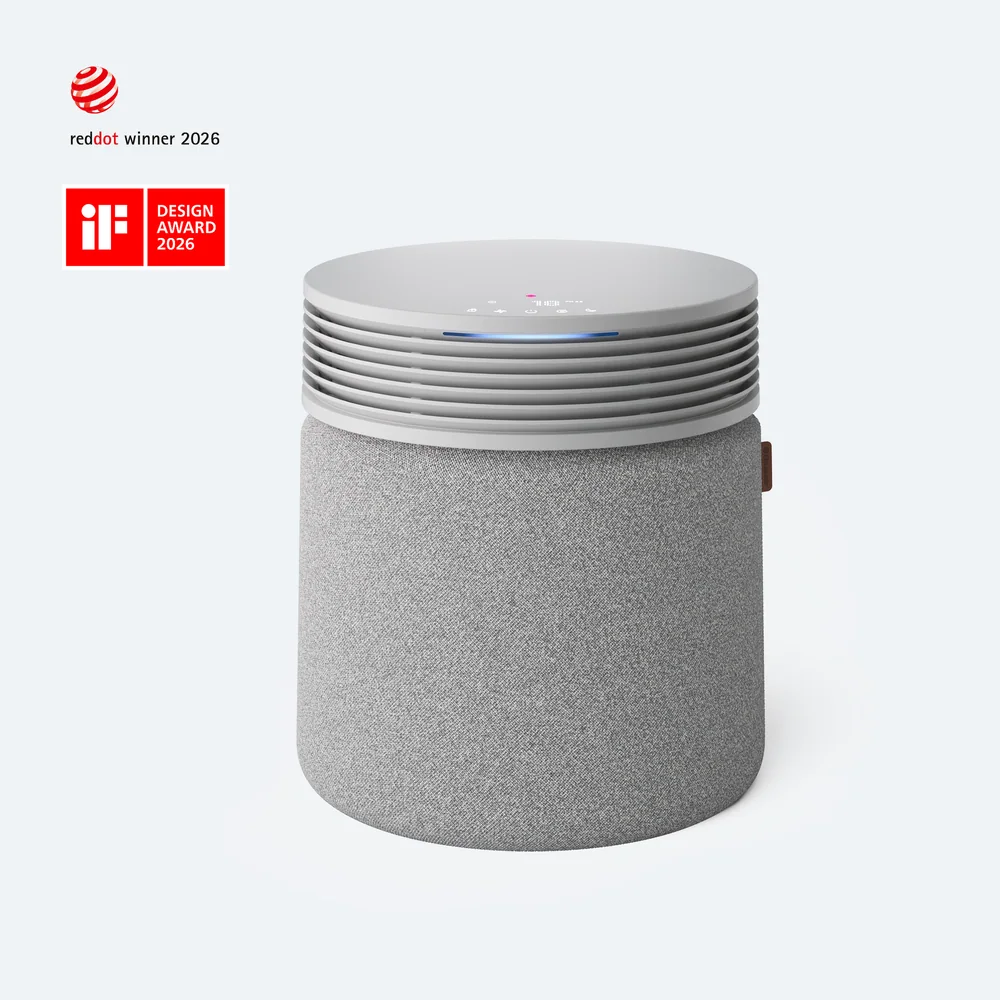
Blueair Blue Signature Large is a smart, high-capacity air purifier intended for large rooms. Instead of looking like a typical appliance, it is designed as a squat cylinder that can double as a small side table, which makes it easier to place in a living room without feeling like you are decorating around a machine.
Like most air purifiers in this class, its core job is particle cleanup: smoke, dust, pollen, and the fine stuff that makes allergies and haze worse. It uses Blueair’s HEPASilent approach (a combination of mechanical filtration and electrostatic charging) and includes carbon filtration for odors and gases.
This is not the model you buy to try out air purifiers. It is the model you buy when you already know the problem is your main living space and you want one unit with enough airflow and filtration to keep up.
Why it stands out
The main reason to pay for Blueair Blue Signature Large is large-room cleaning power. Its published smoke CADR is 455 CFM (with dust at 434 CFM and pollen at 450 CFM). In plain terms, that is the kind of airflow you look for when you want a purifier to have real impact in a big room, not just a small bedroom.
It is also built around the way people actually use a purifier. Auto mode, sensors, and app control matter most when they let you run the machine more often without fiddling with settings. This model is a smart, connected unit with onboard sensing and automatic fan adjustment.
Finally, it is aimed at shoppers who care about noise in a shared space. Blueair lists a 23 to 55 dB noise range. The point is not that it has a quiet mode. It is that it is meant to be tolerable while doing enough work to clean a larger room.
What it is like to own
In day-to-day use, the big change is you can treat it like the main purifier instead of a supplemental one. That is the appeal for smoke season, pet households, and open layouts. You place it where air actually mixes, run it consistently, and let the sensors and auto mode handle the ups and downs.
The furniture-style shape is not just aesthetic. It can make placement easier because it does not read like a tower in the corner. Blueair describes it as a unit that can double as a small table, so it is easier to justify in a living room where you are already managing lamps, end tables, and walkways.
Maintenance is the usual air-purifier routine: keep the outside pre-filter clean and replace the main filter on schedule. Replacement filters are the main recurring cost for any purifier, and this model is no exception. Plan ahead so you are not stuck running an old filter during the weeks you most need clean air.
What to know before you buy
Do not buy a large-room purifier for a home with lots of closed doors and separate rooms and expect it to fix everything. Air purifiers clean best when the air can circulate. If your home is chopped into smaller spaces, spreading your budget across more than one unit can make more sense than putting all your money into one big machine.
Also, keep your expectations realistic about odors and gases. This model includes carbon filtration and is intended for odor control, but particle filtration and gas adsorption are different jobs. If your main issue is strong or persistent VOCs, you may need a different approach than a standard home purifier.
Lastly, you are paying for design and smart features as well as airflow. If you just want solid cleaning for less money, a simpler model can be the better buy, even if it is less living room friendly.
The specs that matter
Smoke CADR is the most useful single number for sizing a purifier and judging how quickly it can knock down fine particles. A higher smoke CADR is what helps in wildfire season and in big rooms where air needs to be cleaned fast.
Dust CADR gives you a sense of how quickly the purifier can reduce everyday household particles. In a large shared space, higher CADR helps the room feel consistently cleaner instead of swinging between fresh and stuffy.
If allergies are the driver, pollen CADR is a practical indicator of how much air the purifier can process for larger allergen-sized particles.
A purifier only helps if you can stand to run it. This range signals it is designed to be livable in a main room, not just on a barely-there low setting.
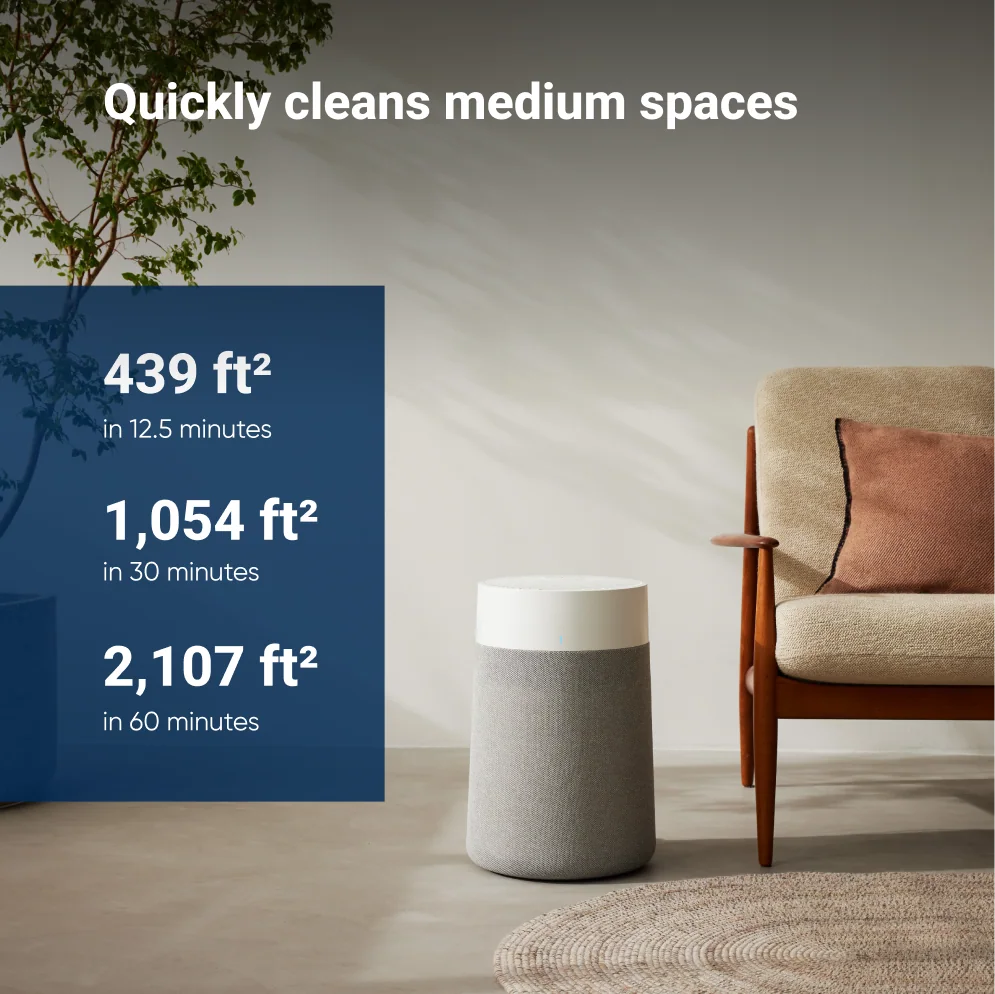
Big room-coverage claims can hide slow cleaning. An air-change rate gives you a clearer picture of how often the purifier can cycle the air in a room size it is claiming.
Multiple speeds and an auto mode make it easier to balance noise and cleaning. Night mode is useful when you want lower noise and fewer lights while still keeping some filtration running.
App control is not required, but it can make ownership easier: checking air quality, changing modes, and keeping up with filter reminders without walking over to the unit.
Who this product fits
You have an open-plan living room and kitchen
Blueair Blue Signature Large is built for the kind of connected space where cooking, foot traffic, and outdoor air all mix together. Its high smoke CADR and large-room focus make it a better fit than a bedroom-sized purifier that would need to run on high all the time.
Smoke season is your yearly problem
If you want one main purifier to lean on when outdoor air gets nasty, this model makes sense because it is designed for large-room impact. Put it in the room where your household actually spends time and let it run consistently instead of trying to rotate a smaller unit around.
Pets live in the living room, not just a bedroom
For pet households, the win is keeping the main shared space cleaner day after day. This model is a strong large-room choice for pet owners, with carbon filtration aimed at odors alongside particle filtration for dander and dust.
You want a purifier that does not look like a purifier
If you hate the look of big appliances, the side-table style is a real reason to choose this model. It is designed to blend into a living space so you are more likely to keep it out and running, which is what actually improves air quality.
What else to compare
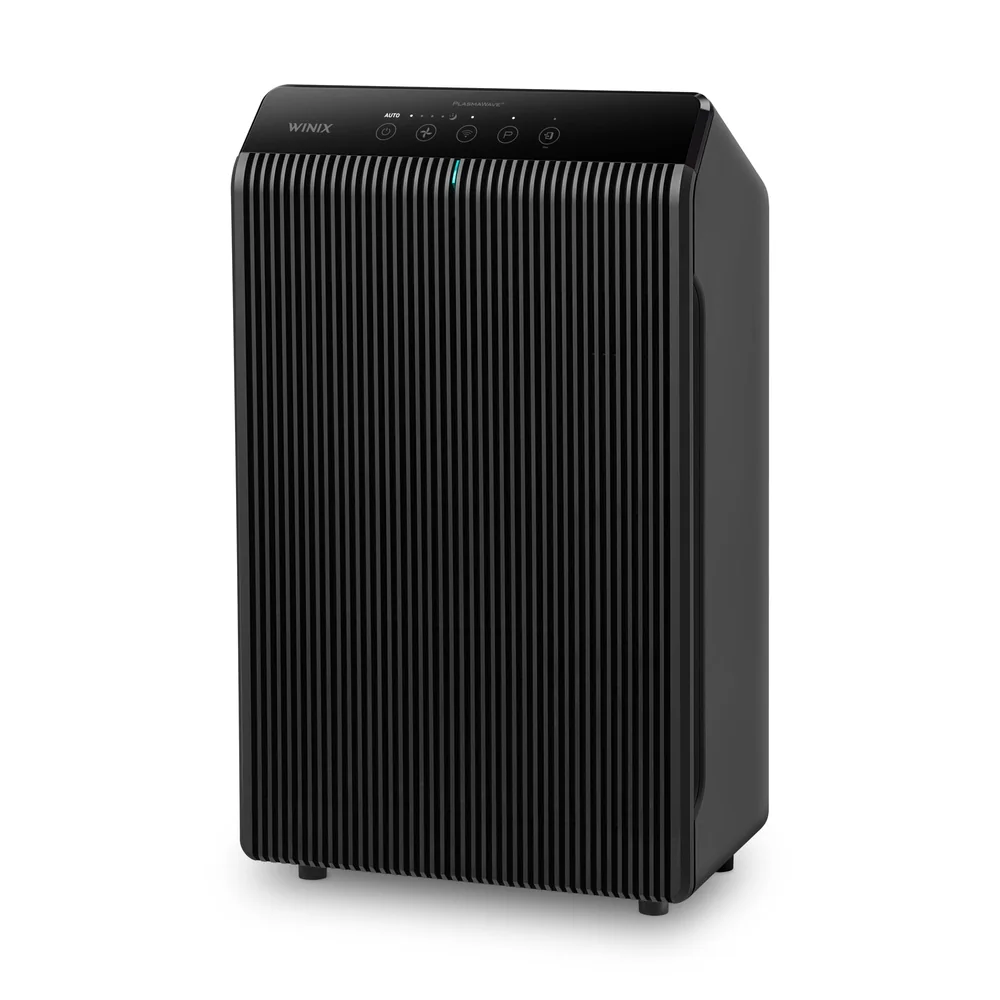
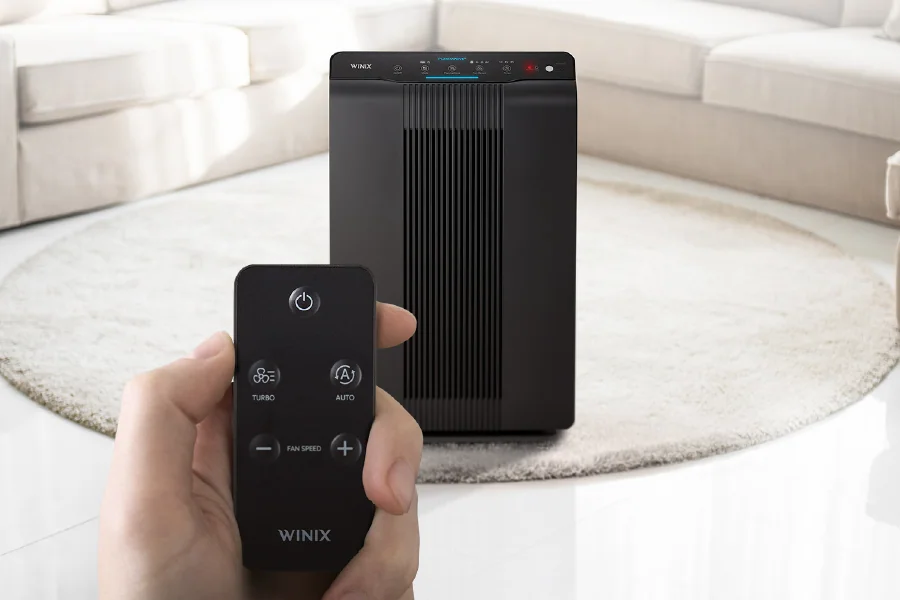
If Blueair Blue Signature Large is more machine than you need, these are the more practical directions to consider.
Blueair Blue Signature Large FAQ
Is the Blueair Blue Signature Large good for large rooms?
Yes. It is made for large rooms and open spaces, with a published smoke CADR of 455 CFM. That is the kind of capacity that makes sense when a smaller purifier feels like it cannot keep up.
Does the Blueair Blue Signature Large help with wildfire smoke?
It is designed for particle removal and has a high smoke CADR, which is the key spec for smoke-sized particles. For smoke season, it makes the most sense as the main unit in your primary living space.
Can the Blueair Blue Signature Large remove pet odors?
It includes carbon filtration intended for odors and gases, which can help with everyday pet smells. Just keep expectations realistic for heavy, persistent odors or chemical VOCs, which usually require more carbon than most home purifiers provide.
How loud is the Blueair Blue Signature Large?
Blueair lists a 23 to 55 dB noise range. In practical terms, it is designed to be quiet enough to live with in a main room while still moving meaningful air.
Should I buy one big purifier or two smaller ones?
If your home is one big connected space, one high-capacity unit like the Blueair Blue Signature Large can be the cleanest, simplest setup. If you have multiple closed-off rooms, two smaller purifiers placed where you spend time can be a smarter use of budget.
Should you buy the Blueair Blue Signature Large?
Buy the Blueair Blue Signature Large if your real problem is a big, shared space and you want one purifier that can actually keep up. Its high CADR numbers and large-room focus are the reason it earns its place as a primary living-room machine, especially for smoke season, allergies, and pet households.
Skip it if you are trying to cover a bunch of separate rooms or you are mainly chasing the lowest cost of ownership. In those homes, you will usually get better results by placing more than one smaller purifier where the air problems actually happen.