
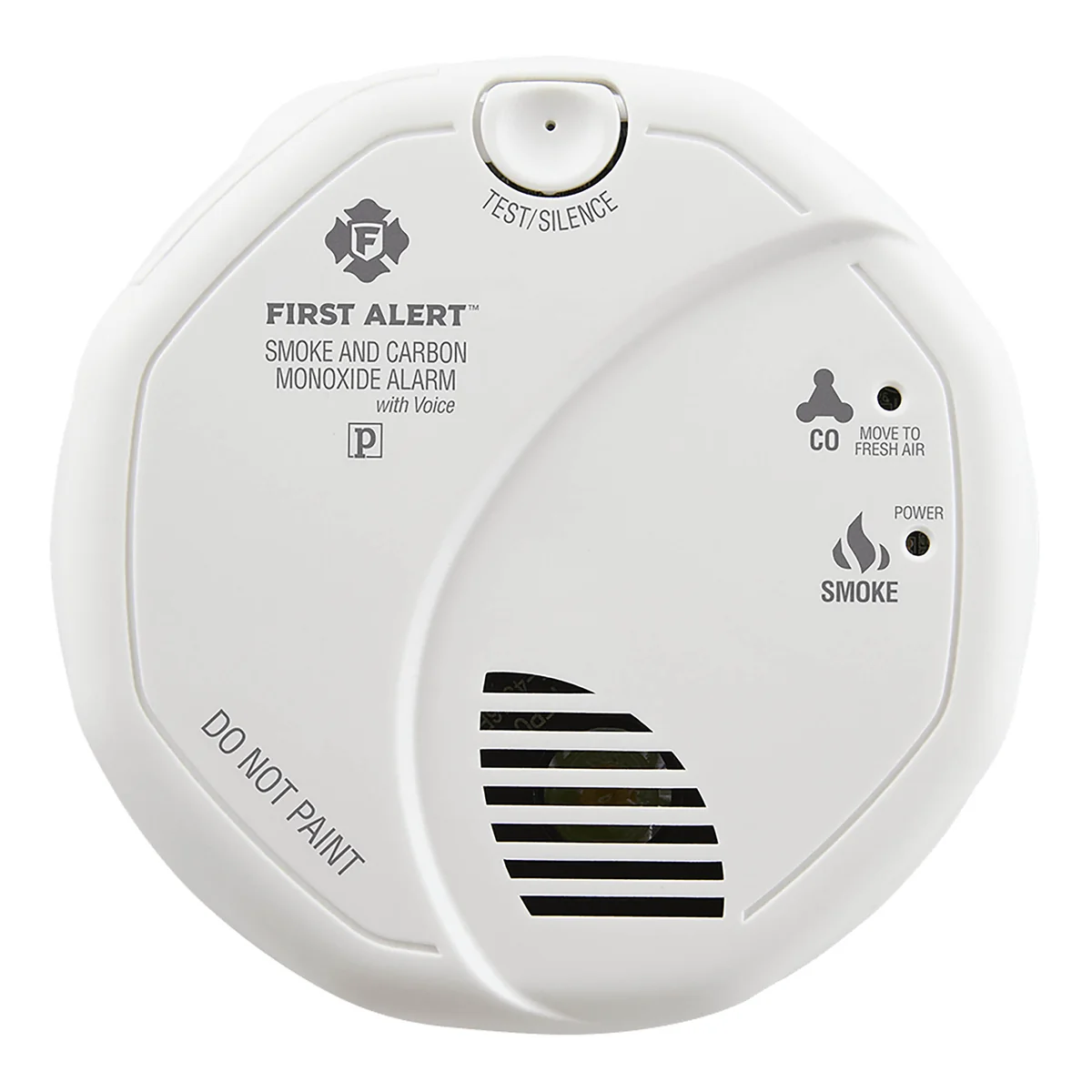
What to know first
- Two-in-one alarm: smoke and carbon monoxide detection in a single unit.
- Voice + location alerts can announce both the threat type and the room you assign.
- Uses a photoelectric smoke sensor and an electrochemical carbon monoxide sensor.
- Runs on two AA batteries and has a pivoting battery drawer so you can swap batteries without taking the alarm down.
- 85 dB alarm (rated at 10 feet) plus indicator lights on the face.
- Manufacturer lists the SCO7CN as discontinued, so availability can be inconsistent.
What the First Alert SCO7CN Battery-Operated Combination Smoke and Carbon Monoxide Alarm with Voice and Location is
The First Alert SCO7CN Battery-Operated Combination Smoke and Carbon Monoxide Alarm with Voice and Location is a single, battery-powered alarm that watches for two different hazards: smoke from a fire and carbon monoxide (CO) from fuel-burning sources. Instead of mounting separate devices, you get one unit that covers both jobs.
It’s designed for straightforward installs where you can mount an alarm but you cannot or do not want to run wiring. That makes it a natural fit for renters and students moving into an apartment for the first time, where you might be filling a coverage gap rather than replacing a whole building system.
The “voice and location” part matters because it doesn’t just sound an alarm. It can speak to tell you what it detected and where, based on a location you program from a list of 11 pre-set home locations.
Why it stands out
The biggest reason to pay for the First Alert SCO7CN is clarity during an emergency. The alarm is built to announce the type of danger (smoke or carbon monoxide) and the location you assign. When you’re half asleep, or you have roommates and closed doors, that extra information can help you react faster and make better decisions.
On the sensing side, it uses a photoelectric smoke sensor and an electrochemical CO sensor. In plain terms, it’s using dedicated sensor types for each hazard, not a one-size-fits-all approach. The photoelectric smoke sensor is described as being optimized for detecting larger smoke particles associated with smoldering fires, and it’s also intended to reduce nuisance alarms from everyday vapor and cooking conditions.
For carbon monoxide, the electrochemical sensor is meant to detect CO from multiple sources. The alarm also stores CO readings and can verbally communicate the highest level detected, which can help you understand whether you might be dealing with a recurring issue rather than a one-off event.
It also keeps the basics right: an 85-decibel alarm (rated at 10 feet) and indicator lights on the front to show whether smoke or CO is present.
What it is like to own
Ownership is mostly about three things: mounting it, setting the location, and keeping batteries fresh. Because it’s battery-operated, you can install it without wiring, which is exactly what many renters need. It runs on two AA batteries.
Day to day, the controls are simple. There’s a one-touch silence/test button so you can test the alarm or hush it if you trigger a nuisance alarm. The unit also has a pivoting, easy-to-access battery drawer, so you can replace batteries without taking the alarm off the wall or ceiling.
The location feature is something you’ll want to set up right away. The alarm is designed so you can choose from 11 pre-programmed home locations. In a small apartment, that can be as simple as labeling one for the bedroom and one for the main living area so the spoken alert is actually useful when it matters.
What to know before you buy
First, availability. The manufacturer lists the SCO7CN as discontinued and notes it may be backordered. That doesn’t automatically make it a bad buy, but it does mean you should expect stock to be inconsistent and plan for what you’ll do if you need a matching replacement later.
Second, this is a battery alarm, not a hardwired system. If your apartment, dorm, or local code requires hardwired alarms or interconnected alarms that all sound together, you need to follow those rules. Start by confirming what your landlord already provides, then add an approved detector only where you’re allowed and where coverage is missing.
Finally, understand what “photoelectric” means in real life. Photoelectric smoke sensing is strong for smoldering-type smoke and for reducing nuisance alarms from everyday vapor. For maximum protection, the manufacturer notes that using both ionization and photoelectric technologies is ideal, which is a reminder that no single alarm type is the whole story in every home.
The specs that matter
You get coverage for two hazards in one device, which is simpler for a small apartment and can reduce the number of devices you need to mount and maintain.
Photoelectric sensing is designed to pick up smoke from smoldering fires and is intended to reduce nuisance alarms from common household vapor and cooking conditions.
CO is invisible and odorless. An electrochemical sensor is purpose-built to detect carbon monoxide so you can get an alert before symptoms become dangerous.
Instead of guessing whether the alarm is for smoke or CO, and where it’s coming from, the unit can tell you. That’s especially helpful at night or with roommates.
You can install it without wiring, which is ideal for renters. It also means you need to stay on top of battery replacement.
This is the loud, attention-getting part. In a small apartment, it should be hard to ignore, even with doors closed.
If swapping batteries is annoying, people put it off. A battery drawer you can reach without dismounting the alarm makes routine upkeep more likely to happen.
A longer limited warranty can be reassuring for a safety device you expect to sit on the ceiling for years, as long as you still follow replacement guidance and end-of-life alerts.
Who this product fits
You’re moving into a first apartment and the coverage is unclear
You can confirm what alarms are already installed, then add the First Alert SCO7CN where you’re missing protection. Because it’s battery-powered, you can mount it without touching wiring.
You want one alarm that covers both smoke and carbon monoxide
Instead of buying and maintaining separate devices, the SCO7CN handles both hazards in one unit, with separate sensor types for smoke and CO.
You’re worried about waking up and not knowing what’s going on
The voice alert can announce whether it detected smoke or carbon monoxide and can call out the programmed location, which helps you make faster decisions in the moment.
You hate taking alarms down just to change batteries
The pivoting battery drawer is designed so you can replace the two AA batteries without dismounting the alarm, which makes basic maintenance less of a hassle.
First Alert SCO7CN Battery-Operated Combination Smoke and Carbon Monoxide Alarm with Voice and Location FAQ
Is the First Alert SCO7CN hardwired or battery operated?
It’s battery operated and uses two AA batteries. That’s useful for renters because you can install it without wiring, but you do need to replace the batteries as needed.
What does “voice and location” mean on the First Alert SCO7CN?
It means the alarm can speak to tell you the type of danger and the location you assigned during setup. You can choose from 11 pre-programmed home locations.
What kind of smoke sensor does the First Alert SCO7CN use?
It uses a photoelectric smoke sensor. Photoelectric sensing is described as being optimized for smoke from smoldering fires and intended to help minimize nuisance alarms from everyday vapor and cooking.
How loud is the First Alert SCO7CN alarm?
It’s rated at 85 dB at 10 feet. Along with the voice alerts and indicator lights, that’s meant to provide a clear warning when smoke or carbon monoxide is detected.
Does the First Alert SCO7CN tell you carbon monoxide levels?
It stores CO readings and can verbally communicate the highest level of CO detected. That can help you notice patterns that might point to a recurring CO source.
Is the First Alert SCO7CN discontinued?
The manufacturer lists the SCO7CN as no longer available for sale on its site. If you see it available through other retailers, verify the exact model number and consider whether you’d rather buy a current replacement model for easier future matching.
Should you buy the First Alert SCO7CN Battery-Operated Combination Smoke and Carbon Monoxide Alarm with Voice and Location?
Buy the First Alert SCO7CN if you need to add smoke and carbon monoxide coverage in a rental and you want a simple battery install. The voice and location feature is the real quality-of-life upgrade here, because it can cut through confusion when an alarm goes off and you need to move fast.
Skip it if you want a model that’s clearly current and easy to replace later, since the manufacturer lists this one as discontinued. In that case, shop for a currently sold First Alert battery combination smoke and CO alarm with voice alerts, and match the features that matter most to you: battery power, photoelectric smoke sensing, and spoken hazard and location announcements.