
What to know first
- Wired on-ear headphones with a 3.5 mm connection for many classroom devices.
- Volume limited to 85 dB (Philips states it meets EN 50332 safe-listening standards).
- Kid-friendly fit features: smaller ear cups, soft cushions, adjustable cushioned headband, and orientation dots.
- Foldable design makes them easier to stash in a backpack.
- Audio share lets kids daisy chain headphones to listen together.
What the Philips Kids' On-Ear Headphones (2000 Series) TAK2000PK/37 is
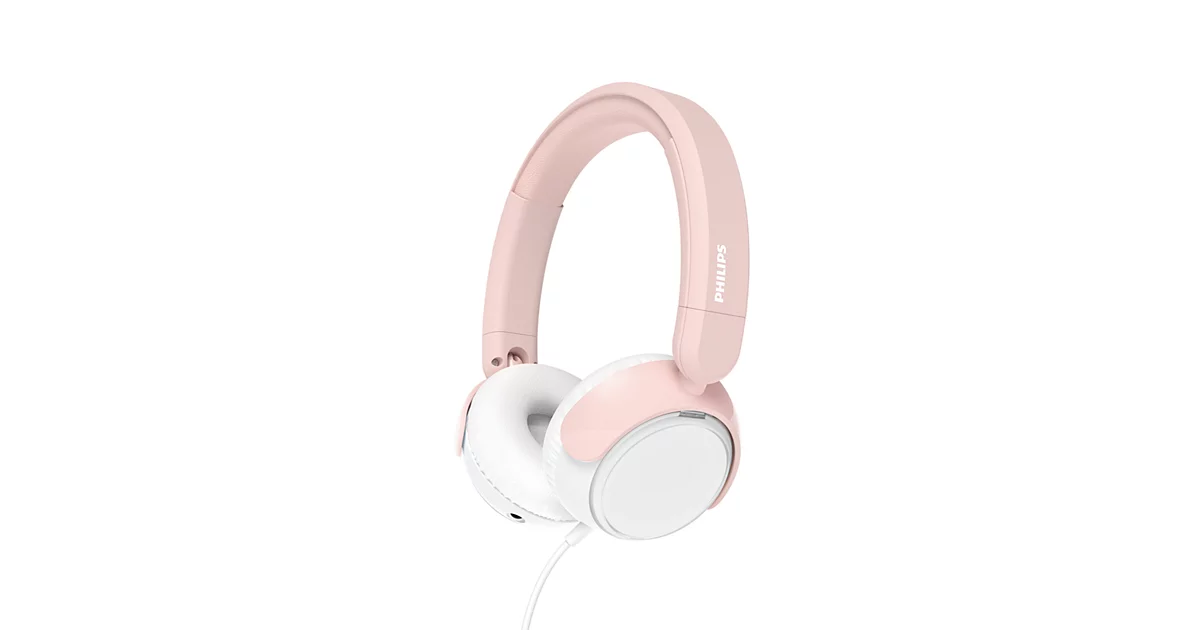
The Philips Kids' On-Ear Headphones (2000 Series) TAK2000PK/37 is a wired, on-ear headphone made for younger listeners and for the way school devices are still set up. The key practical detail is the 3.5 mm plug, since many classroom tablets, Chromebooks, and older laptops still rely on the standard headphone jack.
Philips specifies an 85 dB volume limit. In plain terms, the headphones are built not to go past that loudness level, which can take one daily worry off your plate when a kid is plugging into different devices at school or at home.
The rest of the design is about making headphones easier for kids to wear and carry: smaller ear cups with soft cushions, an adjustable cushioned headband, and a foldable build for packing. There’s also an audio share feature for daisy chaining, which is handy when two kids want to listen from one device.
Why it stands out
The main reason to choose the Philips Kids' On-Ear Headphones (2000 Series) TAK2000PK/37 over a generic wired set is the built-in volume cap. Philips lists the limit at 85 dB and states it aligns with EN 50332 safe-listening standards. For a kid headphone, that’s not a minor spec. It’s a built-in guardrail.
The kid-specific fit details also matter more than they sound on a product page. Philips calls out smaller ear cups, soft ear-cup cushions, and an adjustable cushioned headband. Those are the features that can make the difference between “they’ll actually keep them on” and “they’re constantly shifting them around.”
The orientation dots on the headband are another smart, practical touch. Younger kids do put headphones on backwards, and anything that reduces that daily friction is a win.
Finally, the audio share feature makes these useful outside school. Daisy chaining is a simple way for two kids to listen together from one tablet or laptop without splitting earbuds or taking turns.
What it is like to own
Day to day, wired headphones are mostly about reliability. There’s nothing to charge and nothing to pair. You plug the 3.5 mm connector into the device and you’re set, which is exactly what you want when a kid is moving between classrooms, after-school programs, and home.
For comfort, Philips positions this model as lightweight with smaller ear cups, soft cushions, and an adjustable cushioned headband. That’s the right direction for kids, since adult headphones that are merely “small” can still feel bulky or clampy on a smaller head.
The foldable design is a real ownership feature because it changes how the headphones live in a backpack. Folding makes them easier to fit into smaller compartments and helps avoid the constant “stuffed in sideways” problem.
Philips also includes a customizable ear-cup window. If your kid’s headphones tend to get mixed up with classmates’ gear, being able to add a drawing or label can make theirs easier to spot.
What to know before you buy
Confirm the connection your child actually needs. The Philips Kids' On-Ear Headphones (2000 Series) TAK2000PK/37 is built around a 3.5 mm wired plug. If the school-issued device is USB-C only, you’ll need an adapter, and adapters are easy to lose.
The volume limit is the point of this model, but it also means there’s a hard ceiling. If your child is trying to listen in a very loud environment, they cannot simply turn the volume up past the cap.
This is an on-ear design, not over-ear. On-ear headphones usually feel lighter and pack smaller, but they sit on the ear instead of surrounding it. If your child dislikes that feel, an over-ear style may be a better fit.
The specs that matter
Many schools still use devices with a standard headphone jack. Wired also avoids Bluetooth pairing and doesn’t need charging.
It puts a built-in ceiling on loudness, so kids can’t push volume past the cap during long listening sessions.
On-ear headphones are typically lighter and less bulky for backpacks, but they don’t fully surround the ear like over-ear models.
A better fit on smaller heads usually means fewer complaints during longer school sessions and less fiddling to keep them in place.
It reduces the everyday frustration of putting headphones on backwards.
Folding makes them easier to pack and helps them fit in smaller backpack compartments.
Two kids can listen to the same device without splitting earbuds or taking turns.
Who this product fits
Your child’s teacher asks for “wired headphones with a 3.5 mm plug”
The Philips Kids' On-Ear Headphones (2000 Series) TAK2000PK/37 matches that requirement directly. It plugs in quickly, doesn’t need charging, and the 85 dB limit helps keep volume in a safer range during school hours.
You want headphones that won’t create extra steps at school
A wired connection keeps the routine simple. There’s no pairing process and no battery to manage, so a kid can plug in and get started without help.
Two kids want to listen from one tablet on a trip
The audio share feature is made for shared listening. Kids can daisy chain headphones so both can listen at once from the same device.
You’re tired of school headphones getting mixed up
The customizable ear-cup window gives your kid a simple way to make theirs visually distinct, which can help when similar-looking gear ends up in the same classroom bin.
Philips Kids' On-Ear Headphones (2000 Series) TAK2000PK/37 FAQ
Are the Philips Kids' On-Ear Headphones (2000 Series) TAK2000PK/37 good for school?
Yes, if the school device uses a 3.5 mm headphone jack. It’s wired (so no charging or Bluetooth pairing) and Philips specifies an 85 dB volume limit for safer listening.
Do the Philips TAK2000PK/37 headphones limit volume?
Philips states they’re volume limited to 85 dB, in accordance with EN 50332 safe-listening standards. That’s meant to keep listening levels from going past the built-in cap.
Are these headphones wired or Bluetooth?
They’re wired. If you want something that works without charging and without wireless setup, that’s the appeal.
Can two kids listen at the same time with the Philips TAK2000PK/37?
Yes. Philips includes an audio share feature that lets kids daisy chain headphones so they can listen together from one device.
Will these work with a USB-C only iPad or tablet?
Not directly, since the TAK2000PK/37 uses a 3.5 mm plug. If the device doesn’t have a headphone jack, you’ll need a compatible adapter.
Should you buy the Philips Kids' On-Ear Headphones (2000 Series) TAK2000PK/37?
Buy the Philips Kids' On-Ear Headphones (2000 Series) TAK2000PK/37 if you need wired headphones for school and you want a built-in volume cap. The 85 dB limit is the headline feature, and the kid-focused fit details make sense for daily use.
Skip it if your child’s device is USB-C only (unless you’re fine managing an adapter) or if the classroom expects Bluetooth. For a straightforward 3.5 mm school headphone, this Philips set covers the basics and adds a few genuinely helpful kid features.