
What to know first
- Self-emptying dock is the biggest quality-of-life upgrade: less day-to-day mess handling.
- LiDAR navigation means it cleans in a more organized, room-covering pattern than basic bump-and-go robots.
- Vacuuming and mopping are geared toward regular upkeep, not deep cleaning or sticky, dried-on messes.
- Hair is the weak spot: tangles can be difficult to remove and may require scissors.
- Obstacle avoidance is underwhelming, especially with flat hazards like socks and cords.
- It runs relatively quietly while cleaning, but the dock is loud and high-pitched when it empties.
What the TP-Link Tapo Tapo RV30 Max Plus is
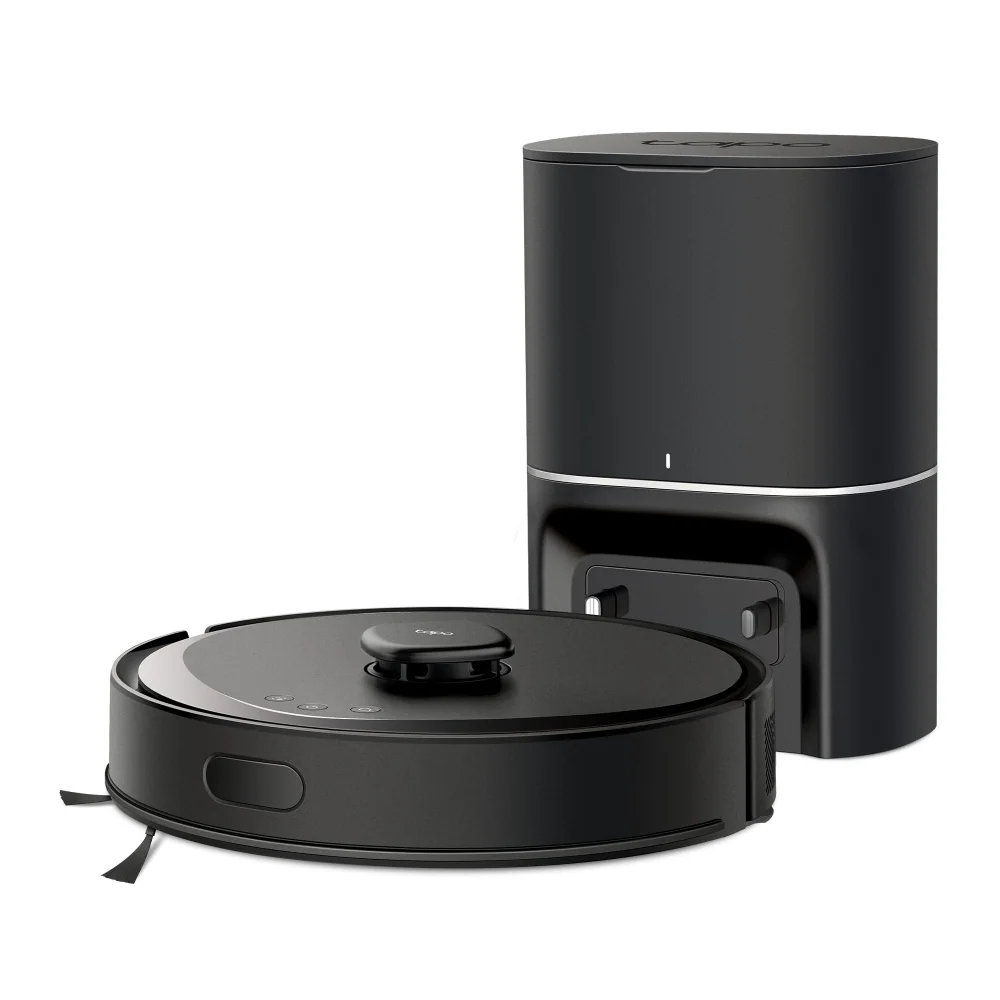
The TP-Link Tapo Tapo RV30 Max Plus is a 2-in-1 robot that vacuums and mops, plus a “Plus” package that includes a self-emptying charging dock. In plain terms: it does the daily crumb and dust patrol, then dumps what it collected into the base so you do not have to empty a tiny bin after every run.
This model uses LiDAR (a little turret on top) to map and navigate. That is the difference between a robot that cleans in deliberate rows and one that bounces around hoping it eventually covers the room. For most people, mapping is what makes a robot vacuum feel dependable instead of random.
It also supports common smart features you would expect in a modern robot vacuum: app control from your phone, scheduling, and virtual walls (so you can block off areas without putting physical barriers on the floor).
Why it stands out
The RV30 Max Plus stands out because it brings two “premium-feeling” features down into a more affordable lane: LiDAR navigation and a self-emptying dock. Those are the upgrades that most directly reduce friction. You get more consistent coverage, and you stop dealing with the dustbin all the time.
In everyday cleaning, it does best with the obvious stuff. It is particularly strong with larger debris pickup, and it can vacuum and mop thoroughly enough for routine maintenance. If your goal is to keep floors from getting gritty between deeper clean days, it fits that job well.
Where it is clearly not trying to compete with higher-end robots is refinement. Fine particle pickup and scrubbing power are not its calling cards, and the app experience is not as customizable as some pricier ecosystems. It is built to be straightforward, not fancy.
Obstacle avoidance is also not a highlight. It can slow down when it senses objects, but it can still miss hazards, especially flatter ones like socks and cords, and push right over them. That is the difference between “run it anytime” and “do a quick floor sweep first.”
What it is like to own
Day to day, the self-empty dock is the feature you will notice most. After a cleaning run, the dock pulls debris out of the robot’s onboard bin. That means you can run it more often without turning robot vacuuming into another chore you keep postponing.
The navigation style is systematic, which tends to make the robot feel more predictable in open spaces. Instead of wandering, it works through the area in a more organized pattern, which is what you want if you are counting on it to cover a lot of square footage consistently.
Noise is a two-part story. While it cleans, it runs relatively quietly. When it empties into the dock, expect a louder, more mechanical and high-pitched burst. If you run it at night or during naps, schedule the emptying for a time that will not annoy you.
Maintenance is where you pay the budget tax. Hair can tangle badly enough that clearing the brush can take real effort and may require scissors. If you have long hair in the household, plan on checking the roller regularly so it does not turn into a bigger cleanup later.
What to know before you buy
First, do not buy any robot vacuum expecting it to replace a full-size vacuum. The RV30 Max Plus is best as a maintenance cleaner. It will keep you ahead of crumbs, dust, and everyday debris, but it is not a deep carpet cleaner and it will not detail edges and corners like a person with a real vacuum can.
Second, treat obstacle avoidance as “some help,” not “problem solved.” If your floors regularly have charging cables, socks, or other small clutter, you will still want a quick pickup routine. This matters even more because flat items are the ones it is most likely to miss.
Third, the mop function is for light wiping. It can make hard floors look fresher when you run it often, but it is not built for stubborn, dried-on kitchen messes. If mopping performance is your top priority, you will want a more mop-forward robot system.
The specs that matter
LiDAR mapping is what lets the robot clean in a more organized pattern and cover rooms more consistently than basic bounce-around models.
You can keep up with both dry debris and light floor wiping in one routine, which is useful for hard floors that look dull between real mopping sessions.
Emptying the bin is the chore that makes many people stop using their robot. Auto-empty means you can run it more often with less hands-on mess.
Longer runtime helps it finish larger open areas in fewer interruptions, which matters if you want it to cover a big living space in one go.
The 3.9-inch height is the number to think about for furniture clearance. If you have very low sofas or cabinets, measure before you assume it will fit.
Scheduling is how a robot vacuum earns its keep. Virtual walls help you keep it out of trouble spots without rearranging your home.
It is easier to live with during the run, but the emptying step is loud. Plan your schedule so the dock does its loud part when it will not bother you.
Who this product fits
You want a robot vacuum you will actually run every day
The TP-Link Tapo Tapo RV30 Max Plus is built for that routine. It cleans in systematic rows and empties itself afterward, so daily runs feel realistic instead of like another task you have to manage.
You live in an apartment and do not want a huge dock
This model is a compact, value-oriented self-empty option. You get the convenience of auto-empty without committing to a giant, water-tank style base.
Your home is mostly hard floors with a couple area rugs
It is a good match for mixed floors where you want frequent pickup plus light mopping. Think crumbs in the kitchen and entryway grit, with rugs that need regular surface cleaning.
You have pets, but shedding is moderate and you can do some upkeep
It can keep up with everyday debris, but hair tangles are the reality check. If you are willing to check the brush and clear it when needed, it can still be a helpful maintenance cleaner.
What else to compare
If you like the idea but want a different balance of performance and automation, these are the upgrades to consider.
TP-Link Tapo Tapo RV30 Max Plus FAQ
Does the TP-Link Tapo Tapo RV30 Max Plus map your home?
Yes. It uses LiDAR navigation to map and clean systematically, which is why coverage tends to feel more consistent than with basic random-navigation robots.
Is the TP-Link Tapo Tapo RV30 Max Plus good for pet hair?
It is not a top choice for heavy pet hair. Hair can tangle badly enough that brush cleanup becomes a hands-on job, sometimes requiring scissors.
How loud is the TP-Link Tapo Tapo RV30 Max Plus?
While cleaning, it is relatively quiet (about 55.5 dB reported). The self-empty dock is much louder during emptying (about 76.3 dB reported), so schedule that step for a convenient time.
Does the TP-Link Tapo Tapo RV30 Max Plus avoid cords and socks?
Not reliably. It can slow down when it detects objects, but it can miss flatter hazards like socks and cords and run over them, so a quick pickup routine still helps.
Is the mop on the TP-Link Tapo Tapo RV30 Max Plus a real mop replacement?
No. The mop function is best for light, frequent wiping. It is not designed for stubborn, dried-on spills or the kind of scrubbing you get from a real mop session.
What smart features does the TP-Link Tapo Tapo RV30 Max Plus support?
It supports phone control and scheduling, plus virtual walls. It is also compatible with Siri, Amazon Alexa, and Google Home, though some Alexa controls can feel unintuitive.
Should you buy the TP-Link Tapo Tapo RV30 Max Plus?
Buy the TP-Link Tapo Tapo RV30 Max Plus if you want the most day-to-day convenience you can get without paying for a flagship robot. LiDAR mapping plus a self-empty dock is the combo that makes a robot vacuum feel like a real household system instead of a gadget you babysit.
Pass if your floors are usually cluttered, you have lots of cords, or pet hair is your main battle. In those homes, the weak obstacle avoidance and hair-tangle maintenance will get old fast. For everyone else who wants steady upkeep and fewer chores per week, this is a smart, practical buy.