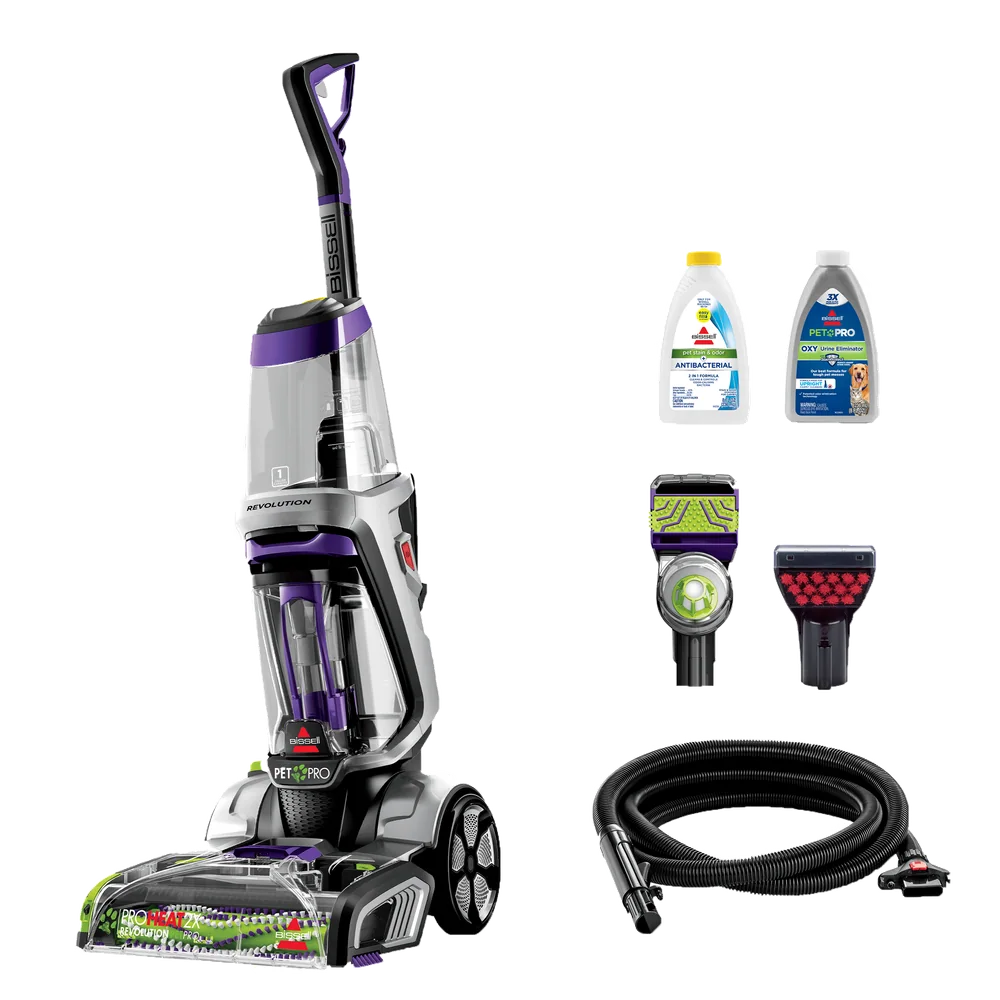
Clean pet urine, vomit, or feces from carpet with fast blotting, the right pretreatment, careful extraction, and realistic expectations about what may be in the padding.
Reading time: 8 minutesBest for: Pet owners dealing with fresh accidents or recurring odor spots on carpet, rugs, stairs, or upholstery
Act before the stain spreads
Start by removing solids with a paper towel or a dull edge, then blot liquids. Blot means press straight down with clean towels, then lift. Do not rub, because rubbing pushes contamination deeper and frays carpet fibers. Work from the outside of the spot toward the center so you do not enlarge the stain. If the mess is already drying, lightly dampen the area with cool water first so you can blot more out, but keep the water amount small.
Stand on a thick towel to apply body weight and pull moisture up. Rotate to a dry section of towel often, because a saturated towel just moves liquid around. If you have a wet dry vacuum, it can speed up the first moisture removal. Avoid heat at this stage. Warmth can set some stains and can intensify odor while you are still trying to remove the source.
Use the right pretreatment
Match the pretreatment to the mess. For urine and other protein based soils, an enzyme cleaner is usually the right starting point. Enzymes are ingredients that break down organic residues so they can be lifted out. For vomit or feces, remove as much as possible first, then use an enzyme pretreatment to address what remains in the fibers. For muddy paw prints, plain water and a small amount of carpet safe detergent can be enough once the mud is dry and vacuumed.
Apply pretreatment lightly and evenly, then give it dwell time. Dwell time is how long the product stays wet on the stain so it can work. If you rush straight to extraction, you often remove the cleaner before it has done much. Keep the area damp, not flooded. Too much liquid increases the chance it reaches the pad, and it makes drying slower, which can lead to lingering odor.
Extract without soaking
When you use a carpet cleaner, think in passes. Make a slow wet pass to apply solution and agitate, then make multiple dry passes with no spray to pull water back out. Those dry passes are where drying time is won or lost. If your machine has a hose tool, use it for small spots so you can target the area without washing a whole room. For stairs and upholstery, a hose tool is usually easier to control than pushing an upright.
Use cool to warm tap water unless your carpet care instructions say otherwise. Many machines advertise heated cleaning, but most are maintaining warmth rather than heating cold water dramatically. The bigger risk is leaving detergent behind. Use the recommended dilution, and do not add extra soap for a tougher smell. Residue attracts soil and can make the spot look dirty again faster. If you suspect residue, do a light rinse pass with plain water, then finish with extra dry passes.
Know when the problem is below the carpet
If odor returns after the surface looks clean, the contamination may be in the pad or even the subfloor. Urine can travel outward under the carpet, so the smell may seem to come from a wider area than the visible stain. A clue is a spot that reappears as a yellow or gray ring after drying. Another clue is odor that is strongest on humid days, because moisture in the air can reactivate residues below the surface.
At that point, repeated surface cleaning can make things worse by adding more water to the pad. You may need to pull back the carpet, replace a section of pad, or treat the subfloor, depending on how severe and how frequent the accidents have been. If you are in a rental, document the issue early. If the carpet is older or the backing is deteriorating, aggressive scrubbing and repeated soaking can cause delamination (the backing separating), which is not fixable with cleaning.
What this guide helps you understand
For pet accidents, the most effective routine is: remove as much moisture as possible first, use an enzyme pretreatment with enough dwell time, then extract with multiple dry passes so you do not leave the pad wet and the odor source active.
Clean white towels or paper towels for blotting, plus a plan for multiple dry extraction passes (no spray) after washing
Technique notes
If the spot is large, treat and extract in smaller sections so you can control how much water goes into the carpet.
Safety note: Do not mix cleaners, especially products that contain bleach or ammonia. Rinse the area with plain water if you are switching products.