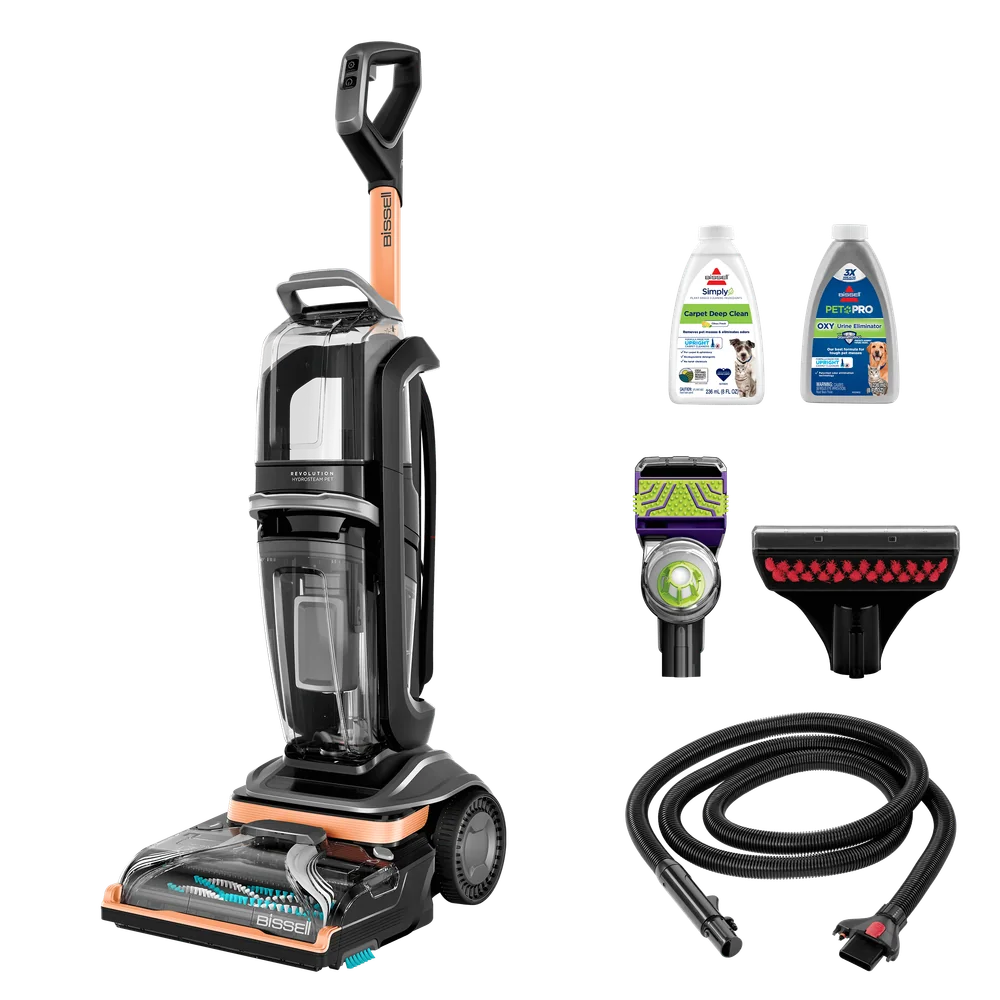
Freshly cleaned carpet should feel damp, not soaked. Whether you ran a rental machine, hired a professional, or just blotted up a spill, drying faster comes down to three things done in the right order: removing water, moving air, and keeping the room from turning humid.
Reading time: 12 minutesBest for: Anyone waiting for damp carpet to dry after machine cleaning
Pickori's Take
Carpet that was just cleaned with water is supposed to feel damp when you're done, not wet. The Carpet and Rug Institute puts normal drying at 6 to 12 hours for residential carpet that's been properly extracted, meaning the machine washed it and then vacuumed most of that water back out.
If your socks come away wet, a dry towel picks up moisture when you press it into the pile, or the floor sounds squishy underfoot, you're not in drying territory yet. You're still in extraction territory, and the fix is running the cleaner over the area again without pressing the spray trigger. Once the carpet is genuinely just damp, fans do the rest of the work by clearing the humid air sitting right above the fibers, while air conditioning or a dehumidifier lowers the moisture level of the room itself.
Those are two different jobs, and confusing them is one reason carpet can end up taking longer to dry than it should. Carpet that's still wet after 12 hours isn't a waiting problem anymore. It's worth checking into, because the padding underneath the visible fibers holds moisture too, and the EPA is fairly direct that wet materials need to dry within 24 to 48 hours to keep mold from becoming a real risk.
Where your carpet actually is right now
Before any of the drying advice below is useful, it helps to know which situation you're actually in. Maybe you rented or own a home carpet cleaner and just finished a room. Maybe a professional came through with heavier equipment. Or maybe none of that happened and you're just dealing with one spilled drink or one pet accident on an otherwise dry floor. Each of those starting points calls for a slightly different first move, even though the end goal, a fully dry carpet within a reasonable window, is the same.
It also helps to understand what's physically happening under your feet. Wall-to-wall carpet isn't one layer. The soft fibers you walk on are attached to a backing, and there's usually a separate pad underneath that. A carpet cleaner washes the top layer with water, then vacuums most of that water back into a tank built into the machine. Moisture the cleaner doesn't remove can remain in the visible fibers, the backing, or the pad underneath, and that's what takes longest to leave. The surface can feel nearly dry to your hand while those lower layers are still holding water, which is part of why judging dryness by touch alone is unreliable.
That distinction, damp versus wet, is the one idea worth holding onto through the rest of this guide. Damp carpet is ready for evaporation: fans, airflow, and humidity control. Wet carpet, the kind that leaves a mark on a towel or squishes when you step on it, needs more water physically removed before airflow will do much good. Treating wet carpet like it's only damp is a common way people end up feeling like they're doing everything right while the carpet still won't dry.
Start where you are
What to do right now, based on your situation
The cleaner is still assembledDon't spray again. Slowly run the machine over the cleaned area, without pressing the trigger, to pull out more water, then empty the dirty-water tank if it's full and start your fans.
You already put the cleaner awayIf the carpet only feels damp, leave it be and focus on airflow and humidity. Bring the machine back out only if a specific area feels distinctly wet or squishy.
A professional cleaned itFollow whatever instructions they left, keep air moving through the room, and call the company if the carpet is still wet past the drying time they quoted you.
Only one spot is wetPress a dry white towel into it. If the towel comes away wet, use a spot cleaner or wet vacuum to pull out water before you consider adding any more cleaning solution.
The distinction that matters most: Damp carpet needs evaporation. Wet carpet needs more water physically removed. If socks get wet, a towel picks up obvious moisture, or you hear a squish, start with removal, not fans.
If the machine is still out, use it to pull more water back out
Most home carpet cleaners only spray solution while you hold down a trigger on the handle. Let go of that trigger and the machine keeps vacuuming without adding anything new. Carpet cleaners call this a dry pass, which is a slightly confusing name since it doesn't dry the carpet in one go. It just uses the machine's suction to remove more of the water that's already there.
Start at one edge of the area you cleaned and pull the machine straight back slowly, without touching the spray button, then shift over by the width of the nozzle and repeat. Do the whole area at least twice. If your machine has a clear front nozzle, you'll usually see less water moving through it with each pass, which is a decent sign you're making progress. Empty the dirty-water tank once it hits its fill line, since many machines lose suction or shut off automatically when that tank is full.
Two passes is a reasonable starting point, not a fixed rule. BISSELL's general guidance is two passes that spray solution followed by two that only remove water, moving more slowly on the way back since that's when the machine recovers the most. Thick carpet, a heavily sprayed spot, or a small portable spot cleaner may need extra passes beyond that baseline. If your specific machine's manual says something different, follow that instead.
If you're still cleaning, ease off the water on what's left
It's an easy trap: more spraying feels like more cleaning. Usually it just means more water you'll have to remove later. Holding the trigger too long, going over the same lane repeatedly, or mixing a stronger solution than the label calls for can leave carpet wetter without actually making it cleaner. Too much detergent can also dry into a stiff, sticky residue that ends up attracting more dirt than it removed.
Work in sections you can fully finish. Clean one, stop spraying, recover the water with a few dry passes, then move to the next. Treat a stubborn stain as its own small job instead of soaking the whole surrounding lane trying to get it out. If you suspect too much detergent went down, check both the carpet and machine instructions before running a light plain-water rinse, and follow that rinse with several suction-only passes so you're not adding a second layer of moisture on top of the first.
Once it's damp rather than wet, help evaporation along
Evaporation happens right at the surface, where moisture leaves the carpet and enters the air above it. Left alone, that air pocket becomes humid fairly quickly and slows everything down. A fan's job is simple: replace that damp air with drier room air so evaporation keeps moving instead of stalling out.
Set a box fan or pedestal fan at the edge of the room and aim it low, across the carpet, rather than straight down at one spot. Open interior doors and closets so air has somewhere to go. A ceiling fan is fine for mixing the room generally, but a low fan does more direct work on the carpet itself. Check back after a few hours and reposition it if corners or the middle of the room still feel cooler and damper than the rest.
One thing not to do: don't cover the carpet with sheets, plastic, or towels while it's drying. It feels protective, but it blocks the airflow that's actually doing the work and can trap moisture right where you don't want it.
Windows, AC, or a dehumidifier: how to choose
The right choice is whichever one actually removes moisture from the room, not just whichever feels more comfortable. Outdoor temperature alone doesn't tell you if an open window will help; humid outside air can slow drying down even on a warm day.
Room condition
Best setup
Why
Dry, mild weather
Open windows or doors, plus fans
The room can trade damp indoor air for drier air from outside.
Hot and humid outside
Close up the house, run AC, add fans
Air conditioning actively removes moisture while fans move that drier air across the pile.
Damp basement or rainy day
Dehumidifier with windows and doors closed, plus fans
A dehumidifier steadily lowers room humidity instead of fighting new moisture coming in from outside.
Cool, dry weather
Moderate heat with HVAC circulation and fans
Gentle warmth helps, but only when something is also carrying the released moisture away.
A portable air conditioner earns its keep in a spot central air doesn't reach well, since you can wheel it into the freshly cleaned room and move it out once the carpet's dry. Just remember it still needs a hose vented outdoors through a nearby window or opening; skip that step and it won't cool or pull moisture from the air the way it's designed to. That flexibility makes it worth considering when only one room needs a drying boost, not a whole-house fix.
The EPA recommends keeping indoor relative humidity below 60 percent, and ideally between 30 and 50 percent. A cheap hygrometer will tell you more than guessing ever will. If humidity is climbing while the carpet dries, close the room up and dehumidify. If the air outside is genuinely drier, ventilation earns its keep.
Cleaned an entire room? Work backward toward the door
If you're still in the middle of cleaning, start at the point farthest from the doorway and work your way back toward your exit. After finishing one section, stop spraying and run dry passes over it before moving on to the next. Start a fan as soon as there's enough finished floor for air to move across, so that first section can begin drying while you're still working on the rest of the room. It also means you won't have to walk back across damp carpet to leave when you're done.
In a larger room, break the floor into sections you can complete fully before moving on. This makes it much easier to notice if one strip got oversprayed or is still giving up a lot of water on the dry pass, and it keeps you from leaving an entire room wetter than your fans and dehumidifier can reasonably keep up with.
Cleaned one spill or stain? Check the towel before you add more solution
A small portable spot cleaner can put more water into a patch of carpet than seems possible for its size. Press the clear hand tool firmly against the fibers so air can't leak in around the edges, then pull it slowly across the spot from several directions without pressing the spray button each time. Follow up with a dry white towel pressed firmly into the area. Blotting lifts moisture; rubbing tends to spread the stain and rough up the fibers, which is the opposite of what you want.
Aim a fan at the spot and check back in an hour. Sometimes the center starts drying while a ring reappears around it, which is a process carpet cleaners call wicking: moisture moving back up from the backing or pad can carry dissolved soil with it toward the surface. Don't immediately soak the spot again to fix that. Let it dry fully, vacuum it, and then decide whether whatever's left actually needs a second, more careful treatment.
Keep furniture and foot traffic off until it's actually dry
Wood stain, furniture dye, and rust can all transfer into damp carpet in a way that's hard to undo. Move light furniture out of the room entirely. For heavy pieces you can't move, slide plastic or foil tabs under every leg and leave them there until the carpet is fully dry, not just surface-dry.
Walking on damp pile flattens it and gives fresh soil an easy place to settle in. If crossing the room is unavoidable, use clean shoe covers and stick to one short route. Keep pets out too, for the same reason. Once the carpet is completely dry, a normal vacuum pass lifts the pile back up and clears out any loosened soil or leftover residue from the cleaning solution.
What to do when the carpet just isn't drying
What you notice
Likely issue
What to do next
Evenly damp after a few hours
Normal evaporation is still underway
Keep the fans and humidity control running, and reposition a fan toward whichever area feels slowest.
One area feels noticeably wetter than the rest
That spot got more water from the cleaner, a spill, or the machine simply extracted less there
Run the cleaner over it again without pressing the spray button. Don't add more solution.
Surface feels nearly dry, then a stain reappears
Moisture from the backing or pad is wicking dissolved soil back up to the surface
Let it dry completely before treating it again, using as little moisture as you can manage. Repeated soaking tends to make this worse, not better.
Carpet feels crunchy or sticky once dry
Cleaning solution likely dried in the fibers
Check the carpet and machine instructions before trying a light, machine-approved plain-water rinse, followed by several suction-only passes.
Still wet or starting to smell musty after 12 hours
Too much water remains in the carpet, possibly including the pad underneath
Remove more water if you can, run a dehumidifier, and call a carpet-cleaning or water-restoration professional if it doesn't improve.
This guide covers routine carpet cleaning only. A plumbing leak, flood, sewage backup, or carpet saturated down into the pad is a different and more serious problem. The EPA is clear that carpet backing and padding need to dry too, and that wet materials should be dried within 24 to 48 hours to keep mold risk down. Contaminated water and widespread saturation call for professional water-restoration help, not another pass with a household carpet cleaner.
How to actually tell it's dry
Don't trust a quick brush of your fingers across the surface. Compare the cleaned area against an untouched dry part of the room using the back of your hand, then press a clean white towel firmly into whatever spot seems slowest to dry. Check edges, corners, and any heavily treated stains last, since those tend to hold moisture longest.
Surface check: No cool, clammy feeling against your hand, and no moisture transferred onto a white towel.
Room check: No musty odor building up, and no trapped dampness hiding under furniture tabs.
Carpet-drying questions
How long should carpet actually take to dry after cleaning?
The Carpet and Rug Institute puts typical residential drying at 6 to 12 hours after a carpet cleaner washes and vacuums the fibers. Thick pile, padding, how much water was used, indoor humidity, and airflow can all push your room toward either end of that range.
Will cranking the heat dry carpet faster?
Moderate heat helps, but only as one part of the equation. Moisture still has to leave the room somehow, so pair heat with fans and either ventilation or dehumidification. Never place a portable heater directly on damp carpet or leave one running unattended.
Can I vacuum carpet while it's still damp?
Don't use an ordinary dry vacuum on damp carpet. Stick to the carpet cleaner's suction-only mode or equipment specifically rated for wet pickup, and save the normal vacuum for once the carpet is fully dry.
Does sprinkling baking soda on wet carpet speed things up?
It's not a substitute for removing water, moving air, or controlling humidity. Adding a powder to damp carpet tends to create residue that's harder to get out later. Pull the water out and manage the room conditions instead.
Sources and methodology
This guide draws on residential carpet-care standards, manufacturer instructions for wet and dry passes, and federal indoor-moisture guidance. The 6-to-12-hour target reflects an ordinary cleaning job in which a carpet cleaner washes the fibers and vacuums the dirty water back out. The EPA's 24-to-48-hour figure addresses wet materials and mold prevention broadly, not a recommended drying time for routine carpet cleaning specifically.