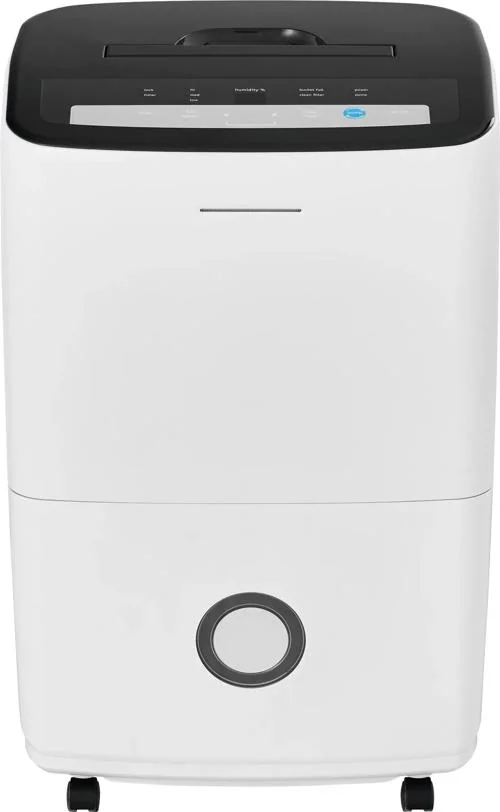
A built-in pump is worth paying for when gravity drainage is not possible and you need the dehumidifier to run unattended for long stretches.
Reading time: 9 minutesBest for: Basements and lower-level rooms where you cannot route a drain hose downhill to a floor drain, sump, or other gravity drain point.
Gravity drain versus pump: the real difference
A gravity drain setup uses a hose connection on the dehumidifier and relies on downhill slope to move water to a drain. It is simple because there is no moving part beyond the dehumidifier itself. If you can keep the hose continuously sloped downward with no dips that trap water, gravity drainage is usually the most reliable way to run unattended.
A pump dehumidifier adds a small internal pump that lifts water up and out through a narrow tube. This solves the "no downhill path" problem, but it also adds a component that can clog, stick, or fail. The tradeoff is convenience versus complexity. If you can do gravity, it is often the calmer ownership experience. If you cannot, a pump can be the difference between controlling humidity and constantly babysitting a bucket.
Pump height, routing, and where the water should go
Pump capability is about lift: how high the pump can push water from the unit up to the discharge point. In real setups, routing matters as much as lift. Long horizontal runs, tight bends, and kinks make it harder for water to move and can cause backups. You want the discharge tube to rise smoothly to the high point, then slope downward to the drain so water does not sit in the line.
Choose a discharge location that can accept small, steady flows of water without splashing or backing up. A laundry sink, a standpipe, or a sump are common targets. If you route to a sink, secure the tube so it cannot flop out. If you route outside, think about where the water will land and whether the line could freeze in cold weather. A pump helps with height, but it does not remove the need for a sensible endpoint.
Common pump failure modes and how to prevent them
Pump problems usually come from blocked flow or neglected cleaning. Dust and biofilm can build up in wet areas, and a partially clogged line makes the pump work harder. If the pump cannot move water out, the unit may shut down, overflow into the bucket area, or cycle unpredictably depending on the design. These issues tend to show up when the unit is running hardest, which is exactly when you want it to be dependable.
Preventive habits help. Keep the air filter clean so airflow stays strong and the unit does not run unnecessarily long. Periodically inspect the pump tube for kinks, algae-like buildup, or loose connections. If your unit has a pump reservoir area, follow the cleaning routine in the manual so residue does not accumulate. Also test the pump at the start of the humid season by pouring a small amount of water into the collection area if the design allows it.
When a pump is worth paying for, and when it is not
A built-in pump is worth it when you need unattended operation and you cannot create a reliable downhill drain path. That is common in basements where the only convenient drain point is a utility sink or standpipe above the floor. It is also worth it if you travel, use the space for storage, or simply do not want humidity control to depend on remembering to empty a bucket.
Skip the pump if you have a nearby floor drain, sump, or other gravity option and can route a hose with consistent slope. Gravity setups are usually quieter and simpler, and there is less to maintain. Also skip the pump if you will still end up dumping water into a bucket at a higher point. In that case you are paying for complexity without gaining true unattended drainage.
What this guide helps you understand
Decide whether you need a pump by mapping a real drain route, not by assuming "pump" is a premium feature that always helps.
Confirm you have a stable discharge point and a secure hose route before choosing a pump model, including how you will prevent kinks and keep the tube in place.
Technique notes
If you can elevate a gravity-drain dehumidifier onto a sturdy platform to create downhill slope to a drain, you may avoid the cost and maintenance of a pump.
Safety note: Secure the discharge tube so it cannot slip out of a sink or standpipe and spill water onto floors near outlets or power strips.