
Pickori

Category guide

What Makes a Dehumidifier Quiet Enough for Living Spaces?

Noise depends on the compressor, fan, vibration control, and how hard the unit has to work in your room.

Reading time: 9 minutesBest for: Shoppers who need a dehumidifier for a bedroom, living room, home office, or any space where noise is a deal breaker.
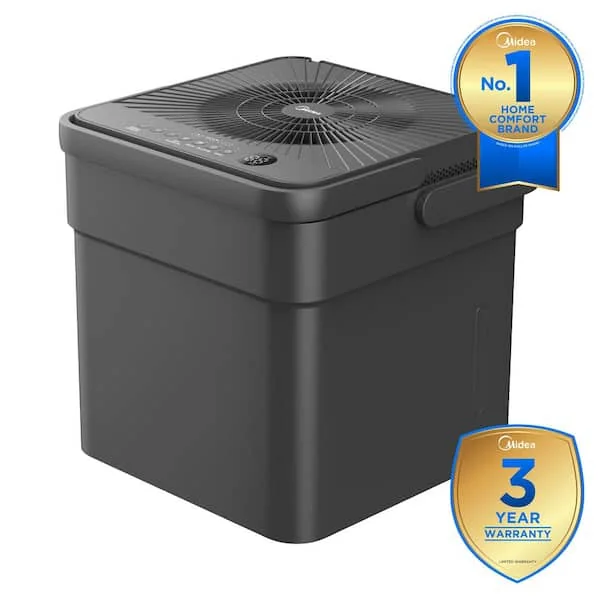
Midea 50 Pint Cube

Where dehumidifier noise comes from: compressor, fan, and airflow

Most home dehumidifiers are compressor units, and the compressor is the main source of low-frequency hum. Low-frequency sound travels through walls and floors more easily than higher-pitched noise, so a unit can feel loud even if it does not seem loud up close. The fan adds broadband airflow noise, and higher fan speeds usually mean more noticeable sound. Airflow design matters because turbulence creates extra noise. A restrictive filter, a clogged intake, or a tight placement that starves the unit for air can make the fan work harder and sound harsher. If you want quiet operation, plan for clear space around the intake and exhaust, and keep the filter clean so the unit can move air at lower effort. A dehumidifier that breathes easily is usually a quieter one.

Vibration and resonance: the hidden noise problem

Vibration is often what makes a dehumidifier seem louder at night. The compressor and fan can cause the cabinet to vibrate, and that vibration can resonate through a hollow wood floor, a thin wall, or even a piece of furniture the unit is touching. This is why the same dehumidifier can sound fine in a basement but annoying in an upstairs bedroom. Start with placement. Put the unit on a stable, level surface with a little clearance from walls and furniture. If the floor is springy, moving the unit a few feet can change the resonance dramatically. Also check that the bucket is seated correctly and that any hose is not tugging on the cabinet. Small rattles often come from loose contact points, not from the motor itself.

Capacity, duty cycle, and why the right size can be quieter

A dehumidifier's capacity is often described in pints per day, which is a standardized test rating. In your home, what matters for noise is how long and how hard the unit has to run to reach your humidity setpoint. An undersized unit may run nearly nonstop, which means you hear it all the time. A properly sized unit can often run at a steadier pace and reach the target humidity without living at its loudest operating mode. Oversizing can also backfire. If the unit removes moisture quickly and shuts off, then turns back on soon after, the repeated start-stop can be more disruptive than a steady background sound. Look for controls that allow a reasonable humidity setpoint and fan behavior that does not jump to maximum unnecessarily. Continuous drainage helps here too, because a full bucket shutoff forces extra cycles and interruptions.

Practical quieting tactics: placement, settings, and drainage choices

If you have a fan speed option, start lower and see if humidity still trends downward over a day. Lower fan speed is usually quieter, but it also moves less air, so it can take longer to dry the space. In a living space, a slower, steadier approach is often more tolerable than a loud sprint. Keep interior doors open if you are trying to dry adjacent areas, because closed doors can make the unit work harder for less benefit. Drainage affects noise in an indirect way. Bucket use can add handling noise and can lead to shutoffs that cause more frequent restarts. Gravity drainage or a built-in pump can keep the unit running smoothly through humid stretches. If you use a pump, secure the hose so it does not tap against a wall when the pump runs. Also keep the filter clean and the intake clear, because restricted airflow is one of the most common reasons a unit gets louder over time.

What this guide helps you understand

Choose and set up a dehumidifier so it can run steadily at lower effort, because steady low-effort operation is usually what sounds quiet in real rooms.

Before buying, decide where the unit will sit and confirm you can give it clearance for airflow and a drainage plan that avoids frequent bucket shutoffs.

Technique notes

If noise is borderline, try moving the unit to a different spot in the room first. Resonance and vibration transfer can change a lot with small placement shifts.

Safety note: Do not place a dehumidifier where its warm exhaust blows directly onto curtains, bedding, or papers that could block airflow and overheat the unit.

More from Dehumidifiers

← Back to Dehumidifiers