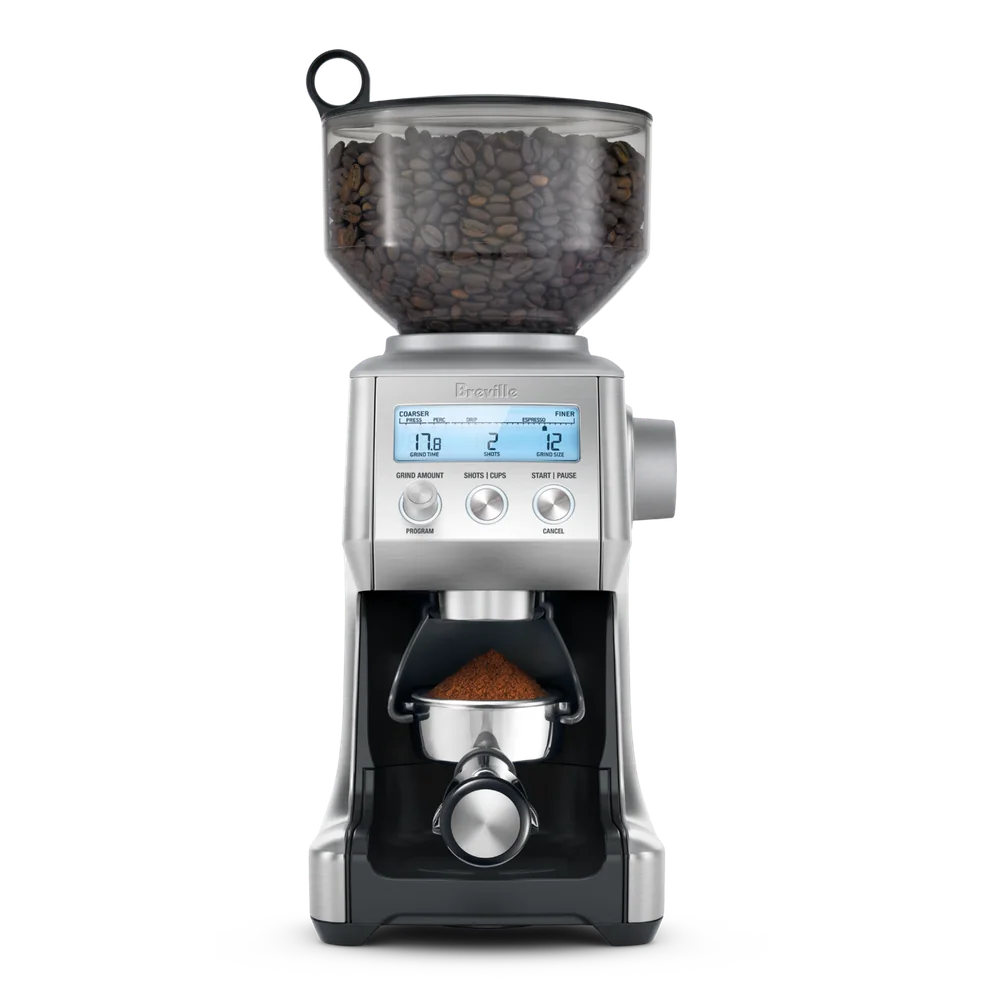
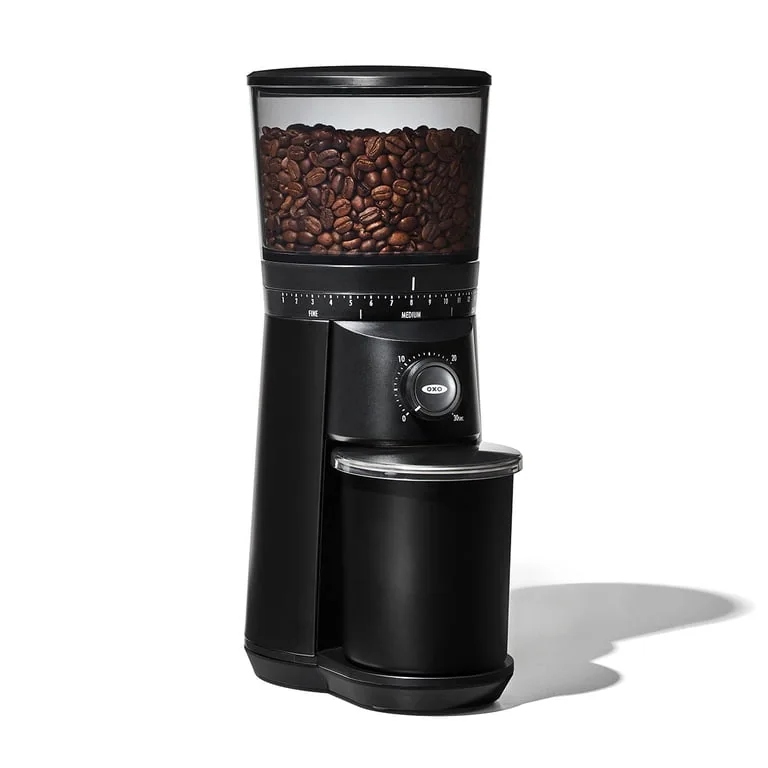
What espresso is asking from a grinder
Espresso needs a grinder that can produce very fine particles with a narrow spread, meaning not too many boulders and not too many dusty fines. If the grind is uneven, water finds weak paths through the puck. That leads to channeling, where some areas over extract and others under extract. The cup can taste both sour and bitter at the same time, and the shot can look messy and inconsistent.
Espresso also needs small adjustment steps. Many grinders can grind fine enough to make espresso, but the steps between settings are too large. That forces you to choose between -too fast- and -too slow- with nothing in between. For espresso, the useful spec is adjustment resolution (how small each change is) and how stable the setting is under use. Motor power matters far less than consistency and control.
Micro adjustments: why one click can matter
In espresso, flow rate is extremely sensitive to particle size. A slightly finer grind increases resistance in the puck, which slows the shot and usually increases extraction. A slightly coarser grind reduces resistance, speeds up the shot, and usually lowers extraction. Because the puck is compacted and the grind is so fine, that relationship is steep. One click can be the difference between a balanced shot and a sharp, sour one.
Keep dose and yield steady while you adjust grind. If you change everything at once, you will not know what fixed the problem. A practical approach is to pick a starting recipe, then use grind to land in your target time window. Once time is close, use small grind tweaks to improve taste. If you need a big taste change, consider adjusting yield next, because longer yields tend to pull more bitter compounds.
Common problems: channeling, choking, and gushers
Channeling often shows up as a shot that starts unevenly, sprays, or runs fast even though the grind is fine. The cause is usually puck prep, not just grind. Clumps, uneven distribution, or a tilted tamp create weak spots where water rushes through. Fixes include breaking up clumps, distributing grounds evenly before tamping, and tamping level with consistent pressure.
Choking is when the shot barely drips or stalls. The usual causes are grinding too fine, dosing too high for the basket, or a puck that is overly compacted. Gushers are the opposite, the shot runs too fast and tastes thin or sour. Common causes are grinding too coarse, dosing too low, or channeling from poor distribution. When you see extremes, change grind first, then confirm your dose and puck prep are consistent.
Workflow tips that reduce waste and frustration
Weigh your dose and your yield. A small scale removes guesswork and makes your notes meaningful. If your grinder retains grounds, purge a small amount before your first shot so stale grounds do not throw off time and taste. If you single dose (weigh beans per shot), keep your routine consistent: same shake, same bellows use if you use one, same pause time, because those habits can change how much coffee actually exits the grinder.
Keep your grinder clean enough that old oils and fines do not dominate flavor. Espresso grinds are fine and oily residue builds faster than with coarse brewing. A quick routine helps: brush the chute area regularly, and open the burr chamber occasionally if your grinder design allows it. Also manage static and mess with a dosing cup or funnel. Less mess means you are more likely to keep your process consistent, which is the real shortcut to better espresso.