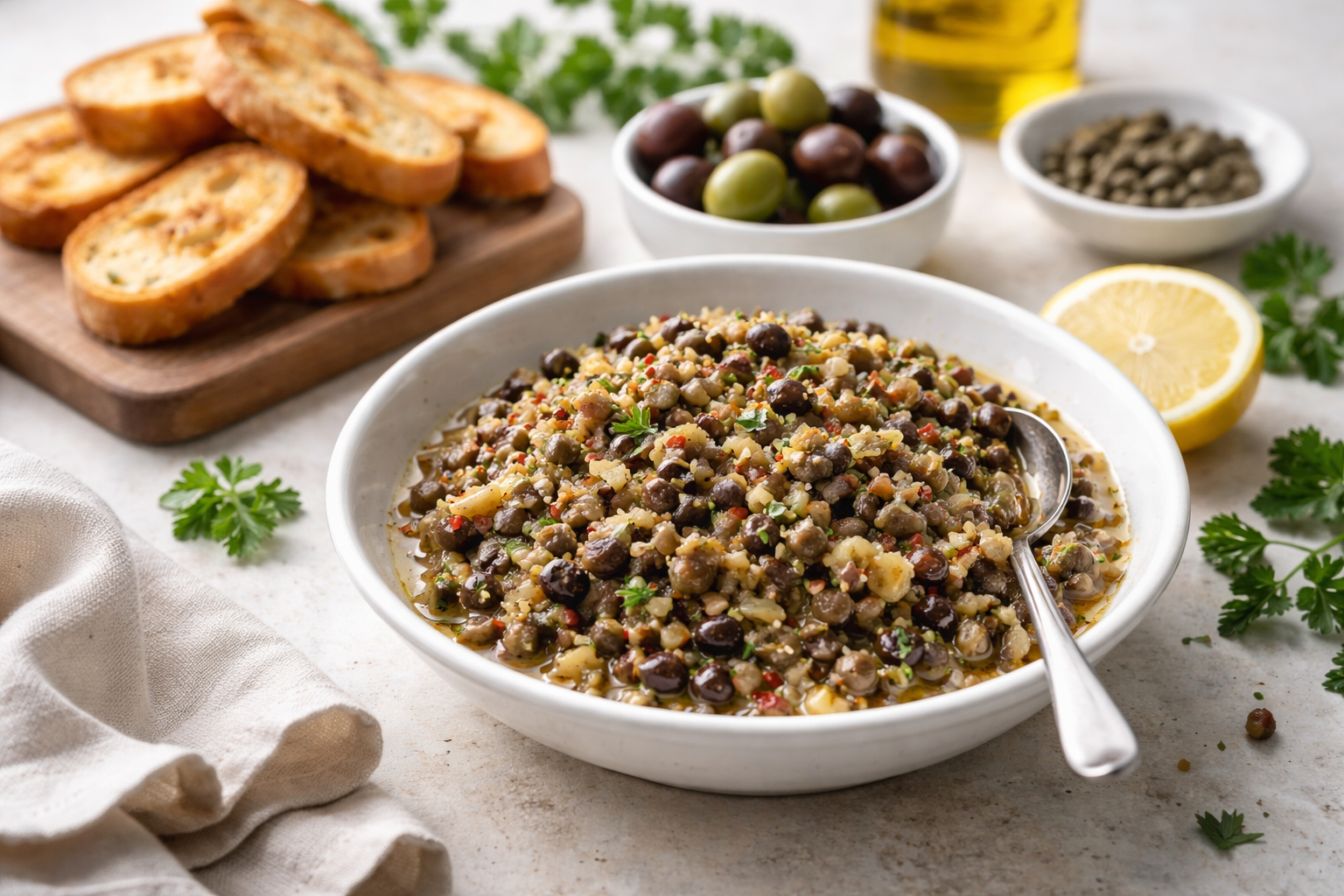
What tapenade should taste and feel like (chunky, salty, bright)
Good tapenade is not olive hummus. It should have small, distinct bits of olive and caper, with a glossy finish from olive oil. That texture matters because it spreads cleanly and still gives you little pops of briny flavor.
Flavor-wise, it should read salty and savory first, then bright from lemon. If it tastes flat, it usually needs acid (lemon) or a little bitterness and fruitiness from better olive oil, not more salt.
Ingredients and variations (green vs black olives, anchovy optional, lemon)
Using both black and green olives gives you a more interesting balance. Black olives tend to be rounder and milder, green olives are sharper and more tangy. You can use all of one type, but the flavor will be more one-note.
Anchovy is optional but classic. It adds savory depth without making the tapenade taste fishy when used in small amounts. Lemon zest boosts aroma, while lemon juice lifts the saltiness so the spread tastes brighter instead of just briny.
Step-by-step: drain, pulse, scrape, and finish with oil
Draining is not busywork. Extra brine dilutes flavor and makes the mixture slippery, which encourages over-processing as you try to "fix" it. Starting drier lets you stop pulsing earlier, which preserves the chunky texture.
Pulsing gives you control. Each pulse chops a little more, and scraping down once prevents big pieces from hiding on the sides. Adding oil at the end is how you choose the final texture, from spoonable relish to smoother spread.
Serving ideas and storage (sandwiches, crostini, pasta, fridge life)
Serve tapenade on crostini, crackers, or alongside cheese and sliced vegetables. It is also great in sandwiches, especially with turkey, roast vegetables, or mozzarella, because the salt and acid cut through richer fillings.
For pasta, toss a few spoonfuls with hot noodles and a splash of pasta water, then finish with more olive oil. Store covered in the refrigerator. For best flavor and texture, use within 4 to 5 days, and keep the surface lightly covered with olive oil to reduce drying.
What this guide helps you understand
This recipe teaches control through pulsing and moisture management. In a food processor, continuous running quickly turns chopped foods into a paste, especially when ingredients are wet. Draining well, pulsing in short bursts, and adding oil only after you like the chop size gives you a spread that tastes fresher and feels intentional instead of over-processed.
Food processor with the metal blade
Fine mesh strainer or colander for draining
Rubber spatula for scraping down the bowl