Pickori

Recipe

Silky Roasted Red Pepper Soup

A smooth, restaurant-style red pepper soup made in a food processor by pureeing in safe batches, then simmering to finish.

Prep time: 20 minutesTotal time: 45 minutesYield: About 6 cups (4 to 6 servings)Difficulty: Easy
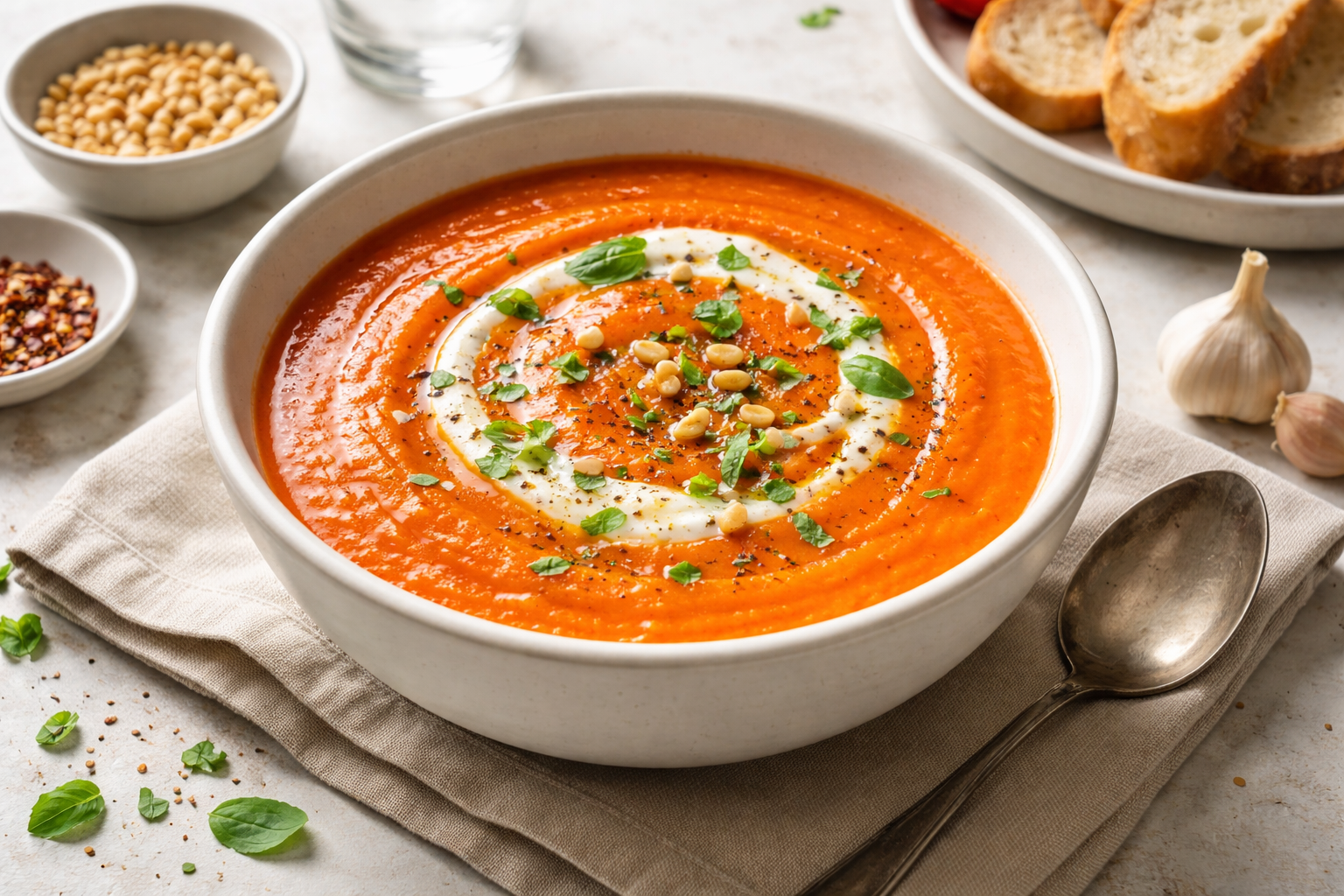
Silky Roasted Red Pepper Soup prepared and ready to serve

What you need

  • 2 tablespoons olive oil, plus more for serving (optional)
  • 1 medium yellow onion, chopped (about 1 1/2 cups)
  • 3 cloves garlic, minced
  • 2 tablespoons tomato paste
  • 1 teaspoon smoked paprika
  • 1/2 teaspoon kosher salt, plus more to taste
  • 1/4 teaspoon black pepper
  • 1 (16 ounce) jar roasted red peppers, drained (or 4 large roasted red peppers, peeled and seeded)
  • 3 cups low-sodium vegetable broth or chicken broth, plus more as needed
  • 1 cup torn day-old bread (about 1 ounce), crusts optional (or 1/3 cup raw cashews)
  • 1 tablespoon red wine vinegar or sherry vinegar, plus more to taste
  • Optional toppings: plain yogurt or sour cream, chopped basil or parsley, croutons, toasted pepitas

Method

  1. Build the base. In a medium pot over medium heat, warm 2 tablespoons olive oil. Add the onion and cook, stirring occasionally, until soft and translucent, 6 to 8 minutes.
  2. Add aromatics and deepen flavor. Stir in the garlic and cook 30 seconds. Add the tomato paste, smoked paprika, salt, and pepper. Cook, stirring, until the tomato paste darkens slightly and sticks to the pot in spots, 1 to 2 minutes.
  3. Add peppers and broth. Add the roasted red peppers and 2 1/2 cups of the broth. Bring to a gentle simmer for 5 minutes to blend flavors and soften everything for a smoother puree.
  4. Cool slightly before processing. Turn off the heat and let the soup base stand 10 minutes. This reduces steam pressure and helps prevent leaks or splatters when processing.
  5. Puree in safe batches. Spoon the mixture into the food processor bowl, filling it no more than halfway. Add some of the bread (or cashews) to each batch. Process until very smooth, 45 to 90 seconds, stopping to scrape down the bowl as needed. If the mixture stalls or looks chunky, add a splash of broth to help it circulate.
  6. Finish and adjust. Return the puree to the pot. Add the remaining 1/2 cup broth as needed to reach your preferred thickness. Simmer gently for 5 minutes, stirring often so it does not scorch.
  7. Balance the flavor. Stir in the vinegar. Taste and adjust with more salt, pepper, or a little more vinegar for brightness. Serve warm with toppings and a drizzle of olive oil if you like.

What the food processor does here (and what it cannot do)

A food processor can puree cooked peppers and onions into a smooth soup because the wide bowl lets the blades pull thick mixtures down and around. It also handles add-ins like bread or nuts well, which can bog down some blenders if the mixture is too thick.

What it cannot do well is safely process a large volume of hot liquid at once. Hot soup releases steam, steam expands, and that pressure can force liquid out through the lid or center opening. The fix is simple: cool the base briefly, work in smaller batches, and never fill the bowl high with hot liquid.

Ingredients and smart swaps (jarred vs roasted peppers, broth, cream-free options)

Jarred roasted red peppers are consistent and fast. If you roast your own, peel and seed them well because skins and seeds are common causes of grainy texture. Either way, draining excess liquid helps you control thickness with broth instead of ending up with a watery soup.

For body without cream, bread makes the soup velvety and mild, while cashews add richness and a slightly fuller mouthfeel. Use vegetable broth for a lighter, sweeter pepper flavor, or chicken broth for a rounder, savory base. If you want it dairy-finished, a spoon of yogurt or sour cream at serving gives creaminess without changing the whole pot.

Step-by-step: build the base, puree in safe batches, then simmer to finish

Cooking the tomato paste briefly is a small step with a big payoff. It removes raw tomato flavor and adds depth, which keeps the soup from tasting like straight blended peppers. Simmering the base before pureeing also softens everything so the processor can get it smoother with less time.

Puree in batches that are comfortably below the top of the bowl. If the mixture just spins and does not move, it is too thick for the blades to circulate, so add broth a tablespoon or two at a time. After pureeing, a short simmer helps the soup thicken slightly and lets you fine-tune salt and acidity without overcooking the pepper flavor.

Texture fixes and storage (too thin, too thick, grainy puree, freezing)

If the soup is too thin, simmer it uncovered for 5 to 10 minutes, stirring often, or process in a little more bread or a small handful of cashews. If it is too thick, thin with warm broth a splash at a time until it pours easily from a ladle.

If the puree is grainy, the usual causes are pepper skins, under-processing, or not enough liquid for circulation. Process longer in smaller batches and add a bit more broth to help the blades pull everything through. The soup freezes well for about 2 months. Thaw in the fridge, reheat gently, and whisk in a splash of broth if it tightens up.

What this guide helps you understand

This recipe teaches that chilling and dilution matter even for soup: letting the base cool briefly reduces steam pressure in the processor, and adding broth in small amounts improves circulation so the puree turns silky instead of gritty. If you serve it chilled (like a pepper gazpacho style), the soup will taste thicker and less salty, so you may need a touch more vinegar and salt after it cools.

A food processor with a tight-fitting lid and a bowl large enough to puree in half-bowl batches (do not fill to the top with hot liquid).

Technique notes

For the smoothest result, process each batch longer than you think you need, then scrape the bowl and process again. Most "grainy" soups are simply under-processed or too thick to circulate.

Safety note: Cool the soup base for about 10 minutes before processing, and never fill the food processor bowl more than halfway with hot liquid to reduce the risk of leaks and splatters.

More food processor recipes

← Back to Food Processors