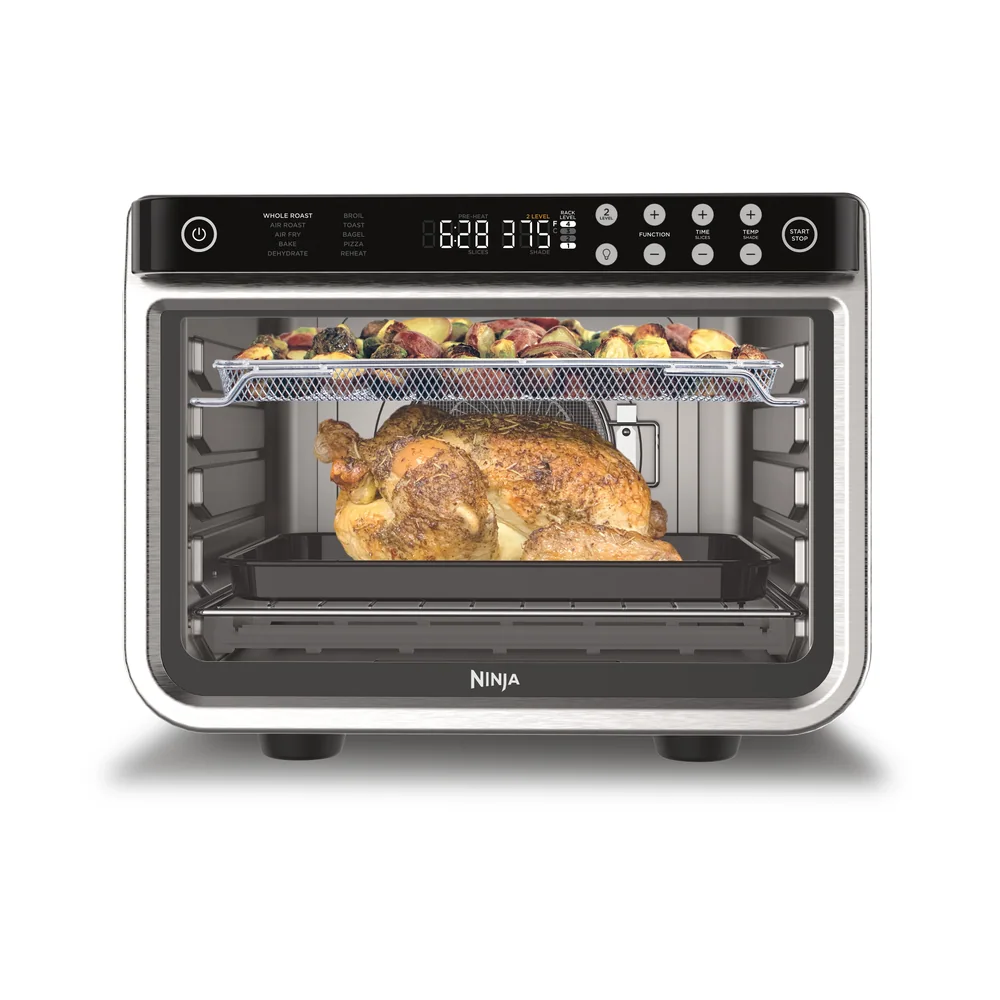
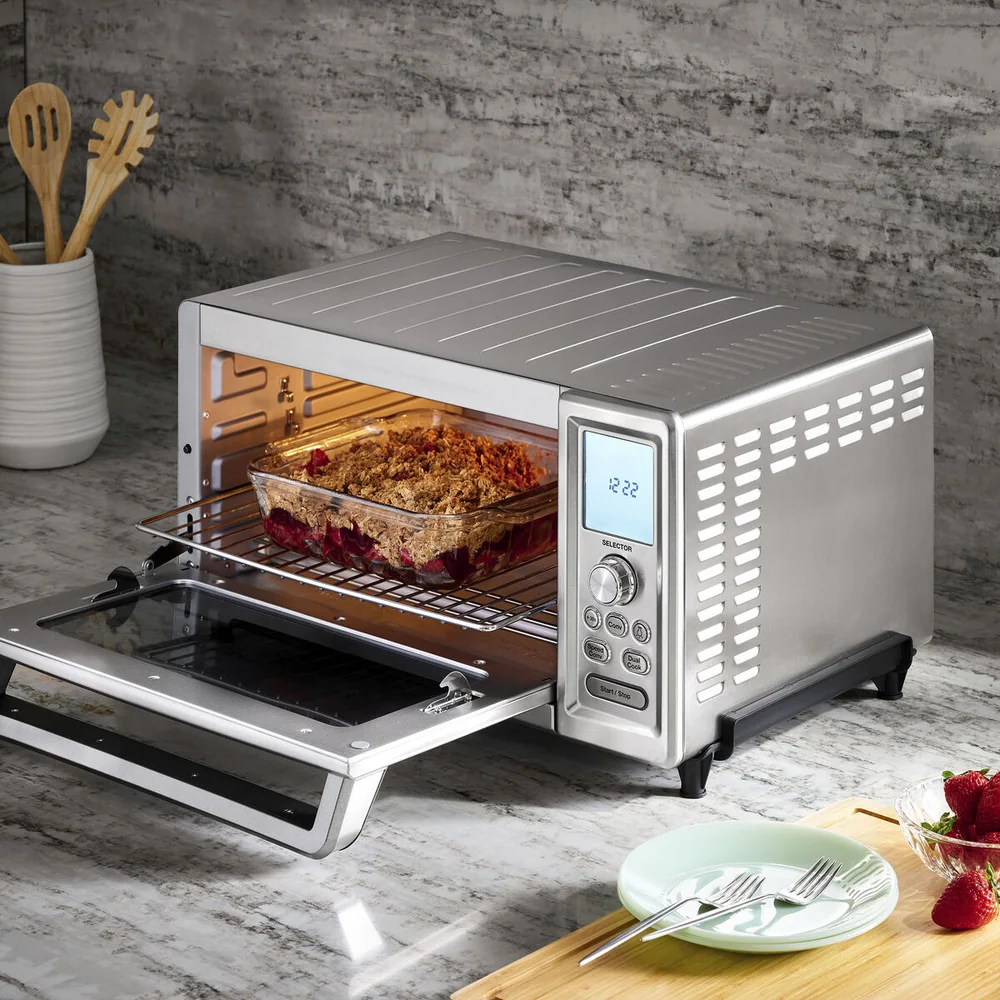
Measure the full operating footprint
Record the available counter width, depth, and height, then include the manufacturer's required clearances. Measure the door fully open and make sure it cannot strike an edge or block a busy walkway.
Plan for a nearby grounded outlet without an extension cord, and keep the appliance away from water, curtains, paper, and other combustible material.
Measure the food and cookware
Check the exterior dimensions of your favorite quarter-sheet pan, casserole, pizza, or baking dish. Compare those measurements with the manufacturer's approved interior capacity and accessory dimensions.
Do not assume that an advertised six-slice capacity means six slices of every bread shape. Rack rails, heating elements, handles, and curved walls reduce usable space.
Choose capacity by repeat use
A compact oven can be quicker to heat and easier to store for toast, reheating, and small portions. A larger oven earns its footprint when it regularly replaces the full-size oven for family meals, pizza, roasting, or batch air frying.
Avoid buying for a once-a-year pan if it makes every daily task harder. Rare oversized jobs can stay in the main oven.
Check access and handling
Look at rack stops, tray handles, control visibility, interior light, door height, and how far a hot pan must travel to the counter. A wide opening matters when cookware nearly fills the chamber.
Use only cookware that fits without touching heating elements or blocking required airflow, and follow the exact manual for maximum size and placement.