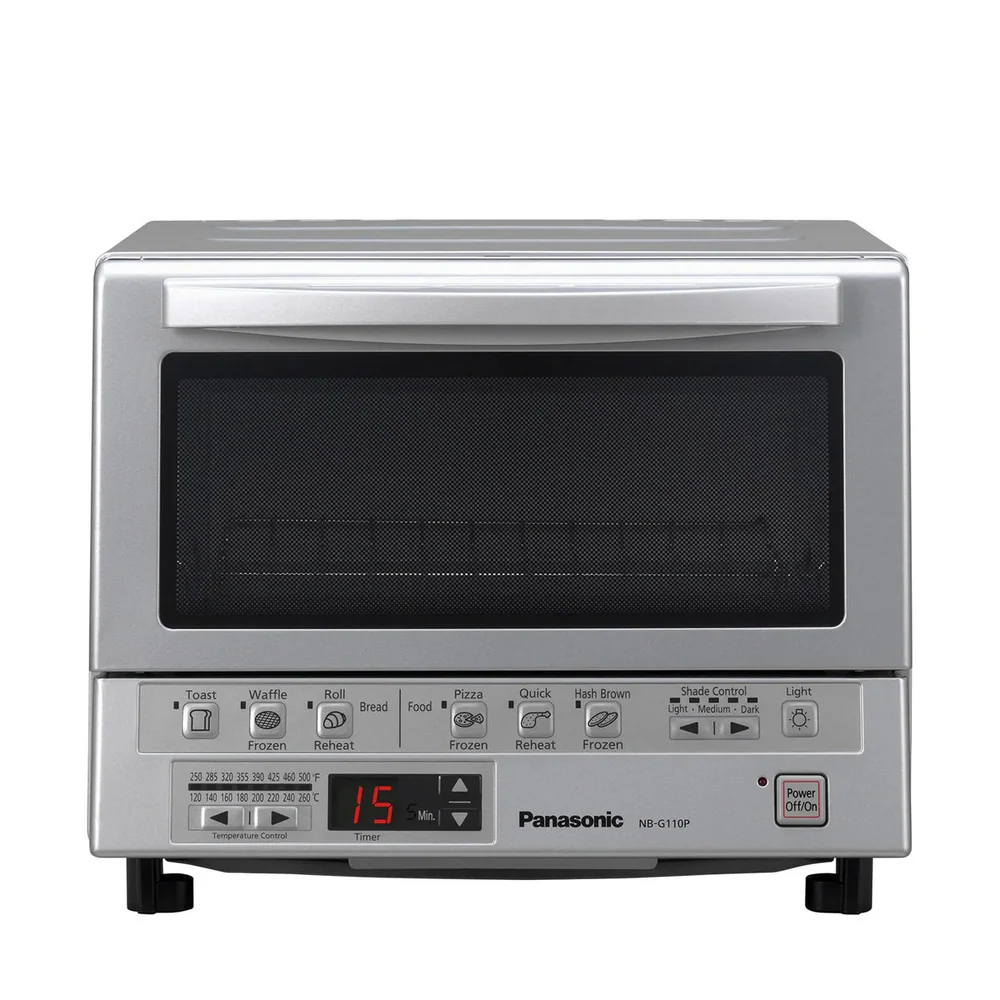
Toast and bagel manage radiant heat
Toast modes often control the top and bottom elements by shade and slice count rather than by a conventional baking time. Bagel modes may bias heat toward the cut side when the rack and food face the specified direction.
Start with the recommended rack position and slice count. Bread moisture, thickness, sugar, and starting temperature all change browning.
Bake, roast, and convection overlap
Bake aims for steady surrounding heat, while roast may use stronger element cycling or fan behavior. Convection moves air to promote more even heat transfer and browning.
When converting a conventional recipe, follow the oven's manual or conversion feature and check earlier. Small chambers react quickly when the door opens.
Air fry and broil are intense
Air fry generally combines a fan with a perforated basket or mesh rack. Broil emphasizes top heat for browning, melting, and thin foods.
Watch both modes closely. Grease, crumbs, parchment edges, cheese, and sugary glazes can scorch when placed too close to an element.
Specialty modes need model-specific instructions
Proof, dehydrate, slow cook, keep warm, reheat, and pizza modes may use different temperature limits, fan cycles, cookware, and time ranges.
Treat the preset as a starting configuration, not proof that every food or vessel is approved. Use the current manual for the exact oven.