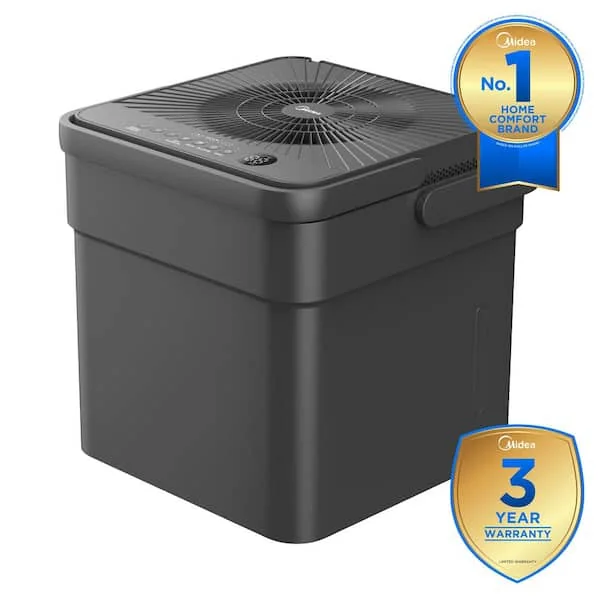
For laundry rooms, prioritize drainage, lint management, and noise, then size for how often you dry clothes indoors and how warm the room gets.
Reading time: 9 minutesBest for: People with humid laundry rooms, indoor drying racks, or poor ventilation who want less dampness and faster dry-down.
A specific section heading
Think about what is creating humidity in your laundry room. If you have a vented dryer, a crushed or leaking vent hose can dump warm, wet air into the room. Fixing that can reduce humidity more than any dehumidifier upgrade. If you air-dry clothes on racks, you are intentionally releasing a lot of water into the room over several hours. In that case, a dehumidifier can make a noticeable difference, especially in winter when windows stay closed.
Room temperature affects performance. Compressor dehumidifiers generally remove more water in warmer rooms, which often describes laundry areas. If your laundry room is in a cool basement corner, output can drop and defrost cycles can increase. The practical approach is to match the unit to your routine: a smaller unit may be fine for occasional loads, while frequent indoor drying or a constantly damp room calls for more capacity and a better drainage plan.
A specific section heading
Laundry rooms are a great place for continuous drainage because you often have a nearby sink, standpipe, or floor drain. A gravity drain is simplest: attach a hose and keep it sloped downhill the whole way. If the only drain point is higher than the dehumidifier, you will need a built-in pump model so it can push water upward. This matters because a bucket fills quickly in a humid laundry room, and forgetting it can lead to shutoffs or spills.
Plan the hose route like you would plan a vacuum cord. Keep it away from foot traffic, washer vibration, and sharp bends that can kink. If you drain into a sink, secure the hose so it cannot flop out and spray water. If you drain into a standpipe, make sure the hose end is stable and not sealed airtight. A simple, secure drain setup is what turns a dehumidifier from a chore into an appliance you can rely on.
A specific section heading
Lint is the laundry room's hidden enemy. Dehumidifiers pull room air through a filter and across internal coils. In a laundry space, that air often contains lint, dust, and dryer sheet residue. If the filter loads up, airflow drops, water removal drops, and the unit may run longer and louder. Over time, buildup can also make cleaning harder and can contribute to musty odors inside the machine.
Choose a unit with an easy-to-access filter and make filter cleaning part of your laundry routine. If you can rinse and dry the filter quickly, you are more likely to keep up with it. Also consider where the air is dirtiest. Placing the dehumidifier right next to the dryer exhaust area or directly under hanging clothes can increase lint intake. A little distance and clear airflow space can reduce maintenance and keep performance steadier.
A specific section heading
Noise matters more in a laundry room than people expect, especially if the room is near bedrooms or a home office. Dehumidifiers use a fan and, in compressor models, a compressor that cycles on and off. A louder unit may still remove moisture well, but you might avoid running it when you actually need it. Pay attention to how you plan to use it: short bursts during laundry hours can tolerate more noise than an all-day humidity hold setting.
Also watch for marketing that focuses on huge square-foot coverage. Laundry rooms are often small, but the moisture load can be high during and after washing. Capacity in pints per day is a better comparison tool, but remember it is measured under warm, very humid conditions. In real use, you want enough capacity to pull the room back down after a drying session without running nonstop. If the unit has adjustable fan speeds, a lower speed can be a practical compromise between noise and moisture control.
What this guide helps you understand
Pick a laundry room dehumidifier that you can drain continuously, keep clean in a lint-heavy space, and tolerate running when laundry is actually happening.
Verify you have a realistic drain destination (sink, standpipe, or floor drain) and confirm whether you need a pump to reach it.
Technique notes
If humidity spikes mainly during indoor drying, run the dehumidifier early and keep the door open to the rest of the home only if that area can handle the added moisture.
Safety note: Keep the unit away from splashing water and do not route a drain hose where it can be pinched by the washer or become a trip hazard.