
Pickori

Category guide

Using a Dehumidifier in a Cold Basement

Cold basements change how dehumidifiers behave, so temperature ratings, defrost cycles, and unit type matter as much as capacity.

Reading time: 9 minutesBest for: Anyone trying to control humidity in a basement that stays cool for much of the year.
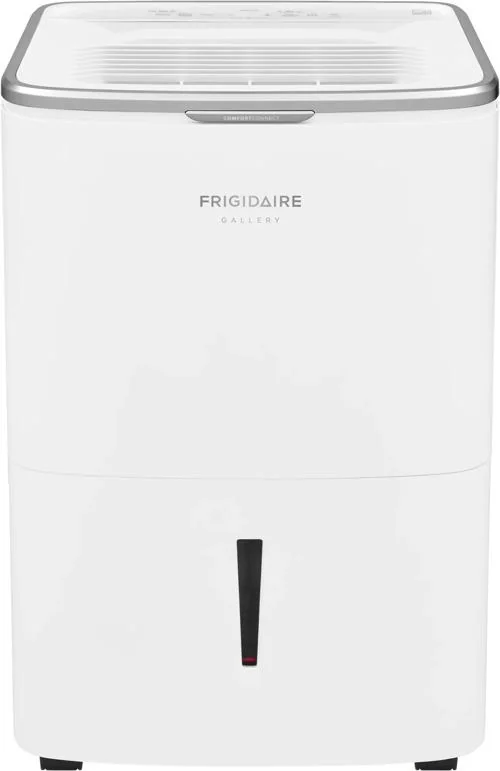
Frigidaire FGAC5044W1

Why compressor dehumidifiers struggle in cold air

A compressor dehumidifier works like a small refrigerator. Air passes over a cold evaporator coil, moisture condenses into water, then the air is reheated slightly before returning to the room. In warm, humid conditions this is efficient. In colder air, the coil can drop below freezing and moisture turns to frost instead of liquid water, blocking airflow and reducing water removal. When frost builds, the unit enters a defrost cycle. Defrost is a control routine where the machine stops dehumidifying for a period so the coil can warm up and melt ice. During defrost, humidity removal slows or stops, and the unit may sound different as the fan changes speed or the compressor pauses. In a cold basement, frequent defrost cycles can make the unit feel like it is running a lot without filling the bucket.

Temperature ratings and what they really mean

Most dehumidifiers list an operating temperature range. Treat the low end as a realistic planning number, not a suggestion. If your basement regularly drops near that minimum, expect reduced water removal and more defrost time. If the basement drops below the minimum, the unit may shut off, run poorly, or ice up repeatedly. A good way to choose is to measure basement temperature where the dehumidifier will sit, not at the top of the stairs. Basements can have cold corners and warmer mechanical areas. If you only need dehumidification in summer, temperature may not be a problem. If you need it in spring and fall, or the basement is unheated, temperature becomes the main sizing factor. In those cases, a unit with better low-temperature behavior can outperform a larger unit that spends half its time defrosting.

Defrost behavior, duty cycle, and what to watch for

Duty cycle is how much of the time the dehumidifier actually runs to remove moisture. In cold basements, duty cycle is often limited by defrost. You can spot trouble if the unit runs constantly but the bucket stays nearly empty, or if you see ice forming behind the intake grille. Some frosting is normal in marginal conditions, but heavy ice means the unit is not operating in its comfort zone. Placement affects frosting. Give the unit space around the intake and exhaust so it can move air and sense room conditions accurately. Do not push it tight against a cold foundation wall where the air is colder and damper. Keep doors and storage from blocking airflow. If the basement has multiple rooms, you may need to open doors or use a fan to move air, because a dehumidifier can only remove moisture from air that reaches it.

When to consider a desiccant or whole-home approach

A desiccant dehumidifier uses a moisture-absorbing material instead of a cold coil. That design can work better in cooler spaces because it does not rely on refrigeration to condense water. The tradeoff is that desiccant units are often used for smaller areas or specialty needs, and they can use energy differently than compressor units. They also tend to put out warmer, drier air, which can feel more comfortable in a chilly basement. If the whole basement stays damp across seasons, or humidity problems extend to the first floor, a whole-home dehumidifier may be the better tool. Whole-home units are ducted, meaning they connect to HVAC ductwork or dedicated ducts to move air across larger areas. This is a planning and installation decision, not just a capacity decision. It can solve distribution problems that portable units cannot, but it requires a clear plan for drainage and service access.

What this guide helps you understand

Match the dehumidifier type and temperature capability to your basement's actual temperature so it spends more time removing water and less time defrosting.

Measure basement temperature for a week in the spot you plan to place the unit, then choose a dehumidifier with an operating range that comfortably covers that low temperature.

Technique notes

If you see frequent frosting, improve airflow and move the unit away from cold walls before assuming you need a bigger pint-per-day rating.

Safety note: Keep the unit away from standing water and make sure the drain hose cannot siphon or spill onto outlets or power strips.

More from Dehumidifiers

← Back to Dehumidifiers