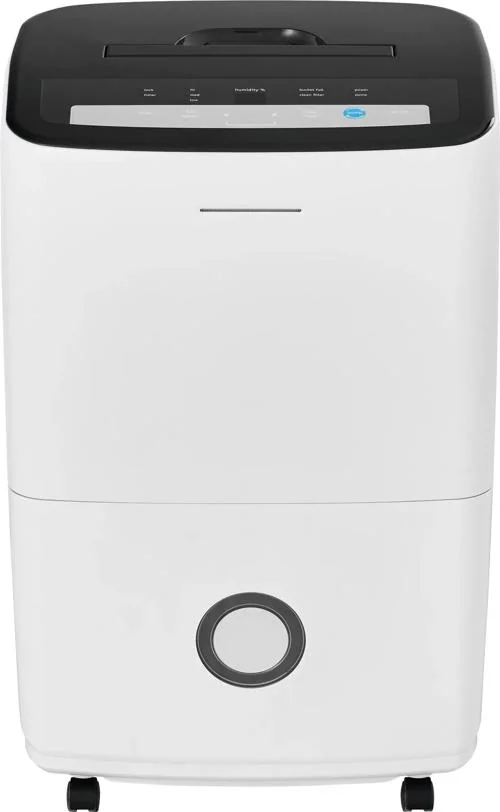
A simple routine helps you control basement dampness by matching dehumidifier capacity, placement, and drainage to what your space actually does.
Reading time: 8 minutesBest for: Homeowners and renters trying to keep a basement comfortable and musty odors down without babysitting a bucket
Measure the basement first
Use a hygrometer (a small meter that reads relative humidity, often shown as RH%) to learn what your basement is doing. Take readings in at least two spots: one near the center of the basement and one near the dampest corner or the laundry area. Check at different times, especially after rain, after running the dryer, and during a hot humid day. This tells you whether you have a steady humidity problem or spikes tied to specific activities.
Relative humidity is the percentage of moisture the air is holding compared to the maximum it could hold at that temperature. Cooler air holds less moisture, so RH can look high in a cool basement even when the air does not feel "wet." That matters because compressor dehumidifiers remove water by condensing it on a cold coil. In a cool basement, the coil can frost and the unit may spend time defrosting instead of dehumidifying. Your measurements help you set realistic expectations and choose settings that actually run.
Deal with liquid water
If you see puddles, active drips, or water seeping through a wall or floor joint, treat that as a liquid water problem first. A portable dehumidifier is not a repair tool for leaks, groundwater intrusion, or a failed gutter or downspout setup. If you run a dehumidifier against an active leak, it can fill the bucket constantly, run nonstop, and still leave the space damp because new water keeps arriving faster than the air can be dried.
Even without visible leaks, basements can stay humid because moisture is being added faster than it can be removed. Common sources include an unvented dryer, a loose dryer duct, a basement bathroom fan that does not exhaust outdoors, or unsealed gaps around pipes and rim joists that pull in humid outdoor air. Fixing those sources reduces the moisture load, which means the dehumidifier cycles normally, uses less electricity, and is less likely to freeze up in cooler weather.
Set up the dehumidifier
Place the unit where it can move air freely and where drainage is practical. Most units need open space around the intake and exhaust so they can circulate basement air instead of short cycling the same pocket of air. If you plan to use a hose for continuous drainage, confirm you can maintain a steady downhill slope to a floor drain or sump, or choose a unit with a built in pump if you need to send water up to a sink.
Set a target humidity that matches how you use the basement. Lower settings make the unit run longer and can increase the chance of frosting in cool basements. Higher settings reduce runtime but may not prevent musty smells or condensation on cold pipes. If your unit has a fan speed option, higher fan speed usually moves air better and can help the unit sense room humidity more accurately, but it can also be louder. Start with a moderate target, then adjust based on what your measurements show.
Check the result over a week
After setup, give it a full week of normal living to see the pattern. Track RH readings and note how often the unit runs, how much water it collects, and whether it ever shuts off due to a full bucket. If you are using a hose, check for drips at the connection and confirm the drain point can handle steady flow. A small leak at the hose fitting can quietly add moisture right back into the basement.
Use what you learn to adjust seasonally. In many climates, basements need more dehumidification in summer when outdoor air is humid, and less in winter when indoor air is drier. If the basement gets cooler in shoulder seasons, watch for frequent defrost cycles, which can look like the unit is "running but not collecting." That is often a sign to raise the humidity setpoint slightly, improve airflow, or consider a design that performs better in cooler spaces.
What this guide helps you understand
A basement humidity routine works when you measure first, reduce moisture sources, then set up drainage and airflow so the dehumidifier can run unattended and you can fine tune the setpoint based on real RH readings.
Have a way to measure RH% in the basement and record readings from at least two locations for several days
Choose a drainage plan (bucket, gravity hose, or pump) that matches how often you can check the unit
Leave enough clearance around the unit so intake and exhaust airflow are not blocked
Technique notes
If musty odor persists even when RH is controlled, look for stored cardboard, damp fabrics, or hidden condensation on cold pipes and ducts
A "square feet covered" claim is less useful than how wet the space is, how cool it is, and whether the unit can drain continuously
Safety note: Keep the dehumidifier plugged into a properly grounded outlet and route hoses so they do not create a trip hazard near stairs or walkways.