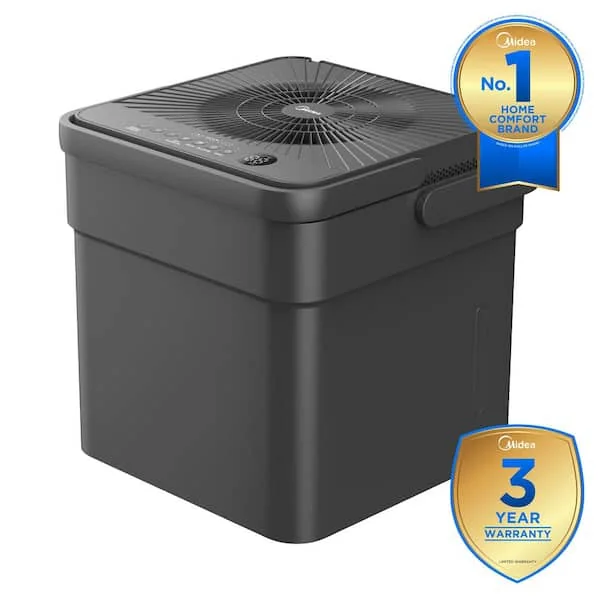
Good placement helps a dehumidifier pull damp air from the whole space instead of repeatedly drying the same corner.
Reading time: 8 minutesBest for: Anyone trying to reduce basement dampness, condensation, or musty smells by improving dehumidifier performance
Give the intake room
Start with clearance. The intake is where the unit pulls in humid air, and the exhaust is where it blows out drier air. If either side is blocked, airflow drops and the unit removes less moisture per hour. Keep the unit away from walls, shelves, and hanging fabrics that can act like a curtain. Avoid placing it behind a couch, under stairs packed with storage, or in a closet with the door closed unless the unit is specifically designed for that kind of installation.
Think about what the unit is "seeing." Many dehumidifiers sense humidity near the intake. If the intake is pressed into a cold corner or right next to a damp wall, the unit may run longer than necessary or cycle oddly. If it is placed near a warm appliance, it may shut off too soon. A spot with open air around it helps the sensor reflect the room, not a microclimate created by a wall, a pile of boxes, or a heat source.
Think about air between rooms
Basements often have separate zones: a finished room, a storage area, a laundry corner, and a utility room. Humidity does not move well through closed doors and tight hallways. If you want one dehumidifier to help multiple areas, place it where air can circulate, such as near the center of the basement or near the main open pathway. Leaving interior doors open can make a noticeable difference because it lets the unit pull damp air from farther away.
If one room is consistently damper, treat it like its own problem. A dehumidifier placed far away may keep the main area comfortable while the damp room stays musty. In that case, move the unit closer to the trouble spot or improve airflow with door position and unobstructed pathways. The goal is not just a good reading at the unit. It is fewer condensation spots on pipes, fewer damp smells in corners, and more consistent RH across the basement.
Keep drainage practical
If you are using a bucket, place the unit where you can reach it without moving stored items. A bucket that is annoying to access tends to get ignored, and a full bucket means the dehumidifier shuts off. If you plan to use a hose, place the unit where the hose can run to the drain without creating a trip hazard or losing slope. A perfect airflow spot is not worth it if the hose has to snake across the floor where it will be stepped on.
For gravity drainage, the unit usually needs to be close to a floor drain or sump to keep the hose short and consistently downhill. For pump drainage, you have more freedom, but you still need a safe route for the discharge tube to a sink or standpipe. Avoid routing the tube where it can be pinched behind a door or crushed under storage bins. Drainage problems often look like "the dehumidifier stopped working," when the real issue is water that cannot leave the unit.
Protect the machine
Basements can be dusty, and dust matters because it clogs filters and coats coils, which reduces airflow and water removal. Avoid placing the unit right next to a workshop area, a litter box, or a spot where dryer lint is common. Also avoid the dampest possible location if it is right against a wall that sweats or a corner that gets splashed. The unit is designed to remove moisture from air, not to sit in standing water or take direct drips.
Leave room to service it. You should be able to slide out the air filter, remove the bucket, and wipe down accessible surfaces without rearranging the basement. If the unit has a rear intake, do not back it tight to a wall. If it has a side intake, do not stack items beside it. Good placement reduces maintenance frequency, keeps noise more predictable, and helps the unit run in longer, steadier cycles that typically remove more water than short on and off bursts.
What this guide helps you understand
The best dehumidifier placement is an open, accessible spot that supports strong airflow and a reliable drainage plan, so the unit can dry the whole space instead of just the air right around it.
Maintain clear space around the intake and exhaust so airflow is not blocked
Choose a location that allows easy bucket access or a safe hose route to a drain
Keep the unit off cluttered floors where the hose or cord can be bumped loose
Technique notes
If humidity is uneven, try moving the unit a few feet and rechecking RH in multiple spots after a day
Closed doors and packed storage can isolate damp zones even when the dehumidifier is running
Safety note: Do not place the unit where it can be splashed, tipped, or blocked by stored items, and keep cords and hoses out of walking paths to reduce trip risk.