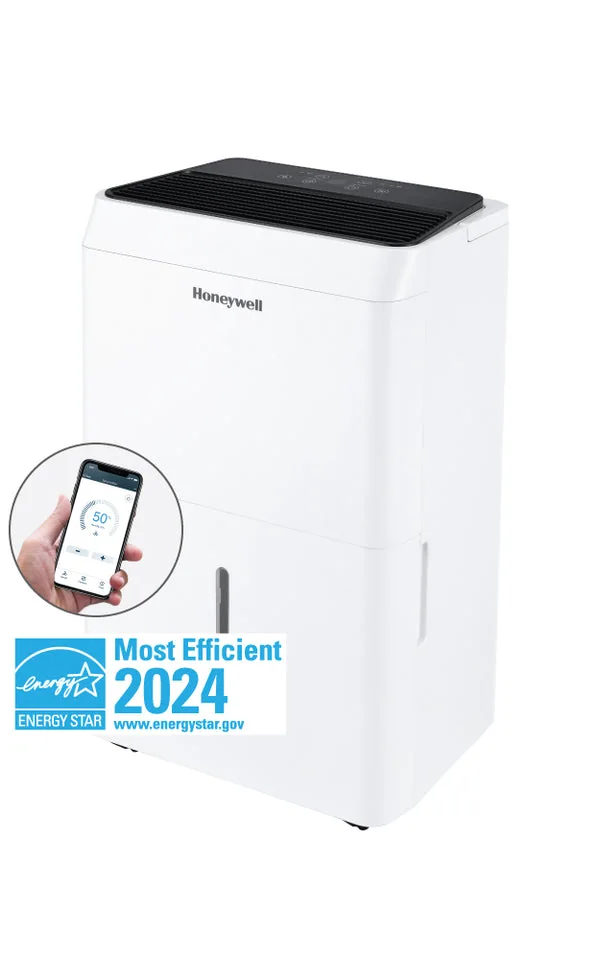
Continuous drainage lets a dehumidifier run for long humid stretches without relying on a bucket that can fill and shut the unit off.
Reading time: 8 minutesBest for: Anyone who wants unattended dehumidifier operation in a basement, laundry area, or storage space
Choose gravity or a pump
Gravity drainage means the water flows downhill through a hose to a floor drain, sump, or other approved drain point. It is simple and quiet, but it only works if you can keep a continuous downward slope with no dips where water can sit. Even a small sag in the hose can create an air lock or slow the flow, which can cause the dehumidifier to stop draining properly.
A pump dehumidifier includes a small internal pump that pushes water through a narrow tube up to a sink, standpipe, or higher drain point. This is useful when the unit sits below the nearest drain or when you cannot maintain a downhill route. Pumps add complexity: they can be louder, they can clog if debris gets into the reservoir, and they need a reliable discharge route. Confirm whether a pump is built in or optional, since "continuous drain" does not always mean "pump included."
Route the hose
For gravity drainage, start at the dehumidifier's drain outlet and plan the shortest path to the drain with the fewest bends. Use the correct hose size for the outlet so the connection seals well. Tighten the fitting by hand and avoid over tightening, which can crack plastic threads. Route the hose so it is supported and does not droop between points. If the hose crosses a walkway, secure it so it cannot be kicked loose.
For pump drainage, route the discharge tube so it rises smoothly and does not kink. Avoid tight coils behind the unit, which can pinch the line and make the pump work harder. Make sure the end of the tube is secured at the sink or drain point so it cannot slip out and spray water. If the tube empties into a sink, keep it above the waterline so it does not siphon or backflow. A simple clip or tie can prevent a lot of headaches.
Test before leaving it unattended
Before you trust the setup, run the dehumidifier long enough to produce water and watch a full drain cycle. For gravity drainage, look for steady flow at the drain point and check the hose connection for slow drips. For pump drainage, listen for the pump to activate and confirm water is actually being discharged. If the unit has a pump mode setting, make sure it is enabled so the pump is allowed to run.
Then do a second check after an hour or two. Some leaks only show up after the hose warms and softens, or after vibration shifts the fitting. Also confirm the drain point can accept the flow without backing up. A floor drain that is partially clogged can overflow during long humid stretches. Catching that early prevents water damage and prevents the dehumidifier from cycling on and off due to drainage errors.
Keep the drain path clear
A continuous drain setup still needs occasional attention. Dust, lint, and small debris can collect around the drain outlet or in the pump reservoir area. If the unit has a removable filter, keep it clean so airflow stays strong and the unit does not run longer than necessary. Longer runtimes mean more condensate and more chances for a marginal drain setup to show problems.
Check the hose route periodically, especially after moving stored items or doing laundry. Boxes and bins can press on a hose and create a hidden kink. In colder basements, watch for sections of hose that run along cold surfaces where water could cool and slow down. If you ever see water near the unit, do not assume it is "normal sweating." It usually means a loose fitting, a blocked hose, or a drain point that is not keeping up.
What this guide helps you understand
Continuous drainage is reliable when the hose connection seals, the route stays clear and properly sloped (or properly pumped), and you verify real water flow before you leave the unit running unattended.
Confirm whether your setup needs a continuous downhill slope or a built in pump to reach the drain point
Secure the hose or discharge tube so it cannot kink, sag, or slip out of the drain location
Run a test long enough to confirm steady drainage and no drips at the fitting
Technique notes
A bucket can still be useful as a backup if the hose is accidentally bumped or the drain backs up
If your basement has a sump, make sure the discharge point is stable and cannot be knocked loose by vibration
Safety note: Keep electrical cords and plugs away from any place the hose could leak, and do not route a drain line where it can be crushed by a door or stepped on near stairs.