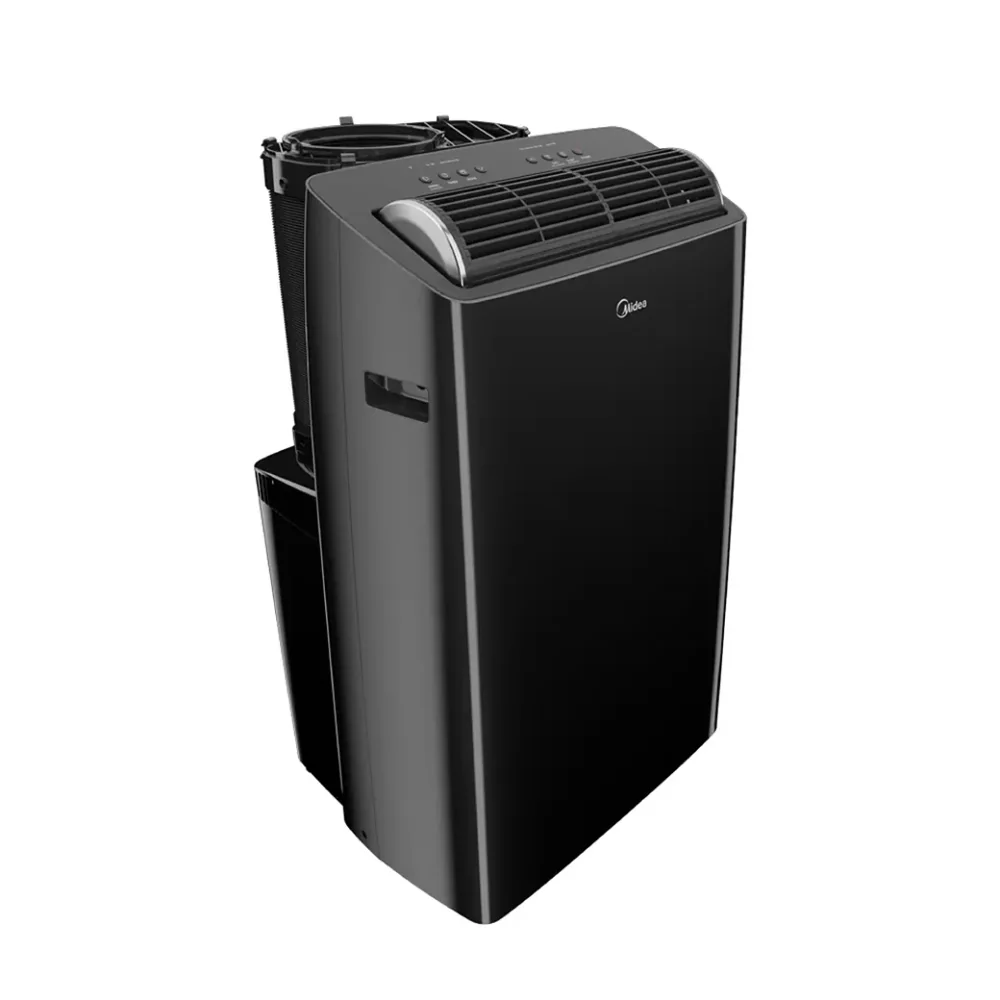
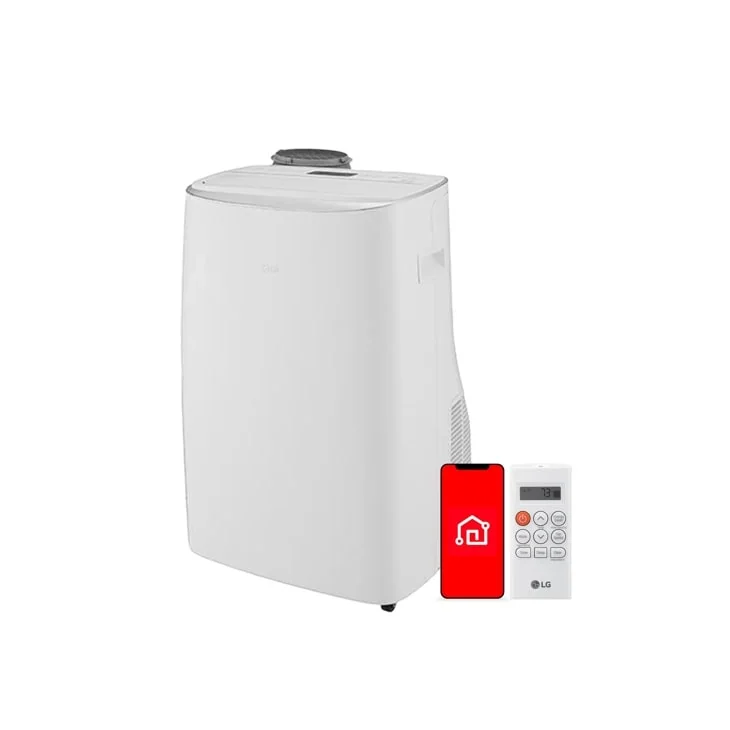
How the air paths work (and why negative pressure matters)
In a single-hose portable AC, the unit uses indoor air to cool its condenser (the hot side of the refrigeration system), then exhausts that warmed air outdoors through the hose. Because that air came from the room, the room loses air volume. The replacement air usually sneaks in through gaps under doors, leaky windows, or other openings, and that incoming air is often warm and humid. In a dual-hose portable AC, the condenser side is closer to a closed loop. Outdoor air comes in through one hose, picks up heat from the condenser, and leaves through the exhaust hose. The room air is used mainly for cooling the room, not for feeding the exhaust stream. The result is typically less unwanted warm air being pulled into the room through cracks.
Efficiency and comfort differences you can actually feel
The practical effect of negative pressure is that a single-hose unit can feel like it is fighting itself in a hot home. You may notice the room cools near the unit but never quite settles, or it cools until the compressor cycles and then warms quickly. This is not only about the machine's capacity. It is also about the room constantly importing heat and moisture to replace the air being exhausted. Dual-hose units often do better in rooms with high heat load, strong sun, or lots of leakage, because they reduce that constant inflow of warm air. They are not magic, though. A poor window seal, a long hose run, or a kinked hose can still dump heat back into the room. Think of dual-hose as a design advantage that works best when the installation is also solid.
Installation tradeoffs: window kits, hose routing, and space
Single-hose units are usually simpler to set up. One hose means fewer connections and often a smaller window opening requirement. That can matter if you have a narrow window, an awkward slider, or limited clearance behind the unit. Fewer parts also means fewer places for small air leaks to develop. Dual-hose units need more window-kit real estate and more attention to routing. If the hoses are squeezed behind furniture or forced into tight bends, airflow drops and performance suffers. Plan the placement before you buy. Measure the distance to the window, check whether the unit can sit close enough for a short hose run, and confirm the window kit can be adapted to your window style without leaving gaps.
Who should choose which design
A single-hose portable AC can be a reasonable choice for moderate conditions: a smaller room, limited sun, and a home where you can keep the door closed and the window kit well sealed. It can also make sense when installation simplicity is the top priority, like a temporary setup or a room where you cannot dedicate much floor space to hose routing. A dual-hose portable AC is usually the better bet for hotter rooms, top floors, and spaces where comfort is sensitive, like a bedroom you need to sleep in. It is also a strong choice when the rest of the home is warm, because it reduces the tendency to pull that warm air into the cooled room. If you are already planning careful sealing and you can accommodate the window kit, dual-hose is often the more satisfying long-term setup.