Portable AC not cooling? Diagnose the problem before you call for service
Published Updated
If the fan is running but the room stays hot, do not start by guessing at parts. Two observations - how much colder the outlet air is and whether the exhaust hose gets hot - can tell you whether the problem is the room, the airflow, or the air conditioner itself.
Quick answer: Put the unit in Cool mode, select high fan, set it at least 5°F below room temperature, and wait three minutes for the compressor protection delay. After another 10 minutes, compare the temperature at the room-air intake with the air leaving the front outlet. A meaningful temperature drop plus a hot exhaust hose usually means the machine is moving heat and the room setup is the problem. Little temperature drop and no hot exhaust point toward a compressor, water-level, sensor, or protection issue.
First, find out whether the unit is actually making cold air
"The room is not getting colder" and "the air conditioner is not producing cold air" sound interchangeable, but they are different failures. A working portable AC can produce properly chilled air and still lose the battle against sun, an open doorway, a leaking window kit, or hot air pulled back into the room. Before changing settings repeatedly, separate machine performance from room performance.
Close the room, switch to Cool, choose high fan, and set the target at least 5°F below the displayed room temperature. If the unit was just turned on or changed modes, wait at least three minutes; many compressors deliberately delay restarting.
Let it run for 10 minutes. Use one thermometer to measure the air entering the main room-air intake, then measure the air directly in the front supply stream. Do not compare the outlet with a thermostat across the room because location and sensor bias can distort the result.
Subtract the outlet temperature from the intake temperature. A drop in the neighborhood of 15°F to 20°F is a useful sign that the refrigeration system is doing real work. Treat that range as a diagnostic clue, not a universal pass/fail specification; fan speed, humidity, model design, and measurement position all affect it.
The outlet is much colder than the intake
The cooling system is probably operating. Focus on room size, sun, doors, hose heat, window-kit leaks, and hot outdoor air being pulled back inside.
The outlet is only a little cooler, or not cooler at all
Confirm the compressor is running, then check the full-water indicator, filter, intake, exhaust restriction, icing, and error code. If those are clear, service becomes more likely.
The exhaust hose is your second diagnostic tool
When a portable AC cools the front air stream, it must reject that captured heat through the exhaust hose. After 10 minutes in Cool mode, the hose should feel clearly warm or hot. That makes the hose a quick proxy for what the sealed refrigeration system is doing without opening the cabinet.
What you observe
What it usually means
Where to look next
Cold outlet air and a hot exhaust hose
The unit is moving heat.
Room heat load, window seal, hose radiation, open doors, or an undersized unit.
Room-temperature outlet air and a cool exhaust hose
The fan is running but the compressor probably is not.
Mode, setpoint, three-minute delay, timer, full tank, sensor code, or compressor protection.
Weakly cool outlet air and a very hot hose or cabinet
The unit may be struggling to reject heat.
Kinked or extended hose, blocked condenser intake, hot exhaust recirculation, or extreme room temperature.
Cooling starts normally, then fades
A condition develops while it runs.
Ice, rising tank level, overheating, a timer, or the sensor reaching setpoint too early.
If the portable AC blows cold air but the room will not cool
This is usually a heat-balance problem, not a broken compressor. Portable air conditioners continuously remove heat, but the room can gain heat faster through direct sun, exterior walls, electronics, cooking, people, and warm air entering under doors. Single-hose models add another penalty: the air sent outdoors has to be replaced, so warm air can be pulled in through gaps elsewhere in the room.
Do not judge performance only by the number on the display. First, close the door and shade the glass. Shorten and straighten the exhaust hose without stretching it tight, seal the hose connections, and feel around the window panel for warm drafts. If the outlet stays roughly 15°F to 20°F cooler than the intake but room temperature barely changes after 30 to 60 minutes, the next question is capacity and heat load. Use our portable AC room-size guide and window-kit sealing guide rather than replacing a unit that is still producing cold air.
If the fan runs but the compressor does not start
A fan can run in Fan, Dry, Sleep, or energy-saving modes without providing steady cooling. Select Cool mode explicitly and lower the setpoint enough to create a clear call for cooling. Then wait. A three-minute anti-short-cycle delay is common after power-up, a mode change, or a quick restart; repeatedly pressing buttons only restarts the confusion.
Listen for a deeper hum and feel for vibration after the delay. Then check whether the exhaust begins warming. If neither happens, look for a full-water indicator, timer, error code, tripped LCDI plug, or room temperature outside the operating range stated in the manual. Reset power only once, after correcting anything obvious: turn the unit off, unplug it for five minutes if the manufacturer permits, reconnect it directly to a grounded wall outlet, and test again. A code or failed compressor that returns after one reset is information, not an invitation to keep power-cycling.
If it cools for a while, then shuts off or starts blowing warm air
The timing narrows the cause. A unit that stops within a few minutes may have a timer active, a temperature sensor sitting in its own cold discharge air, a setpoint too close to room temperature, or an immediate protection fault. A unit that cools for 20 minutes and then stops is more suggestive of a filling condensate tray, developing ice, or heat building around a restricted condenser intake or exhaust hose.
Write down the sequence instead of only the final symptom: start time, when the compressor engages, when the hose gets hot, when cooling fades, and what appears on the display. That short timeline is often more useful to support staff than "it does not cool." If the tank fills repeatedly, use the portable AC drainage guide. If the filter is dirty or the coil is dusty, follow the filter and coil maintenance guide.
If the portable air conditioner is freezing up
Ice is not extra cooling. It insulates the evaporator and eventually blocks airflow, so the outlet can become warmer even while the coil is frozen. Switch out of Cool mode, run Fan mode until all ice has melted, and keep towels ready for drainage. Never chip ice from the coil; the thin fins and refrigerant tubing are easy to damage.
Before restarting, clean and fully dry the filter, open blocked intakes, choose a higher setpoint, and confirm the room is within the operating-temperature range in the manual. If ice returns with a clean filter and normal airflow, stop there. A bad coil sensor, fan problem, or low refrigerant condition needs diagnosis; refrigerant is in a sealed system and is not a homeowner "top-off" job.
Run one controlled 30-minute test before changing parts
A portable AC can look inconsistent when the real inconsistency is the test. Opening the door, moving the thermometer, changing fan speed, or restarting the unit halfway through makes each observation describe a different condition. Give the machine one controlled run instead. Close the room, shade direct sun, leave the hose and window kit in their normal positions, select Cool mode and high fan, and set the target temperature low enough that the thermostat will not satisfy during the test.
Use the same thermometer and the same measurement locations each time: the room-air intake, the center of the cold outlet, and a shaded spot several feet from the unit.
Time
What to record
What the observation can reveal
Before starting
Room temperature, intake temperature, tank or filter lights, mode, setpoint, and timer status.
This catches a settings problem before it is mistaken for a cooling failure.
3 minutes
Whether the compressor has engaged, whether the sound changed, and whether the exhaust is beginning to warm.
No change yet may still be a normal anti-short-cycle delay; repeated clicking is not.
10 minutes
Intake temperature, outlet temperature, exhaust-hose heat, and airflow strength.
This is the clearest snapshot of whether the unit is producing cold air and rejecting heat.
20 minutes
Room temperature, new display messages, compressor status, and any frost near the outlet or filter.
A good start followed by fading cooling points toward water, ice, overheating, or sensor behavior.
30 minutes
Final room temperature and whether cold air is reaching the occupied part of the room.
Strong vent cooling with no room change shifts the diagnosis toward capacity, heat gain, leakage, or poor air circulation.
Do not chase a one-degree fluctuation. Look for a stable relationship: Is the outlet consistently much colder than the intake? Does the exhaust stay hot while the compressor runs? Does the temperature split collapse at the same moment an error code, frost, or full-tank light appears? Those relationships are more diagnostic than the lowest temperature flashed on the display.
The log also improves a warranty call. “The temperature split falls from 17°F to 4°F after 20 minutes and frost appears” gives support staff far more to work with than “it sometimes blows warm.”
Three common patterns, worked through
Pattern 1: The vent air is cold, the exhaust is hot, but the room stays uncomfortable
This combination is evidence that the cooling circuit is doing useful work. Replacing the unit with another machine of similar effective capacity may produce the same result because the unresolved problem is the room’s heat balance. A west-facing room, a top-floor bedroom, an open stairway, or a desktop computer can require more cooling than floor area alone suggests.
Watch what happens at the doorway and window kit. A single-hose unit sends indoor air outside, which puts the room under slight negative pressure. Hold a strip of tissue near door gaps; inward movement shows where replacement air is entering. Seal the window panel, shorten exposed hose, close the room, and use a separate fan to move cooled air away from the unit without blowing it back into the intake. If the unit still produces a healthy temperature drop but cannot lower room temperature, compare its DOE-rated capacity with the models in our best portable air conditioners guide. A better-sized or dual-hose design may solve a room-load problem that maintenance cannot.
Pattern 2: The fan blows normally, but the outlet and exhaust both stay near room temperature
Here the fan proves only that the controls and blower have power. It does not prove the compressor is running. First remove the ordinary explanations: choose Cool rather than Fan or Dry, lower the setpoint, cancel timers and schedules, drain a confirmed full tray, and wait through the restart delay. Then listen for the compressor and watch the household lights for a brief change as it attempts to start. A normal start adds a lower mechanical hum and should make the exhaust noticeably warmer within several minutes.
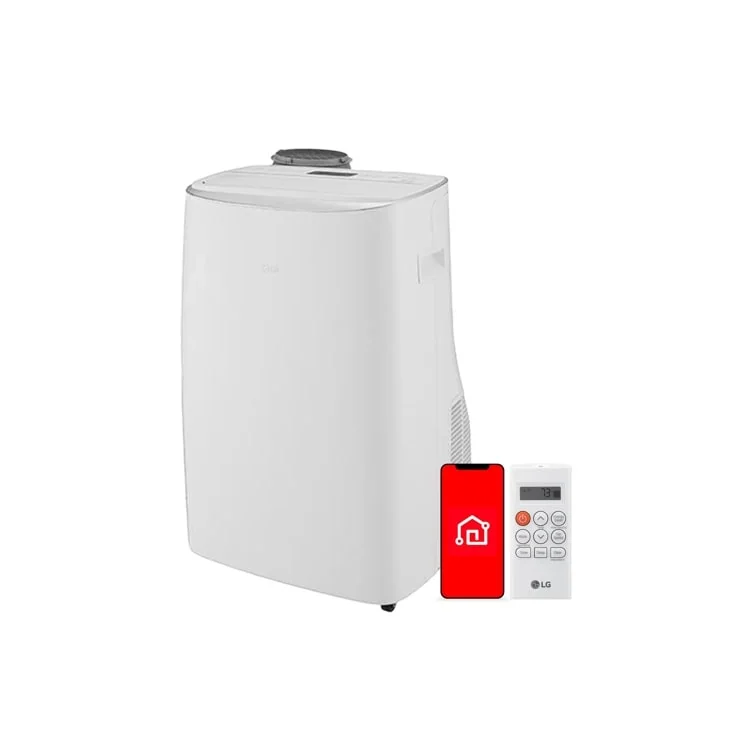
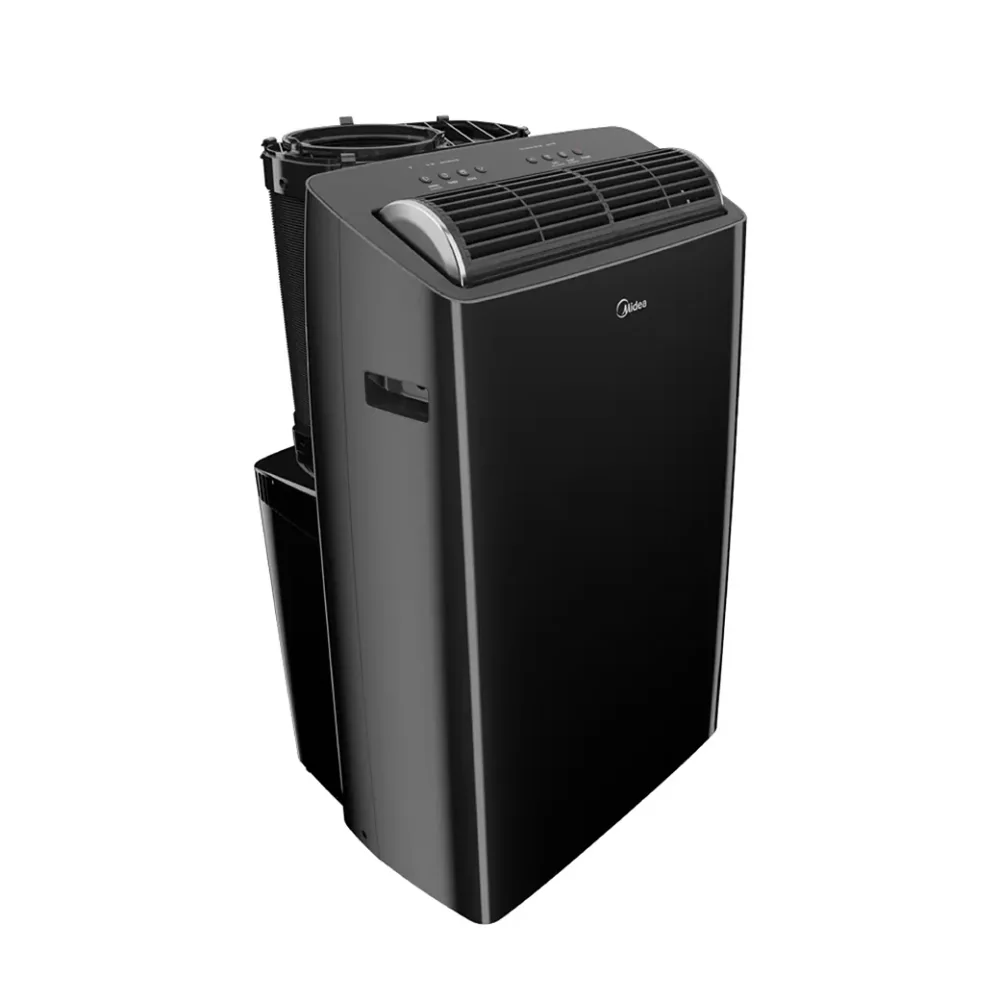
If you hear one click and the compressor starts, keep observing. If you hear repeated clicks, the plug or breaker trips, or the compressor attempts to start and immediately stops, disconnect the unit and request service. Do not substitute an extension cord or repeatedly reset the LCDI plug. If the machine is out of warranty and repair approaches replacement cost, compare how different designs handle this workload. The LG Dual Inverter LP1419IVSM review explains the appeal of variable-speed operation, while the Midea Duo Smart Inverter review covers an inverter dual-hose alternative. Those are design comparisons, not reasons to discard a unit before completing the basic checks.
Pattern 3: It cools strongly at first, then fades or shuts down
A time-dependent failure means something changes during operation. Condensate accumulates, ice grows, condenser heat builds, or a sensor reaches a threshold. Your 30-minute log should show which signal changes first. A full-tank code before shutdown points toward drainage. Falling airflow with visible frost points toward icing. A cabinet and hose that become unusually hot while the temperature split shrinks point toward restricted heat rejection. A compressor that stops while airflow remains strong and then restarts after cooling may be protecting itself from temperature or electrical stress.
Do one correction at a time and repeat the same test. Drain the unit, or thaw it completely and restore airflow, rather than changing drainage, filter, hose, and settings all at once. If the symptom disappears, you know which condition mattered. If it returns on the same timeline, document it for support. Owners considering a replacement for a demanding room can also compare the dual-hose approach in our Whynter NEX ARC-1230WN review; bringing condenser air from outside can reduce the infiltration penalty that makes some single-hose installations struggle. It will not, however, cure an undersized electrical circuit, a poor window seal, or a room with an open path to the rest of the home.
Portable AC error codes: useful clues, not universal translations
The same two-character code can mean different things on different brands, and brands can change code meanings between model families. Find the model number on the rear nameplate and use that exact manual. The examples below are common manufacturer-specific patterns, not a master codebook.
P1
On many Midea portable AC models, P1 means the bottom condensate tray is full. Drain it as the manual directs. If P1 returns quickly with a clear drain path, service may be needed.
FL, CH04, Ft, or HL
LG uses FL or CH04 on some portable models for a full-water or drainage condition; De'Longhi uses Ft or HL on some models for a full tank. Drain first, but verify the exact model.
E1, E2, E3, or E4
On Midea's published portable-AC code list these point to room, evaporator, condenser, or display-communication sensors. Other brands use E-codes differently, so do not buy a sensor from the code alone.
Filter light
A filter reminder is usually based on run time, not a sensor that knows the filter is dirty. Clean the filter, reinstall it dry, and reset the reminder using the manual's sequence.
The shortest useful troubleshooting order
Confirm Cool mode, a low-enough setpoint, high fan, and no timer. Wait through the compressor delay.
Read the display and drain a full tank before resetting anything.
Clean the filter and clear both the room-air and condenser-air intakes.
Shorten the exhaust path, remove kinks, reconnect both ends, and seal the window panel.
Measure intake and outlet temperature, then check whether the exhaust hose gets hot.
If the unit makes cold air, reduce the room heat load. If it does not, reset once and document the symptom sequence.
Escalate repeated codes, repeated icing, electrical problems, and a compressor that will not stay running.
Stop troubleshooting and call for help when...
The plug, cord, or outlet becomes hotStop using the unit. Do not use an extension cord, power strip, or adapter. A repeated breaker or LCDI trip needs electrical attention.
You smell burning or hear repeated hard clickingDisconnect power. Repeated start attempts can indicate an electrical or compressor-start problem.
A sensor or compressor code returns after one resetThe protection system is reporting a recurring fault. Record the exact code and model number for service.
Ice returns after a complete thaw and airflow checkRecurring freeze-up with a clean filter can point to a sensor, fan, or sealed-system problem.
The compressor runs but the temperature drop stays smallIf airflow is strong, the coil is not iced, and the exhaust path is clear, weak cooling may require refrigeration-system diagnosis.
Water appears near electrical partsUnplug the unit before moving or draining it and do not restart until the source of the leak is understood.
Portable air conditioner troubleshooting FAQ
Why is my portable air conditioner blowing warm air?
The fan may be running while the compressor is delayed, disabled by a full-water condition, or stopped by a sensor or protection fault. Confirm Cool mode, lower the setpoint, wait at least three minutes after a restart, and check the tank and display. If the exhaust hose never warms, the compressor probably is not moving heat.
Why does the fan run but the portable AC compressor does not?
The most common non-failure explanations are Fan or Dry mode, a setpoint near room temperature, a three-minute restart delay, a full condensate tray, or a timer. If those are ruled out and the compressor still never engages, record any code and contact the manufacturer rather than opening the cabinet.
What does P1 mean on a portable air conditioner?
On many Midea-built portable air conditioners, P1 means the bottom water tray is full and must be drained. Codes are not universal, so use the exact model number from the rear label to confirm the meaning and drain procedure.
Why does my portable AC keep shutting off?
Check the timer, setpoint, condensate tray, icing, and exhaust heat. The shutdown timing helps: stopping almost immediately often suggests settings or a sensor, while stopping after longer operation more often points to accumulated water, ice, or overheating.
How long should a portable AC take to cool a room?
You should feel clearly cooler outlet air within roughly 10 minutes after the compressor starts. A measurable room-temperature change can take 30 to 60 minutes and depends heavily on room size, insulation, sun, humidity, and open doorways. Judge the machine first by its intake-to-outlet temperature drop, not by how quickly the whole room reaches the setpoint.
Can a portable air conditioner cool without an exhaust hose?
No. In cooling mode the unit must move heat outdoors. Without the exhaust hose, the condenser releases that heat back into the same room, so any cold air at the front is offset by hotter air at the rear.
Portable ACs worth comparing
As an Amazon Associate I earn from qualifying purchases.
Safety note: Unplug the unit before draining it, removing a filter, or moving it. Keep water away from controls and electrical connections. Do not bypass the safety plug, use an extension cord, open the sealed refrigeration system, or continue operating a unit with a hot plug, burning smell, recurring breaker trip, or water near electrical parts.