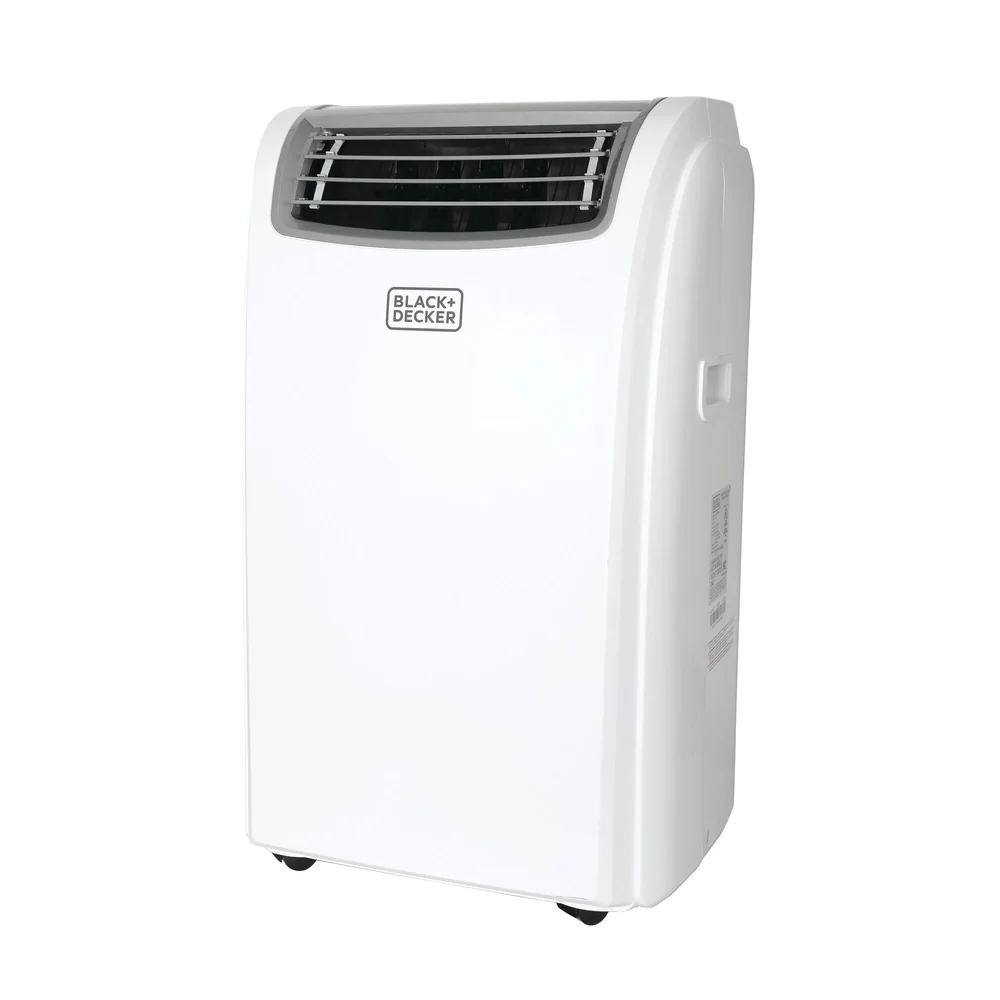
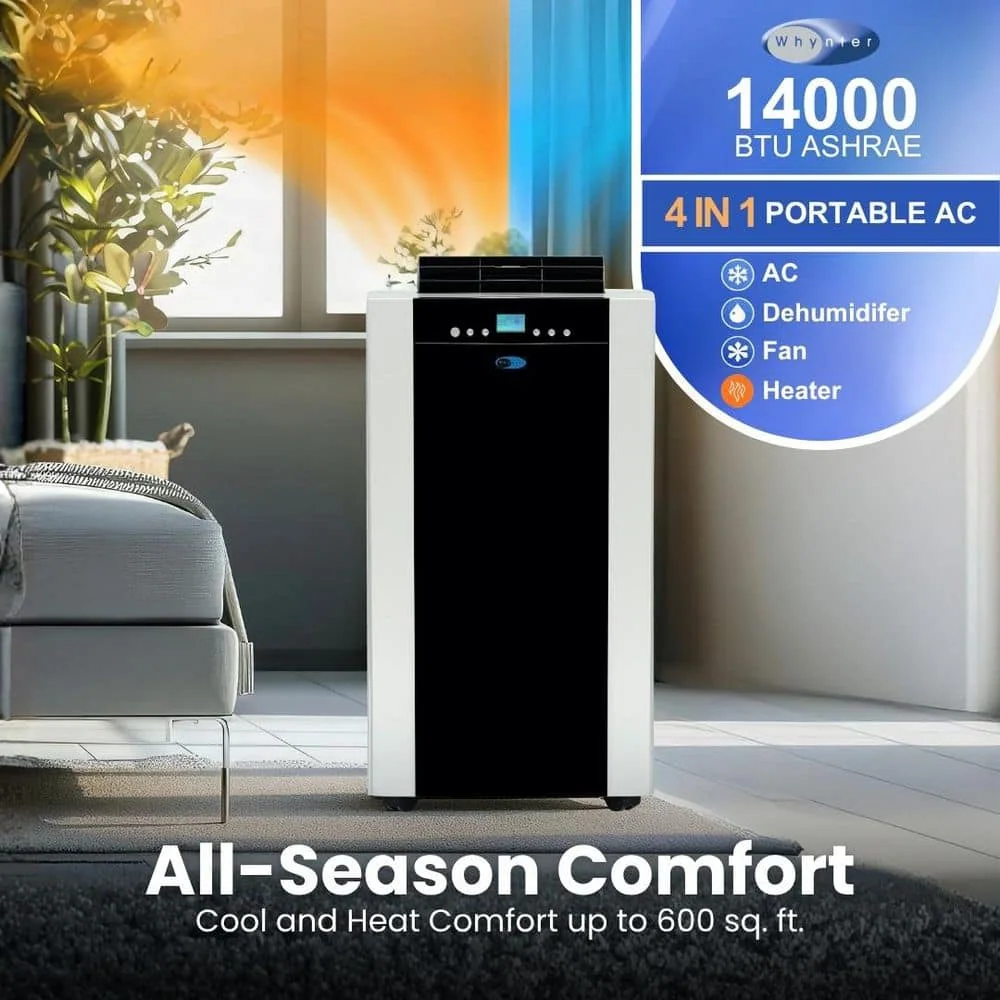
Cooling also removes moisture
When a portable AC cools, it pulls warm room air across a cold coil. Water vapor in that air condenses into liquid water, then drips into a collection area. This is called latent cooling, meaning energy is spent removing moisture rather than lowering temperature. The more humid the room, the more of the unit's effort goes into moisture removal, and the less "temperature drop per hour" you may feel compared with a dry day.
This is also why an oversized portable AC can feel clammy. If the unit cools the room air quickly and then cycles off, it may not run long enough to wring out much moisture. You can end up with a room that hits the thermostat setting but still feels sticky. In humid climates, it is often better to choose a capacity that runs longer at a steady output (inverter units help here) and to keep doors closed so the unit is not constantly fighting new humid air.
Humidity changes drainage
Condensate handling is not the same across portable ACs. Some units collect water in an internal tank and shut off when it is full. Others try to fling or evaporate some of that water into the hot exhaust airstream so it leaves through the hose. That "self-evaporating" approach works best when indoor humidity is moderate and the unit is running in cooling mode with a warm exhaust stream.
In very humid weather, or in modes that do not create as much hot exhaust, the unit may still need draining. Plan for where the water will go before you need it at 2 a.m. If your unit has a continuous drain port, you can run a hose to a floor drain or a condensate pump. If it only has a tank, learn how to remove and empty it without spilling, and keep the unit level so the float switch reads correctly and does not stop cooling early.
Dry mode has limits
"Dry mode" usually means the unit prioritizes dehumidification over aggressive temperature control. It may run the compressor with a lower fan speed to keep the coil colder and condense more water. That can help comfort on muggy days, but it is not the same as a dedicated dehumidifier. The portable AC still has to exhaust heat through the hose, and the room still gains humidity from people, cooking, and outdoor air leaks.
Dry mode can also change how water is handled. Some units reduce how much condensate is evaporated into the exhaust, which can increase the need to drain. And because fan speed is often lower, air mixing in the room can be weaker, so one corner may still feel damp. If you use dry mode overnight, check whether the unit can run continuously without filling a tank, and confirm the noise level at that setting is actually workable for sleep.
Know when a dehumidifier fits better
If your main problem is humidity rather than heat, a dehumidifier can be the better tool. A dehumidifier removes moisture and releases heat back into the room, so it is not a substitute for air conditioning on hot days. But in a cool basement, a shoulder-season bedroom, or a rainy climate where the temperature is mild, a dehumidifier can make the space feel dramatically more comfortable without needing a window hose.
A practical way to decide is to watch what you are fighting. If the room is warm and humid, a portable AC can address both, as long as the window kit is well sealed and drainage is managed. If the room is not very warm but feels musty, sticky, or you see condensation on surfaces, a dehumidifier may run more efficiently and with less installation hassle. In some homes, the best setup is both: AC for hot afternoons, dehumidifier for damp nights or basements.