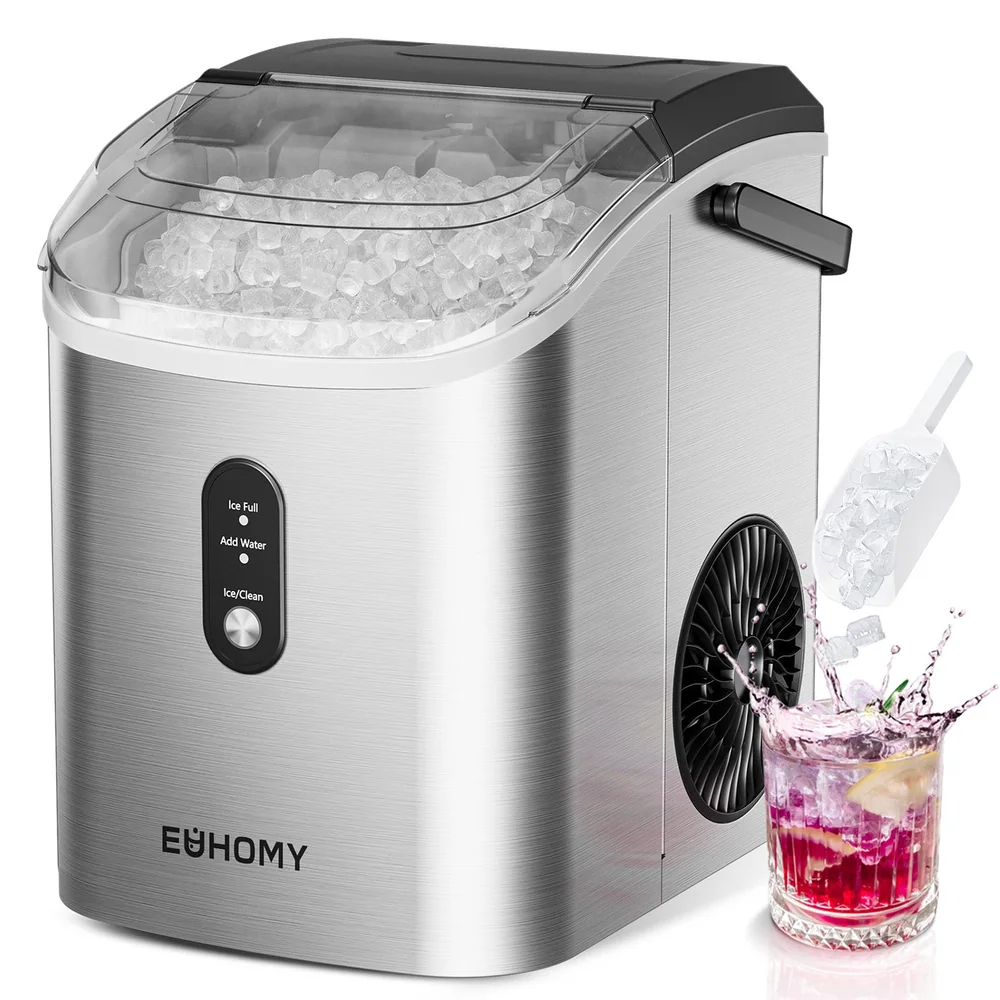
In an RV, the right countertop ice maker is the one that fits your power, ventilation, and water setup without turning travel days into leak days.
Reading time: 9 minutesBest for: RV owners who want reliable ice without stressing limited counter space, electrical capacity, or water handling on travel days.
Footprint, weight, and travel-friendly placement
Start with a tape measure and be honest about where the machine will live. You need counter depth for the body, lid clearance to open it, and space to pull the basket out. Also consider where the heat exhaust is. Many units vent from the sides or back, so pushing the machine tight against a wall can trap heat and slow production. In an RV, a machine that technically fits can still be a bad fit if it blocks cabinet doors or forces you to route cords across a walkway.
Next, think about travel. A countertop ice maker is not designed to ride loose on a counter. You want a spot where you can secure it, or a plan to stow it in a cabinet or on the floor for driving. Weight matters because you will lift it to dump water and to store it. Before you buy, picture the full routine: carrying it, draining it, drying it, and putting it away without banging it into trim or tearing up a countertop edge.
Ventilation and heat in a small RV interior
Ice makers move heat out of water and into your living space. In a house, that is usually a mild annoyance. In an RV, it can raise the temperature in a small interior and make your air conditioner work harder. If you camp in hot climates, the machine may also slow down because warm room air makes it harder to shed heat. That can turn "fast first batch" into "why is this taking so long."
Give the machine breathing room and avoid enclosing it in a tight cubby while it runs. If you plan to run it under a cabinet, check that the exhaust is not blowing directly into a wall or curtain. Also consider noise. Fans and compressors sound louder in a small space, especially at night. If you want ice for evening drinks, it may be better to run the machine earlier, move ice to the freezer, and shut the unit off before quiet hours.
Power planning: shore power, inverter, and startup surges
Countertop ice makers use electricity in cycles. The compressor and fan draw more power when they start, then settle into a steadier run. That matters in an RV because an inverter or generator may handle the average draw but struggle with startup surges. If your power setup is marginal, you can see nuisance shutdowns, tripped breakers, or an inverter alarm when the compressor kicks on.
Before buying, check your typical camping style. If you mostly use shore power, you have more flexibility. If you boondock, you need to be realistic about battery capacity and how long you want to run a compressor appliance. Also look at cord routing. Use a proper outlet, avoid loose adapters, and do not run the machine from a plug that already feeds other heavy loads like a microwave. In an RV, simple power discipline prevents a lot of frustration.
Water, draining, and keeping it clean on the road
Pour-in reservoir machines are usually easiest for RVs because they do not require plumbing. The key is water handling. You need a stable place to fill the reservoir without splashing, and an easy way to dump old water. Some machines have a drain plug, others require tipping. Tipping a water-filled appliance in a small RV can turn into a spill, so a drain plug you can reach is a practical feature, not a luxury.
Cleaning matters more on the road because warm interiors and frequent refills can lead to odors or film. Plan to empty the reservoir when you pack up, wipe the bin, and let the interior dry before stowing. If you store the machine closed and damp, it can smell musty the next time you open it. Using filtered water can improve taste and reduce mineral scale, which helps keep production steady when you are far from a store that stocks descaling supplies.
What this guide helps you understand
Choose an RV-friendly ice maker by matching its size, ventilation needs, and power and water routines to how you actually camp and travel.
Confirm you have a secure place to run the machine with ventilation clearance, and a no-spill plan to drain the reservoir before driving.
Technique notes
If you want ice ready while driving, make it ahead of time and store it in the freezer, because the countertop bin is not meant to keep ice frozen for hours.
Safety note: Drain and dry the machine before travel, and never operate it where it can slide or tip while the RV is moving.