
Pickori

Category guide

What Water Should You Use in a Countertop Ice Maker?

Choose water that balances taste and low scale buildup, so your countertop ice maker stays cleaner and your ice tastes the way your drinks should.

Reading time: 9 minutesBest for: People trying to improve ice taste and reduce scale without overcomplicating their routine.
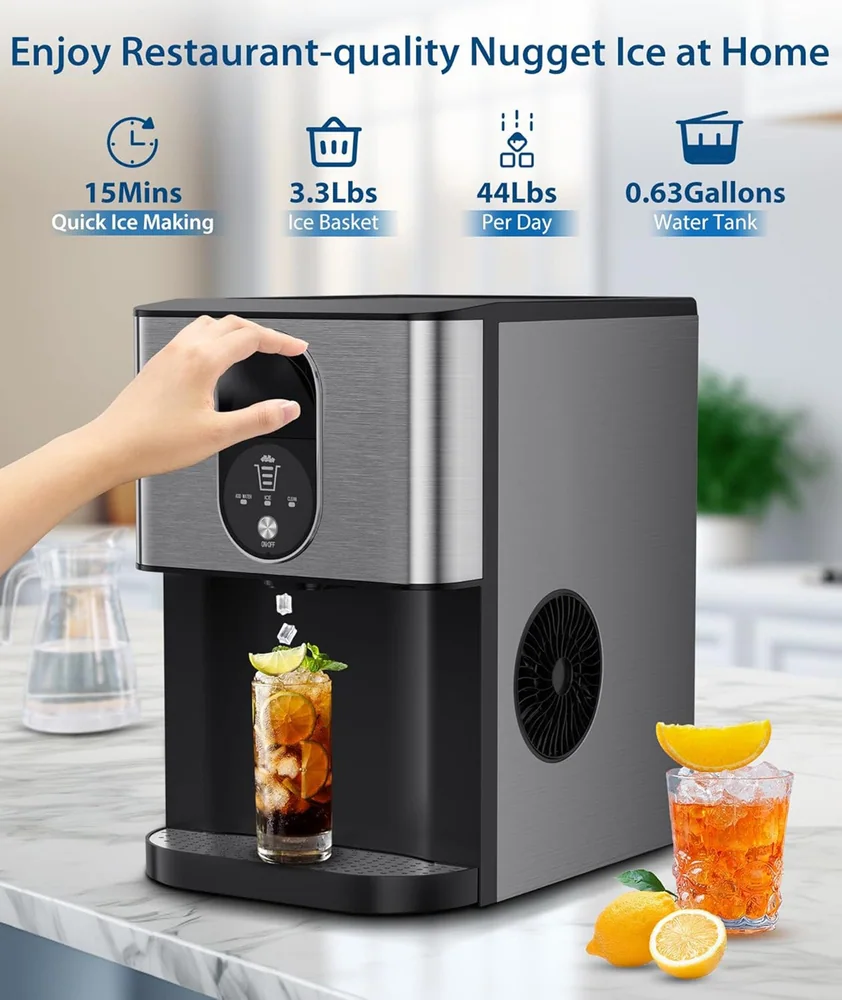
Cowsar Nugget Ice Maker

Tap water: convenient, but know what you are tasting and cleaning

Tap water is the default choice because it is easy. If your tap water tastes fine in a glass, it will usually make acceptable ice for everyday drinks. The downside is that many municipal supplies contain disinfectants that can leave a noticeable taste or smell, and many homes have mineral-heavy water that creates scale. In an ice maker, those minerals concentrate as water cycles and evaporates, which can speed up buildup.

If you use tap water, pay attention to early warning signs. Ice that starts tasting "pool-like" or "metallic" often points to water taste issues, not the machine itself. White flakes or crust in the reservoir point to minerals. You can still use tap water, but you should expect to descale more often and refresh the reservoir water regularly. Letting water sit for days is when off tastes become more obvious.

Filtered water: the easiest upgrade for taste and lower scale

Filtered water usually improves ice taste because many filters reduce chlorine taste and odor. Some filters also reduce sediment that can leave film in the reservoir. This is often the best balance for most households: you keep the convenience of filling from the sink or a pitcher, and you reduce the "why does my ice taste like the fridge" problem that shows up in drinks.

Filtering does not mean zero maintenance. Many filters do not remove all minerals that cause scale, and some are better at taste than hardness. You still need to clean and descale, just often less aggressively. The practical tip is consistency: use the same water source most of the time so you can learn your machine's rhythm. If you switch between hard tap water and filtered water, your descaling schedule becomes harder to predict.

Distilled and low-mineral water: less scale, but follow manufacturer guidance

Distilled water has had minerals removed. That can reduce scale buildup inside the ice maker, which can mean fewer descaling headaches. Some people also prefer the neutral taste in delicate drinks like cocktails or iced coffee. However, not every manufacturer recommends distilled water for every machine, and some machines behave differently depending on water conductivity and mineral content.

The safe approach is simple: check what your manual allows. If distilled water is permitted, it can be a good option when your tap water is extremely hard and you are tired of constant descaling. If it is not recommended, do not force it. A middle ground is using filtered water and keeping a tighter cleaning routine. Also remember that "clear" looking ice is not the same as "clear" tasting ice. Taste comes from your water source and your machine's cleanliness.

Water handling habits that protect taste (and your machine)

Even great water can taste bad if it sits. Countertop ice makers recycle water, and melted ice returns to the reservoir. If you keep adding fresh water on top of old water, you can end up with a stale mix that affects every batch. The fix is to treat the reservoir like a beverage container: empty it regularly, rinse it, and refill with fresh water. This matters more if the machine is used only occasionally.

Keep the lid closed during operation to reduce dust and kitchen odors settling into the bin. If you are making ice for a party, start with fresh water and plan to move finished ice to the freezer so it does not melt back into the tank. If your ice starts tasting off, do not immediately blame the water source. Drain, clean, run a rinse cycle, and then try again with fresh water. Many "water problems" are actually "old water in the machine" problems.

What this guide helps you understand

Choose a water source you can use consistently, because it controls both ice taste and how quickly scale builds up inside the machine.

Check your owner's manual for any restrictions on distilled water, filtered water, or additives before changing what you use.

Technique notes

Refreshing the reservoir water regularly often improves taste more than switching water types once in a while.

More from Countertop Ice Makers

← Back to Countertop Ice Makers