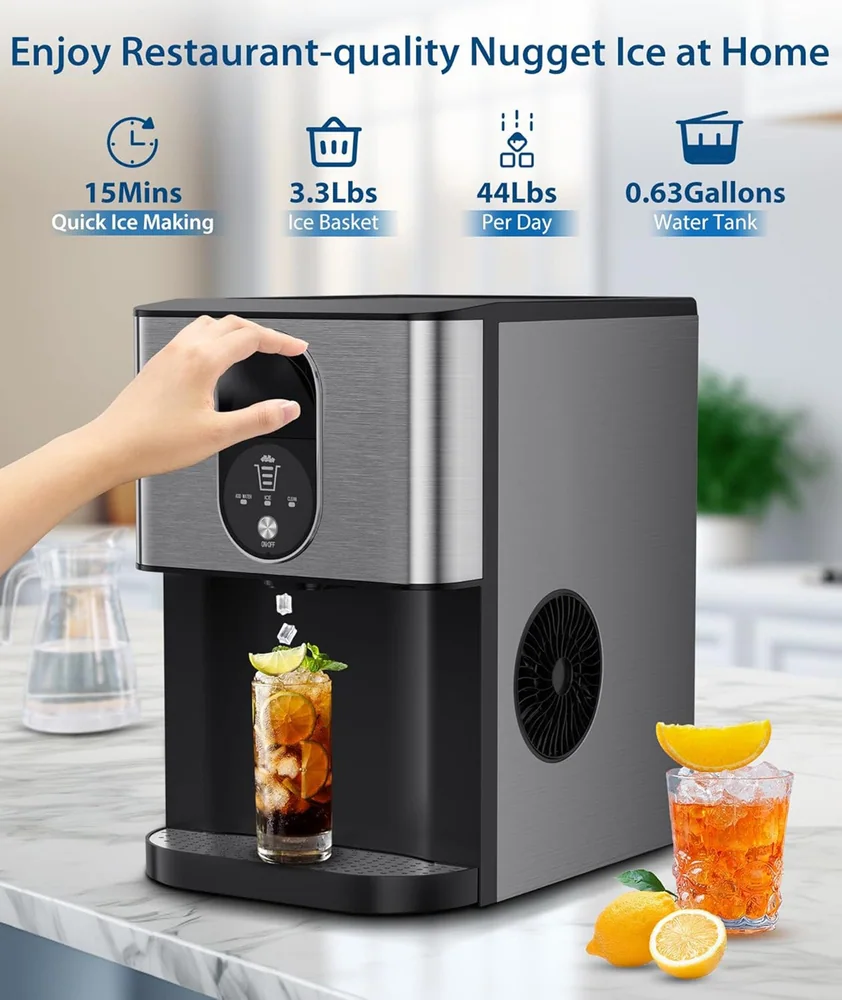
Most countertop ice makers are ice producers, not freezers, so the bin is insulated but not actively refrigerated and the ice will slowly melt back into the reservoir.
Reading time: 9 minutesBest for: People who expect the bin to act like a freezer and want a realistic routine for storing, serving, and keeping ice tasting fresh.
Insulated bins are not freezers
Most countertop ice makers have one refrigeration job: freeze water on a cold surface (often metal prongs or an evaporator plate), then release the ice into a bin. The bin is usually insulated to slow melting, but it is not actively cooled. That means the bin temperature drifts upward as soon as the machine stops making ice, and it also warms while the machine runs because the appliance is producing heat the whole time.
The cause and effect is simple: no active cooling equals gradual melting. Even "good insulation" only buys time. If you leave a full basket overnight, you should expect smaller pieces, wet surfaces, and some water in the reservoir by morning. If you need ice to stay frozen for hours without attention, plan on transferring ice to a freezer, or consider a machine designed with true cold storage (which is uncommon in this countertop category).
Recycling meltwater changes how the machine behaves
When ice melts in the bin, the water typically drains back into the reservoir and gets reused for the next freezing cycle. This is convenient, but it also means the water in the reservoir is constantly changing temperature and concentration. As ice forms, it leaves some minerals behind in the remaining water. Over time, that can make scale (mineral buildup) form faster, especially if your tap water is hard.
Recycled water also affects consistency. If the reservoir water warms up, the next batch can take longer and may come out softer at first. If the water level drops too low, the machine may pause or make thin, incomplete pieces. A practical routine is to treat the reservoir like a "fresh water tank," not a set-and-forget feature: dump old water if the machine has been sitting, refill with fresh water before a party, and do not assume yesterday's meltwater will make today's best ice.
Freezer transfer, clumping, and how to store finished ice
Because the bin is not a freezer, the best way to keep ice ready is to move it. If you want a stash for later, empty the basket into a freezer-safe container or bag. Do it while the ice is still dry and firm. Wet ice freezes into a solid block more easily, so timing matters. Bullet ice (hollow, rounded pieces) is especially prone to clumping because it has more surface moisture and melts faster than dense cubes.
To reduce clumping, spread fresh ice in a single layer on a tray for 30 to 60 minutes, then transfer it to a container. If you are serving right away, keep the machine making ice and scoop from the bin as needed, but do not overfill the bin and walk away. A full bin melts faster because pieces press together, share meltwater, and refreeze into clusters that are harder to scoop and less pleasant in drinks.
Sanitation and taste when ice melts and refreezes
Melting is not just a storage issue, it is a cleanliness issue. When ice sits wet, it can pick up odors from the bin, the scoop, or the room. Meltwater that cycles back into the reservoir can also carry residue from the bin walls and any biofilm (a slippery layer that can form in damp systems). That is why "self-cleaning" rinse cycles are helpful but not the same as regular descaling and wiping accessible surfaces.
A good ownership habit is to treat the ice path like a food-contact area. Use a dedicated scoop, keep hands out of the bin, and empty and dry the bin if the machine will sit unused. If the machine has a drain plug, use it to fully empty old water before cleaning. If you notice off smells, cloudy residue, or slimy surfaces, clean sooner rather than later. Better sanitation usually means better-tasting ice, and it also reduces the chance of clogs and slow production caused by buildup.
What this guide helps you understand
Choose a countertop ice maker based on how you will use and store ice, not on the assumption that the bin will keep ice frozen like a freezer.
Before buying, confirm whether the bin is actively refrigerated or only insulated, and plan a freezer-transfer routine if it is insulated only.
Technique notes
Leave clearance around the machine for airflow, because the heat it releases can speed melting in the bin and warm the surrounding counter area.
Safety note: Unplug the machine before wiping inside the bin area or draining water, and keep water away from the power cord and outlet.