
Pickori

Practical guide

How to Choose Electric Kettle Size and Capacity

Match usable capacity, minimum fill, footprint, weight, handle clearance, and batch size to your routine.

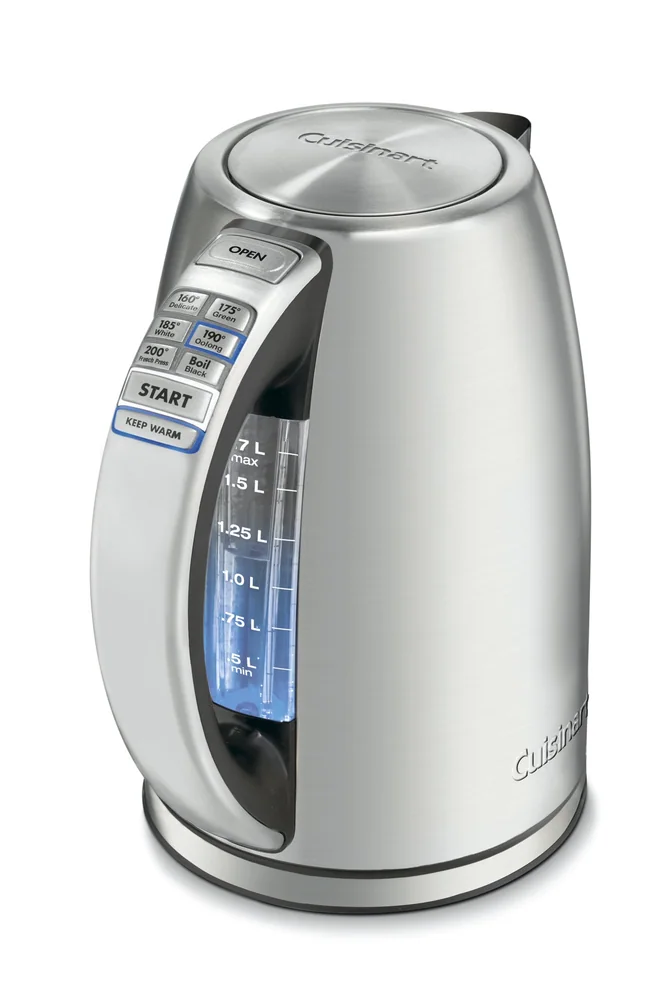
Cuisinart 1.7-Liter Stainless Steel Cordless Electric Kettle

Count your normal servings

Estimate the water used for one mug, a teapot, French press, or shared breakfast. Choose a capacity that handles the normal batch without routinely filling to the brim.

Check the minimum fill as carefully as the maximum. A large kettle can be wasteful for one cup when its heating element or sensor requires more water.

Measure the whole station

Record counter width, depth, overhead cabinet clearance, handle sweep, lid opening, and the base cord's path to a suitable outlet.

Keep the base on a stable, dry surface away from the sink and counter edge. Do not plan around an extension cord unless the manufacturer explicitly allows one.

Account for lifting weight

Water weighs roughly one kilogram per liter before the kettle itself is added. A full large kettle can be awkward for smaller hands or limited grip strength.

A balanced handle, clear level window, controlled lid, and easy return to the base may matter more than maximum capacity.

Check serving and cleaning access

A broad opening can simplify filling and wiping, while a narrow gooseneck body may trade cleaning access for pouring control.

Compare how the filter, lid, and scale-prone surfaces are removed or reached in the current manual.

More from Electric Kettles

← Back to Electric Kettles