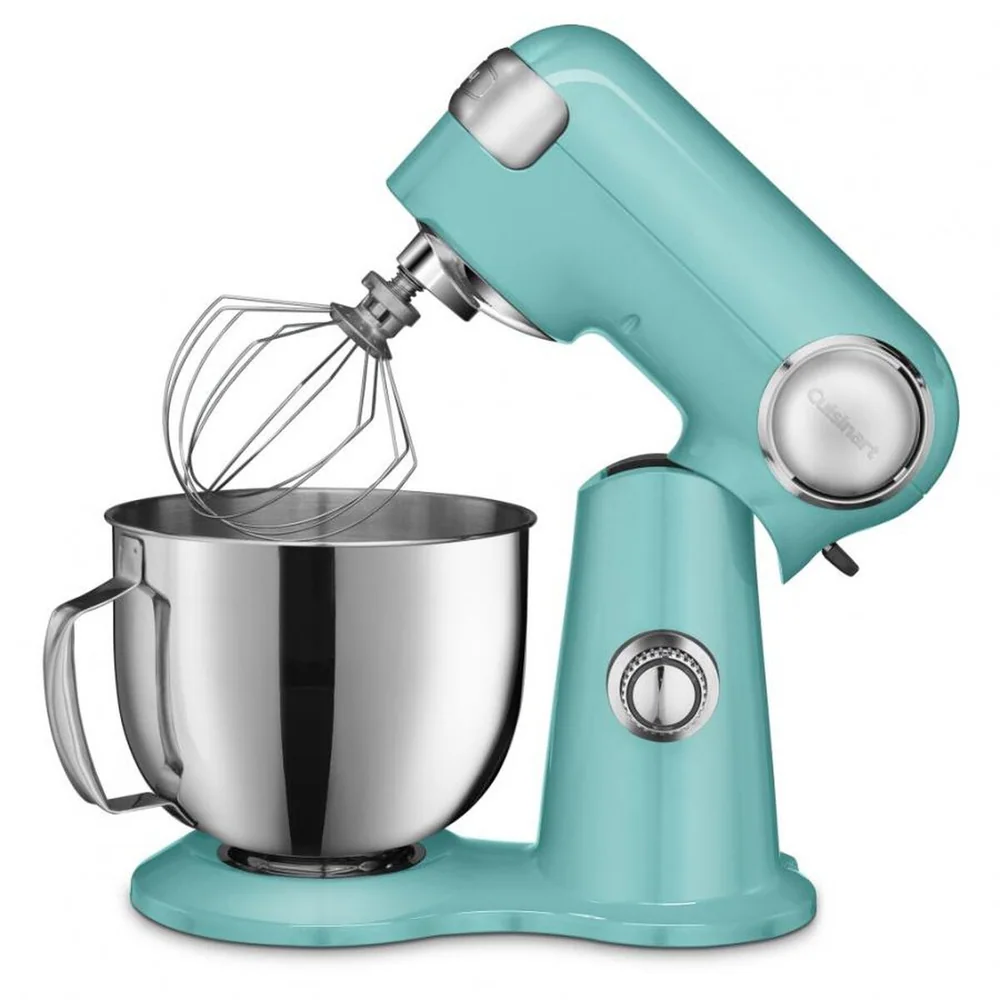
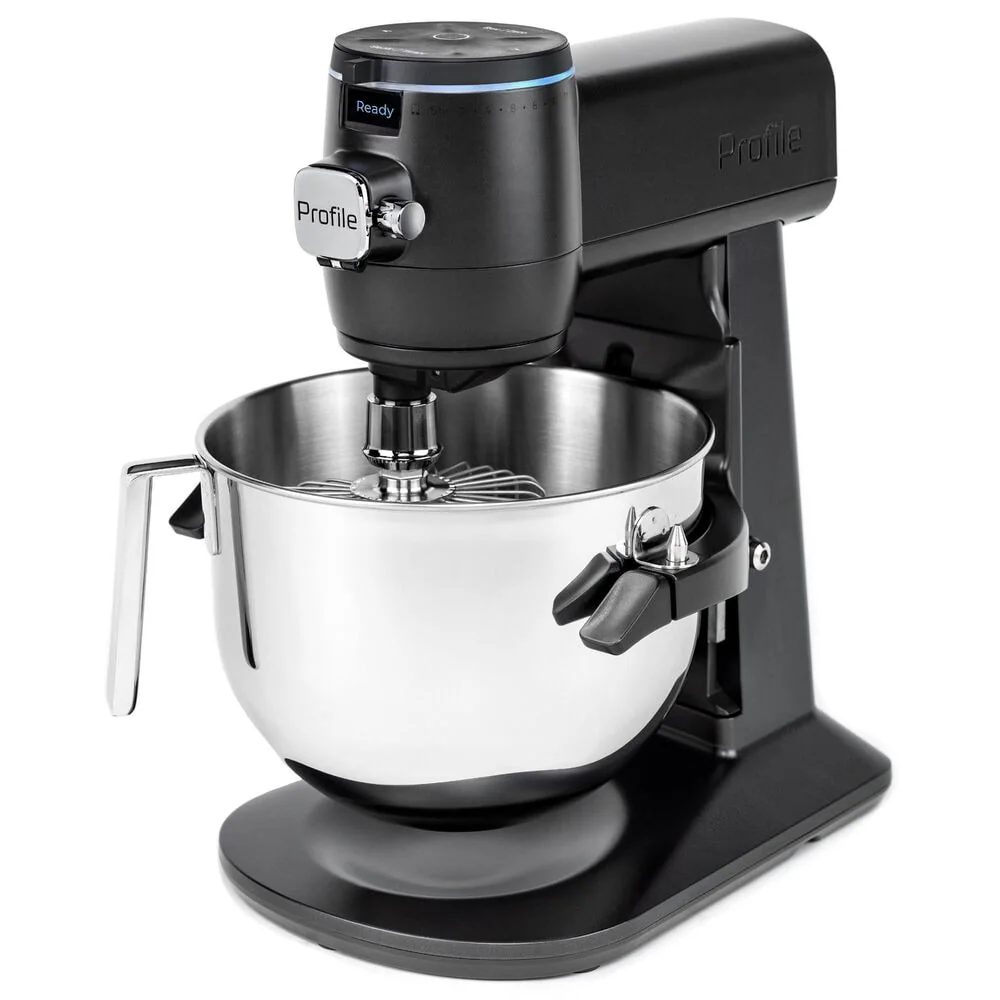
Tilt-head favors direct bowl access
A tilt-head pivots upward so the bowl usually twists onto the base. It is easy to scrape, add ingredients, and change tools when there is enough overhead clearance.
The moving head and smaller typical capacities favor everyday home batches. Confirm the head locks firmly and the mixer stays stable at approved loads.
Bowl-lift favors stability and volume
A bowl-lift keeps the head stationary while a lever raises the bowl on support arms. The wider, heavier base can be useful for large batches and dense dough.
Loading the bowl or removing a sticky tool can feel less direct. Try the workflow if possible, and measure the mixer's permanent height before assigning counter space.
Compare the whole system
Look beyond the mechanism to usable capacity, speed control, dough limit, included tools, bowl handle, pouring access, noise, weight, and service support.
Attachment compatibility can split at the tilt-head and bowl-lift boundary. Verify exact model numbers before buying a second bowl, beater, shield, or hub accessory.
Choose by weekly friction
Pick tilt-head when small-to-medium batches, easy scraping, and cabinet fit dominate. Pick bowl-lift when stability, heavy recipes, or repeated large batches justify the space and weight.
If bread is occasional but cakes and cookies are frequent, the largest dough specification should not control the entire purchase.