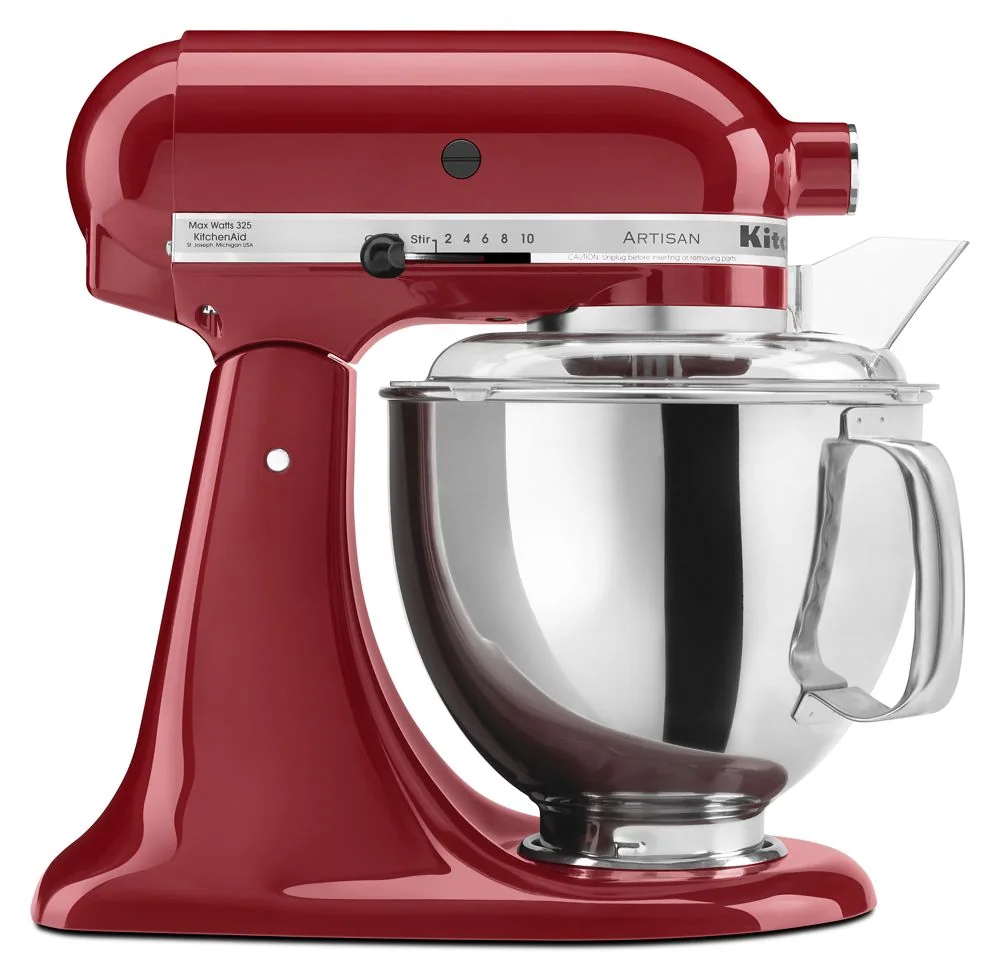
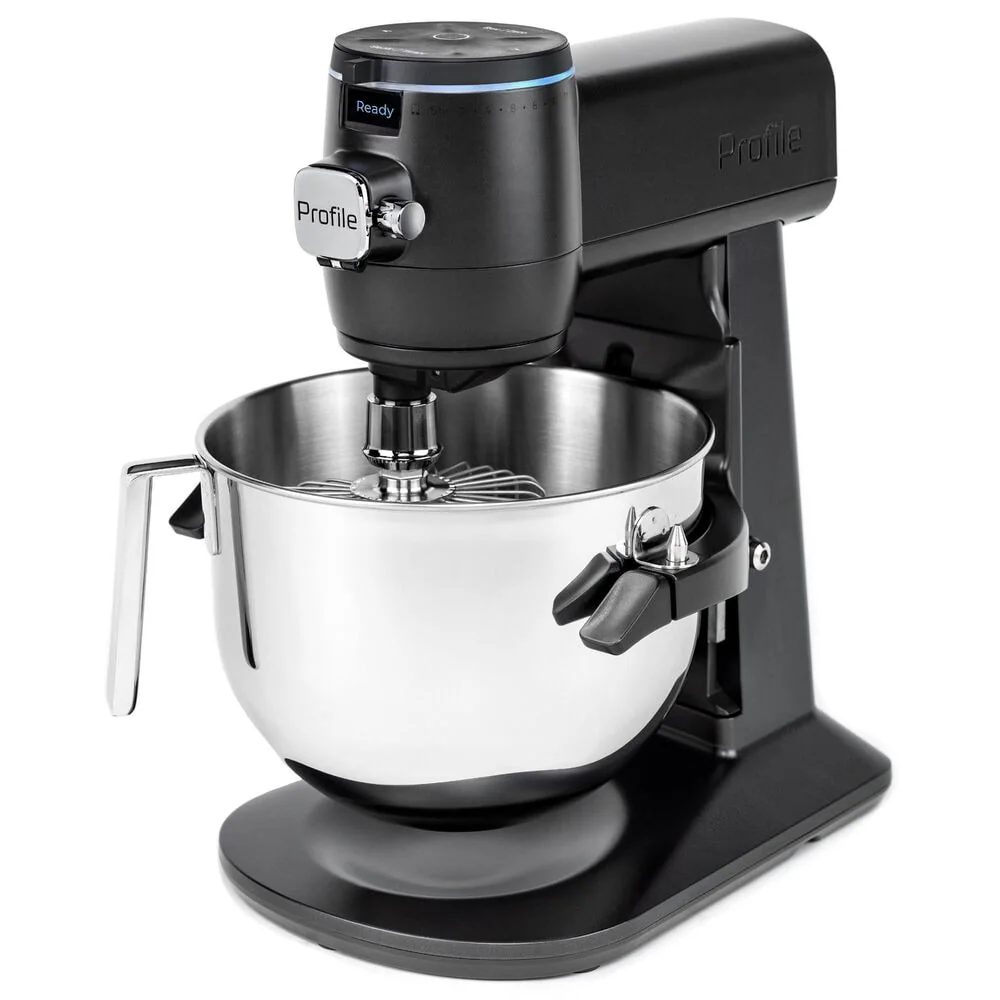
Define the repeat batch
Write down the cookies, cakes, frostings, breads, and family-size foods you make in a normal month. Note the flour weight or finished dough weight for bread rather than calling every batch one loaf.
A medium bowl can suit most home baking, while a larger bowl helps with double batches and heavy mixtures. Oversizing can make very small whipping or creaming jobs less effective.
Use model-specific capacity
Compare the manufacturer's maximum flour, dough, cookie, or batter guidance for the exact model. Bowl shape, tool geometry, transmission, cooling, and recipe hydration all affect the safe working limit.
Do not assume a higher wattage or another quart of bowl volume guarantees more usable dough capacity. Stop if the mixer walks, stalls, overheats, or exceeds its stated operating instructions.
Measure the operating envelope
Measure height, width, depth, weight, cord reach, and cabinet clearance. For a tilt-head, measure with the head raised; for a bowl-lift, allow room to lower and remove the bowl.
A heavy mixer is most convenient when it can stay on a stable counter. If it must move, plan a safe lift or appliance platform that does not compromise ventilation or stability.
Check small-batch reach
Look for guidance about beater-to-bowl clearance and minimum whipping quantities. An accessory small bowl can help only when it is explicitly compatible with the mixer and tool.
Buy for the largest frequent batch and verify that the smallest frequent batch still reaches the attachment. Rare holiday volume can often be handled in two controlled batches.