
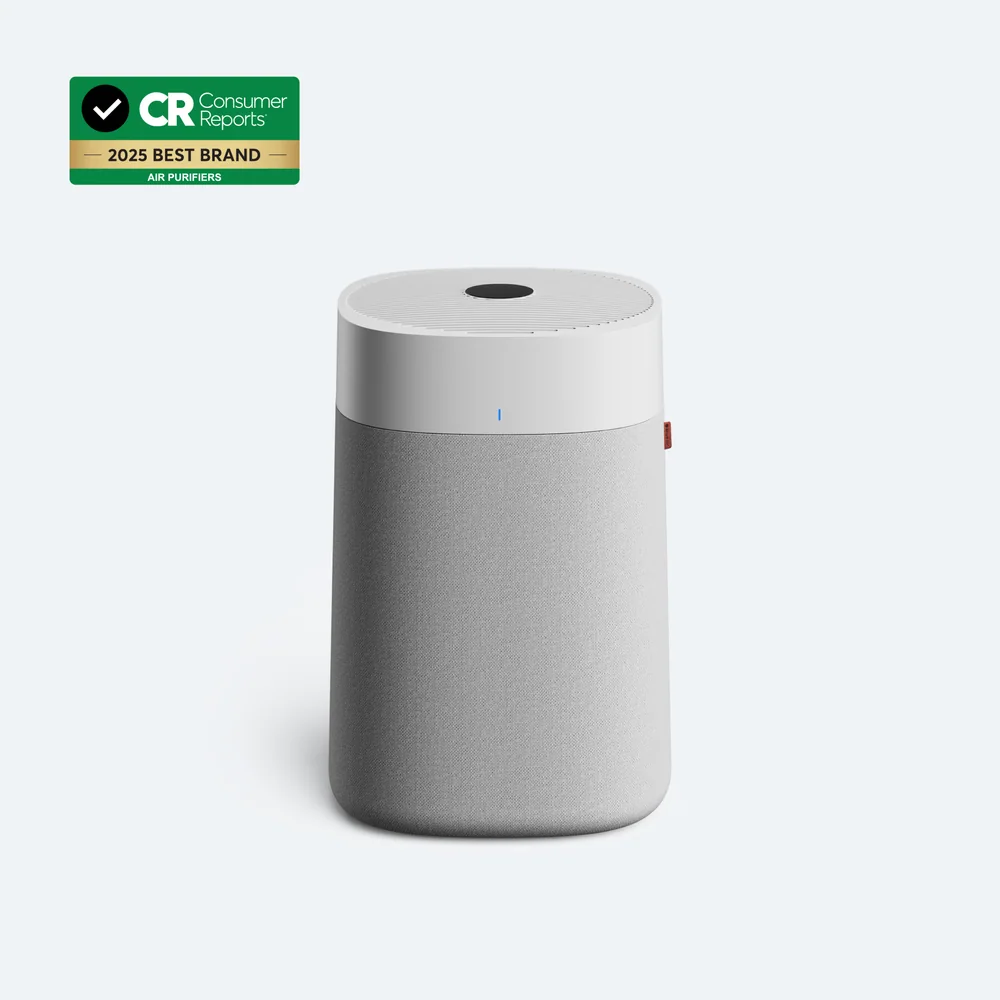
What to know first
- Built for large rooms: rated up to 635 sq. Ft. And commonly used for around 500 sq. Ft. Spaces.
- Uses HEPA filtration plus activated carbon filtration for particles and some odor control.
- Auto mode is backed by a particle sensor and a 5-color air-quality indicator.
- You can control it from a smartphone, and the unit shows real-time PM readings.
- Washable fabric pre-filter helps catch larger dust and lint before it loads up the main filter.
- Energy Star certified, so it’s designed to be efficient for its output.
What the Blueair Blue Pure 211i Max is
The Blueair Blue Pure 211i Max is a large-room air purifier meant to sit on the floor (or a sturdy surface) and continuously cycle air through a particle filter. It’s a model you buy when you want one unit to handle the main space where everyone actually lives: the living room, a big family room, or an open-plan area.
Filtration is a two-part approach: HEPA for airborne particles and activated carbon for additional filtration support. In plain terms, it’s aimed at the stuff most people notice day to day, like dust, pollen, and smoke-sized particles, with some help for odors via carbon.
It’s also a smart model in the practical sense. You get auto mode, a built-in particle sensor, an on-unit air-quality indicator, and wireless control from a phone. That combination matters because the best purifier is the one you’ll keep running at a useful speed, not the one with the most impressive box claim.
Why it stands out
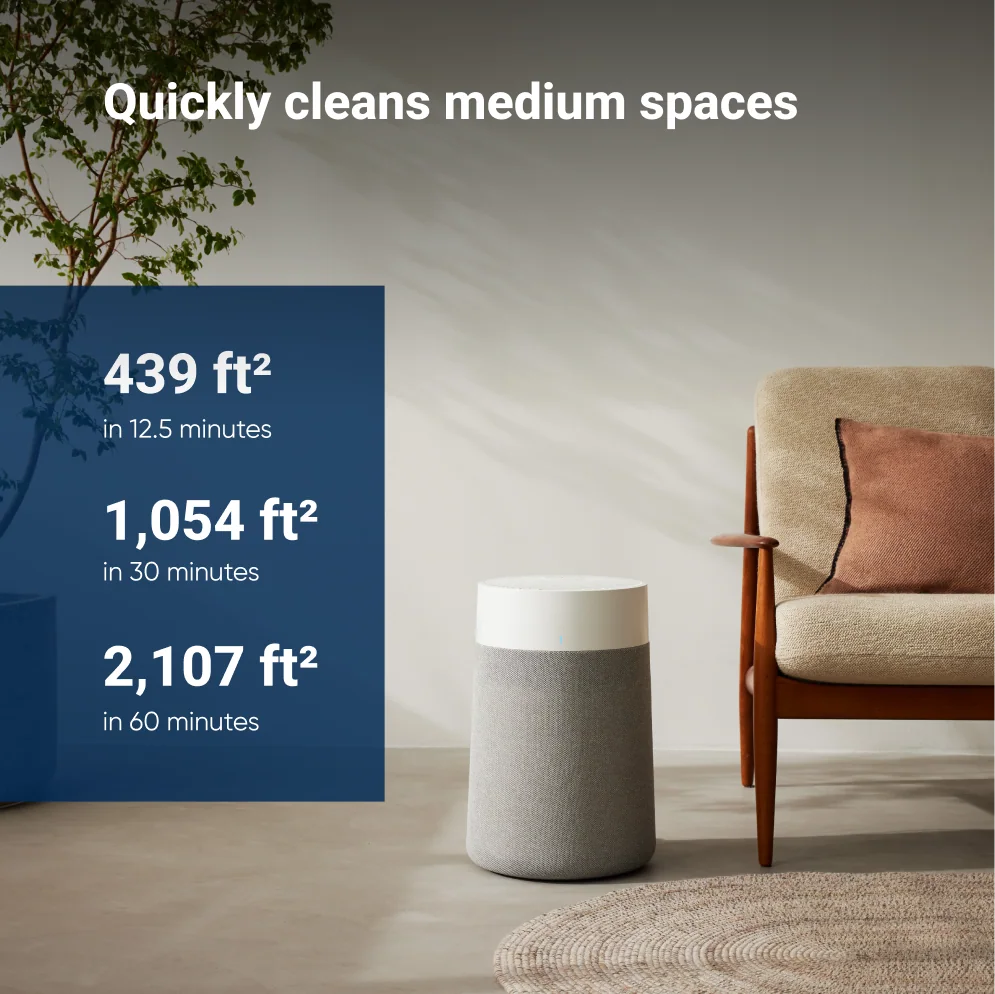
The main reason to pay for the Blueair Blue Pure 211i Max is capacity. This model is designed for large-room coverage and fits spaces around 500 square feet, with a stated rating up to 635 square feet. That’s the difference between a purifier that can make a noticeable change in a big room and one that just runs in the corner.
It also focuses on livability, not just raw airflow. Auto mode, a particle sensor, and a clear air-quality indicator mean you can let the machine do the boring part: ramping up when the air gets worse and backing off when it doesn’t need to work as hard. The unit also displays real-time PM values, which is useful if you want to understand what’s happening during cooking, cleaning, or smoke events.
Energy Star certification is another practical plus. Large-room purifiers are often run for long stretches, sometimes 24/7. Efficiency helps keep the ongoing cost of running the fan from becoming annoying.
Finally, the washable fabric pre-filter is a small detail that can make ownership easier. It’s there to catch larger lint and dust before it loads up the main filter, and being washable means you can refresh it without buying a new piece every time.
What it is like to own
Physically, the Blueair Blue Pure 211i Max is a single, freestanding unit (22.7 inches tall, 14.4 inches wide, 14.4 inches deep) that weighs 16 pounds. That’s manageable to move when you need to, but it’s not a “tuck it behind a plant stand” purifier. Plan on giving it a real spot in the room so it can pull in air and push clean air back out without being blocked.
Controls are straightforward: you get on and standby, a dedicated night mode (the lowest speed setting), and fan speed steps labeled 0 through 4. There’s also a filter replacement indicator, and the unit can show real-time particle readings. If you prefer using your phone, it supports wireless control through an app.
Auto mode is the setting most people will live on. The built-in particle sensor measures PM1, PM2.5, and PM10, and the LED indicator shows air quality in five colors from excellent (blue) to very polluted (red). That’s a simple, glanceable way to know when the purifier is actually reacting to something in the air.
Maintenance is mostly filter management. The unit uses a particle and carbon filter, plus a washable fabric pre-filter. The recurring cost and convenience come down to how often you replace the main filter and how easy it is for you to keep the pre-filter clean.
What to know before you buy
Room coverage claims need context. The Blueair Blue Pure 211i Max is rated for large rooms (up to 635 square feet), and it’s a strong choice for a big main room. But if you’re thinking “one unit for the whole house,” that’s usually not how air cleaning works in real homes with walls, hallways, and closed doors. You’ll get better results placing separate purifiers in the rooms where you spend time.
Also keep your expectations straight on odors. This model uses activated carbon filtration, but particle filtration and gas adsorption are different jobs. If your main problem is strong, persistent odors or VOCs, you may want a purifier designed specifically for heavier gas filtration rather than assuming any “HEPA plus carbon” setup will solve it.
Finally, don’t shop based on the quietest mode. Night mode is the lowest speed setting, and like any purifier, the lowest speed moves less air. If you need fast, noticeable cleaning in a large room, you should expect to run it at higher speeds at least some of the time.
The specs that matter
Large-room ratings are what you want for a big living room or open-plan space. In a room that size, a smaller purifier can feel like it’s doing nothing because it can’t move enough air through the filter.
This is a floor-standing footprint you need to plan around. Give it breathing room so it can pull air in and push clean air out without being jammed into a tight corner.
Heavy enough to feel stable in a main room, light enough to move when you’re vacuuming, rearranging furniture, or relocating it during smoke season.
HEPA is the workhorse for airborne particles like dust, pollen, and smoke-sized particles. Activated carbon can help with some odors, but it’s not the same as a dedicated, deep carbon setup for strong smells and gases.
Multiple speeds let you choose between faster cleaning and quieter operation. Auto mode matters because it can keep the purifier working harder when the air is worse without you constantly adjusting it.
This is what makes auto mode useful. You can see when air quality changes during cooking or cleaning, and the purifier has the information it needs to respond.
If you run a purifier for long stretches, efficiency helps keep operating costs reasonable for the amount of air it’s moving and cleaning.
It’s a straightforward baseline warranty. If you want longer coverage, check whether any retailer or manufacturer programs extend it before you buy.
Who this product fits
You want one purifier for a large living room
Put the Blueair Blue Pure 211i Max in the main room where people hang out, run auto mode, and let the sensor handle day to day changes. It’s sized for big spaces where smaller purifiers often feel underpowered.
You deal with seasonal allergies and want less dust and pollen indoors
This model’s HEPA filtration targets airborne particles. In a large, high-traffic room, it’s a purifier you can keep running so the air stays consistently cleaner instead of only reacting when symptoms flare up.
You want a set-it-and-forget-it purifier with app control
If you like checking air quality and controlling settings from your phone, the wireless control and on-unit PM display make it easier to keep the purifier doing its job without fiddling with buttons every day.
You’re trying to cover multiple rooms
This is where you should pause. One big unit in the hallway usually will not clean bedrooms and offices as well as separate purifiers placed in those rooms. The 211i Max works best as the main-room workhorse, not a whole-home replacement.
What else to compare
If the Blueair Blue Pure 211i Max isn’t the right fit for your layout or budget, these are the other models I’d look at next.
Blueair Blue Pure 211i Max FAQ
How big of a room can the Blueair Blue Pure 211i Max handle?
It’s designed for large rooms and is rated up to 635 square feet. It’s also commonly framed as a strong choice for spaces around 500 square feet, which is a realistic big living room size for many homes.
Does the Blueair Blue Pure 211i Max have auto mode?
Yes. It has auto mode along with a particle sensor and a 5-color air-quality indicator, so it can adjust fan speed based on detected particle levels.
What does the Blueair Blue Pure 211i Max sensor measure?
The particle sensor measures PM1, PM2.5, and PM10. The unit can display real-time PM values and shows overall air quality with a color indicator from excellent to very polluted.
Is the Blueair Blue Pure 211i Max good for smoke and allergies?
It uses HEPA filtration, which targets airborne particles like dust, pollen, and smoke-sized particles. For odor-heavy situations, remember that activated carbon can help, but odor and VOC control is a different job than particle filtration.
Can I control the Blueair Blue Pure 211i Max with my phone?
Yes. It supports wireless control from a smartphone, in addition to the on-unit controls for power, night mode, and fan speeds.
How often do you replace the filters on the Blueair Blue Pure 211i Max?
The unit has a filter-life indicator to prompt replacement. Actual timing depends on how much you run it and how dirty your air is, and the manual guidance commonly points to checking and replacing filters around every 6 to 12 months.
Should you buy the Blueair Blue Pure 211i Max?
Yes, if your goal is simple: one strong purifier for a large main room that you can leave on and not think about. The Blueair Blue Pure 211i Max is built for large-room coverage, it has the sensor and auto mode features that make daily use easy, and it’s efficient enough to run regularly without feeling wasteful.
Skip it if you’re trying to solve a whole-home problem with one machine, or if your main issue is heavy odors and gases rather than particles. In those cases, you’ll be happier either placing multiple purifiers where you actually spend time or choosing a model designed specifically for deeper odor and VOC control.