

Pickori's Take
- Choose the Dreame X60 Max Ultra Complete as the best all-around premium robot vacuum for a complicated mixed-floor home with pets, long hair, low furniture, clutter, or awkward thresholds. A simple, mostly hard-floor home does not need to spend $1,500, and mopping-first buyers should compare a continuously washed roller-mop rival.
- Carpet is the case for the price. Vacuum Wars measured 89 percent embedded-sand removal and 100 percent of flattened pet hair, against its category averages of 78 and 82 percent, plus zero wrap from seven-inch hair.
- In the same evaluation, it avoided 22 of 24 obstacles and crossed a 51 mm threshold; its 3.13-inch body also slips under low furniture. Cramped layouts can still produce occasional stranding, so avoidance is excellent rather than foolproof.
- Mopping is good, not a headline. The heated pads scrub dried stains well, but high water use pulls the overall mopping result below average, and rug-heavy floors can knock pads loose without careful settings.
- Expect a dock-dependent routine: a 235 mL onboard bin, tank refills, and a Vacuum Wars estimate of about 950 square feet per charge. The Complete bundle's spare brushes, filter, bags, mop pads, and solution cut supply runs, not chores.
A flagship built around fewer failed runs
Underneath the marketing, the X60 Max Ultra Complete is a very low robot carrying a lot of sensors, paired with a dock that handles most of the dirty work. Dreame leads with 35,000 Pa of maximum suction, and that number tells you almost nothing. Pascals measure pressure, but manufacturers don't measure suction the same way, so a bigger figure on one brand's box doesn't prove cleaner carpet than a smaller figure on another's.
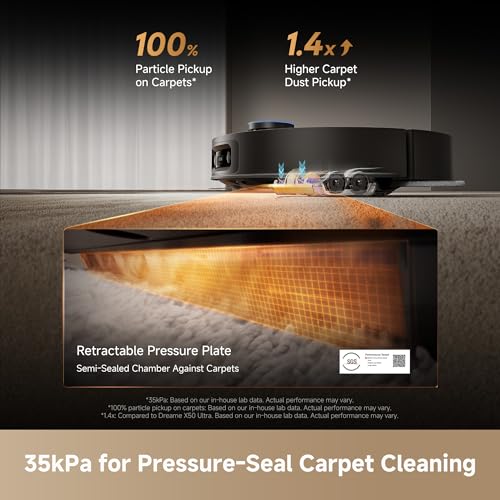
The carpet cleaning comes from two parts. The first is the HyperStream Detangling DuoBrush 2.0. The second, on the Max model only, is a retractable pressure plate that seals the brush area against the pile, so the airflow goes through the carpet instead of leaking around it. That pairing explains the carpet results below far better than the suction claim does.
The other defining part is VersaLift, a retractable DToF sensor. DToF (direct time-of-flight) maps a room by timing how long laser light takes to bounce back. Most robots carry that sensor in a permanent turret on top. The X60 lowers it, which drops the body from 4.05 inches to 3.13. Dual AI cameras, side-facing 3D structured light, and built-in illumination cover what the lowered sensor can't see, and Dreame claims the robot recognizes up to 280 object types.
Carpet, hair, and thresholds make the case
Carpet is where the X60 pulls away from flagships that only have big numbers. Vacuum Wars' controlled evaluation of this exact model measured 89 percent embedded-sand removal from medium-pile carpet, against its 78 percent category average. The X60 also removed all of the flattened pet hair, against an 82 percent average. "Flattened" is the key word. That's fur ground into the fibers by feet and paws, and it survives robots that only gather the loose tumbleweeds.
Seven-inch hair left zero wrap on the brush in the same testing, compared with a 26 percent average, and a separate home evaluation found no tangles from hair or string. That's one recurring scissors job gone.
Thresholds are another strength. Dreame rates single steps at 1.77 inches (45 mm), yet the robot crossed a 51 mm threshold under controlled conditions. The 3.47-inch double-layer rating applies only to a compatible two-step transition, not to a vertical wall. Hard floors are the one surface where it is merely strong. Fine debris scattered on the first pass before the second pass collected it, and one home test found more sugar left behind than two rival robots left.
Where the X60 earns its keep, job by job
Premium robots rarely fail on an open, clean floor. They fail at the rug fringe, the raised doorway, the sock under the bed. Each row below judges one of those jobs and says whether it strengthens the case for this particular robot.
| Workload | Outlook | What to expect |
|---|---|---|
| Carpet and embedded grit | Excellent, and the core reason to buy the Max | This is where the Max hardware earns its premium. A retractable pressure plate seals the intake against carpet so airflow pulls from inside the pile rather than skimming it. Vacuum Wars measured 89 percent embedded-sand removal from medium-pile carpet against a 78 percent category average. That is the grit tracked in from entryways, the stuff that settles deep and wears fibers down. In a carpet-heavy home, no other row matters more. |
| Pet hair pressed into carpet | Exceptional | Loose tumbleweeds on tile are easy. Fur ground into a rug by a dog that naps in the same spot every afternoon is the real test. The X60 removed 100 percent of flattened pet hair from carpet in independent testing, against an 82 percent average. That is measured evidence, not an inference from a suction claim. For a multi-pet household, this row does much of the work of justifying $1,500. |
| Long hair and brush maintenance | Effectively tangle-free in testing | The DuoBrush 2.0 is the underrated feature. Seven-inch hair produced zero wrap in independent testing, where the category average was 26 percent, and a separate home evaluation found no tangles from hair or string. Anyone who has cut a matted rope of hair off a roller knows why this beats a suction headline. A brush that stays clean keeps pickup consistent and removes one of the most common reasons owners stop running a robot on schedule. |
| Hard-floor debris | Strong, not flawless | Bare floors are fine, but they are not where the X60 separates itself. Controlled testing saw fine debris scattered on the first pass and collected on the second, and a longer home evaluation found more leftover sugar than two comparison robots left behind. A daily scheduled run hides most of that. In a home that is mostly tile or wood, though, you are paying for carpet hardware you will rarely use. |
| Mopping dried residue | Good scrubber, thirsty mop | The heated spinning pads press down with up to 15 N. In Vacuum Wars' dried-coffee protocol, the X60 scored 136 points against that publication's 93-point category average. Once its water-use penalty entered the same calculation, the combined mopping score fell to 19.9, below the 22.8 average. Home use matched that shape: streak-free floors, but heavy water draw, a water-tank change after roughly 600 square feet in one home, and an unfinished heavy wet spill. Competent bonus, not the reason to buy. |
| Clutter and small obstacles | Among the best measured, still layout-sensitive | Dual cameras, lateral 3D structured light, and onboard illumination helped the X60 avoid 22 of 24 objects in Vacuum Wars' standardized course, where its tested category average was about 16. That matters, because a robot that eats one charging cable can lose its scheduled-cleaning privileges for good. Longer home use was less tidy: dependable edges and step detection in one house, occasional stranding and confused paths in a cramped one. Recognition is excellent. Room geometry, lighting, and furniture bases still get a vote. |
| Thresholds and low furniture | A real advantage in awkward homes | Dreame rates the single-step climb at 1.77 inches, and the X60 cleared a 51 mm (about 2-inch) threshold in Vacuum Wars' test, tying the best result that evaluator had recorded. The 3.47-inch double-layer figure assumes a compatible two-step transition, not a wall. Under furniture, the retracting sensor drops the body to 3.13 inches, and home evaluations found it reaching spots taller robots missed. That is cleaned floor, not a flattering spec line. |
| Large single-floor plans | Thorough and slow, may need a recharge | The X60 is methodical, not quick. Vacuum Wars measured navigation at 0.64 meters per minute versus its 0.71 category average, and estimated roughly 950 square feet per charge against a 1,170-square-foot average, despite the 6,400 mAh battery. Fast charging and recharge-and-resume still finish big homes, just not always in one run, and the 235 mL bin adds dock trips. Scheduled runs while you are out barely notice. A quick tidy before guests will. |
Read the table as a pattern. The X60 is strongest exactly where cheaper robots break down: deep carpet, matted fur, hair wrap, doorways, and the gap under the sofa. Its softer rows (fine powder, mop efficiency, speed) are the jobs a mid-priced robot can cover.
That is why the 35,000 Pa claim is not the story. Manufacturers do not measure pascals the same way, so the number cannot rank Dreame against another brand. The pressure plate and the measured carpet results explain the pickup. The headline figure does not.
Where the evidence disagrees, keep both halves. Controlled testing shows outstanding avoidance and carpet cleaning. Months in real homes turned up pads dropped near rugs and pathing that shifted with layout and settings. Set carpet behavior deliberately rather than switching on every advanced option at once.


The dock removes work, then creates its own
Treat the dock as half the product and place it that way. The onboard bin holds only 235 mL, which is small for a premium robot, so the X60 is built to return often and empty into the dock's 3.2 L bag. A dock hidden behind a door or at the end of a cramped hallway turns every mid-run trip into a navigation test. At 15.34 by 16.65 by 19.65 inches and 23.37 pounds, the station needs a permanent spot with clearance, not a leftover corner.
Water is the chore that never fully goes away. Dual-solution dosing and 212 F pad washing keep the mops cleaner than hand rinsing would. Still, one two-month home evaluation needed a tank change after roughly 600 square feet of mopping, and another described similarly heavy water use. Plan on emptying the dirty tank as part of your routine.
The robot is also slow. Vacuum Wars measured navigation efficiency at 0.64 meters per minute against its 0.71 category average, and estimated about 950 square feet per charge versus a 1,170-square-foot average. Fast charging and recharge-and-resume mean large homes still get finished, just with a break partway through. Schedule it for when you're out. It's thorough, not brisk, which makes it a poor tool for a quick tidy before guests arrive.
Mopping and navigation still need judgment
The mopping hardware is serious. It uses twin warmed spinning pads that press down at up to 15 N and turn at 230 RPM, with an edge extension for baseboards. In Vacuum Wars' dried-coffee protocol, it scored 136 points against that publication's 93-point category average. Once the test's water-use penalty is counted, though, the 1.4 grams it used pulled its combined mopping score down to 19.9, below the 22.8 average. The useful conclusion is simpler than the scoring formula: it removes dried residue well, but it does so by spending water freely, and a heavy wet spill beat it in one home.
Navigation also has two sides. The X60 avoided 22 of 24 objects on Vacuum Wars' standardized course, where its category average is roughly 16, so charging cables and pet toys are far less likely to end a run. Longer home use found dependable edge cleaning and step detection. A cramped, awkward layout, however, produced occasional stranding and confused pathing. Lighting, furniture bases, and app settings still affect how a run ends.
Long-term reliability is the one question nobody can answer yet. The model is early in its life. There are scattered firmware, map, and mop-pad complaints, but no broad pattern of hardware failure.
X60 Max Ultra Complete or X60 Ultra?
Decide based on your carpet and your pets, not the badge. Both robots share the 3.13-inch retractable-sensor body, the 35,000 Pa claim, the 6,400 mAh battery, the heated spinning-pad mops, and high threshold climbing. In a mostly hard-floor home they should behave much alike. The Max's retractable pressure plate is the hardware that matters on carpet, and it is the most likely reason for this model's embedded-hair and sand results.
The Max's second solution tank, which can hold pet-odor formula, and its multispectral dirt detection add to the pet case. The Complete bag is really prepaid supplies. For a carpet-heavy pet home, buy the Max. For mostly hard floors with a wide price gap, buy the Ultra.
What kind of home can justify $1,500?
Count the problems in your home that a cheaper robot would fail on. The usual ones are shedding pets on carpet, long hair, raised or two-step thresholds, sofas and beds with barely three inches of clearance, and floors where cords and toys show up daily. Each one is a way a scheduled run can go wrong. At $1,500, the X60 makes sense when three or more of those describe your home, because one machine and one dock handle all of them.
If you have only one or two of those problems, a cheaper specialist is usually the better buy. A tidy, mostly hard-floor apartment wastes money here. Households that care most about mopping should compare a continuously washed roller-mop design. The previous X50 Ultra is taller at 3.5 inches and climbs lower transitions, so it only makes sense at a substantially lower price.
Set up the carpet behavior before trusting the schedule
Don't turn on every advanced carpet and mop feature at once. The mop pads lift 0.41 inch over carpet, which is enough for low-pile rugs but no guarantee on thick ones. Home evaluations traced wet pads meeting deep carpet, and pads popping off near rugs, back to particular settings. Start conservatively. Mark the thick rugs on the map, and use the dock's option to detach the pads before carpet-heavy runs so wet pads never touch the pile.
Watch the first few scheduled runs before you leave the robot unattended. Check that it moves onto rugs cleanly, that no pad gets left on the floor, and that the clean tank lasts for your whole mopping area. Then add features one at a time, so if a problem appears you'll know which setting caused it.
Who this product fits
A mixed-floor home with pets and long hair
This is the home the X60 was built for. Fur ground into rugs, long hair on every floor, and a trail of toys are where cheaper robots start failing. The pressure plate, detangling brush, and cameras handle all three, and the pet-odor solution tank earns its place. Buy the Max.
A tidy apartment with mostly hard floors
Skip it. Without deep carpet, tricky transitions, or daily clutter, most of what $1,500 buys goes unused. Hard-floor pickup is strong but isn't the X60's standout, and its mopping trails the best roller-mop designs. A cheaper robot or a mopping-first rival suits this home better.
A house with thresholds and low furniture
This is a strong fit. Raised doorway strips and low beds or sofas are where ordinary robots quietly give up, and the X60 handles both better than most. Confirm that any two-step transition matches the compatible shape, and place the dock where the robot never has to climb to reach it.
A large one-level home
Buy it with realistic expectations. Coverage per charge is below average and routes favor thoroughness over speed, so a big single floor may need a recharge break before the job is finished. Schedule runs while you're out and the pause stops mattering.
What else to compare
The X60 wins by solving many problems at once, so its alternatives are mostly narrower bets. The X60 Ultra keeps most of the hardware for less. The older X50 Ultra only makes sense at a steep discount. Mopping-first homes should look at a continuously washed roller mop.
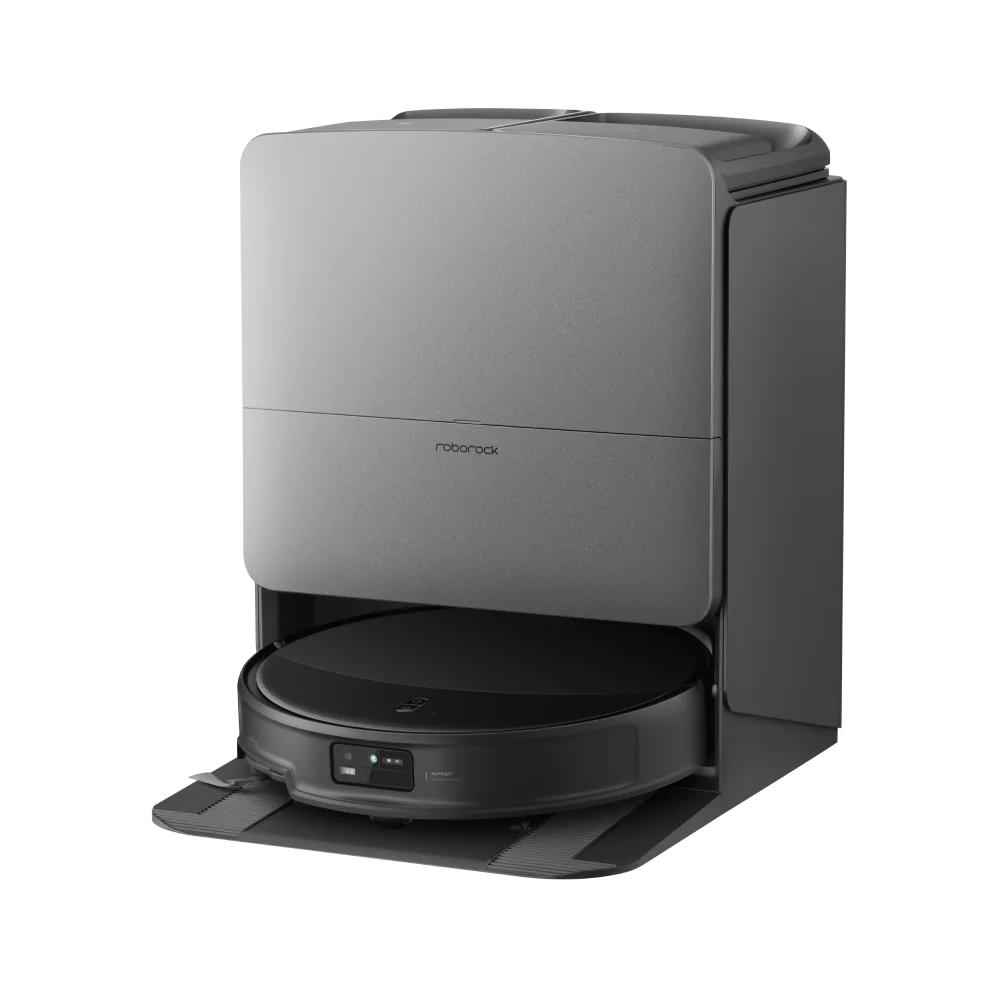 Roborock Saros 20A premium alternative for buyers who prefer Roborock's app and navigation approach
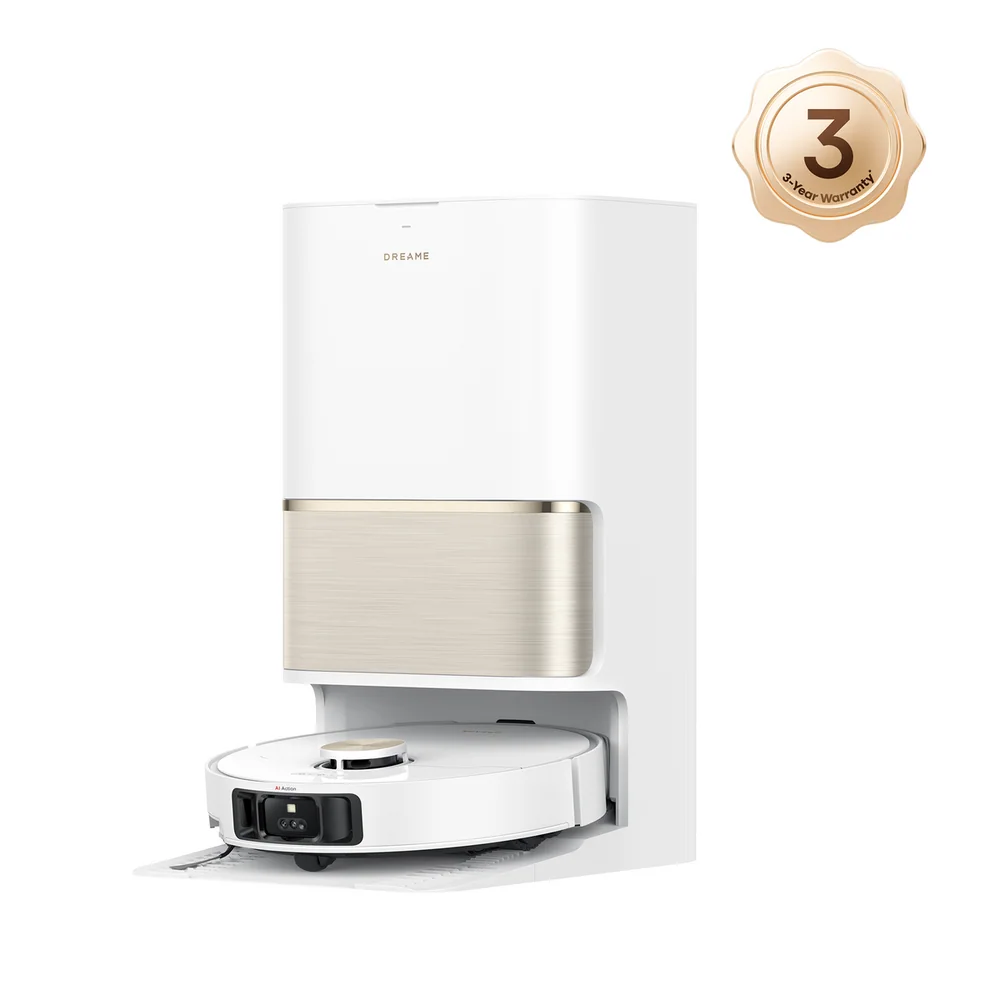 Dreame L50 UltraA less expensive Dreame with strong obstacle avoidance for shoppers who do not need the X60's carpet strength or threshold ability
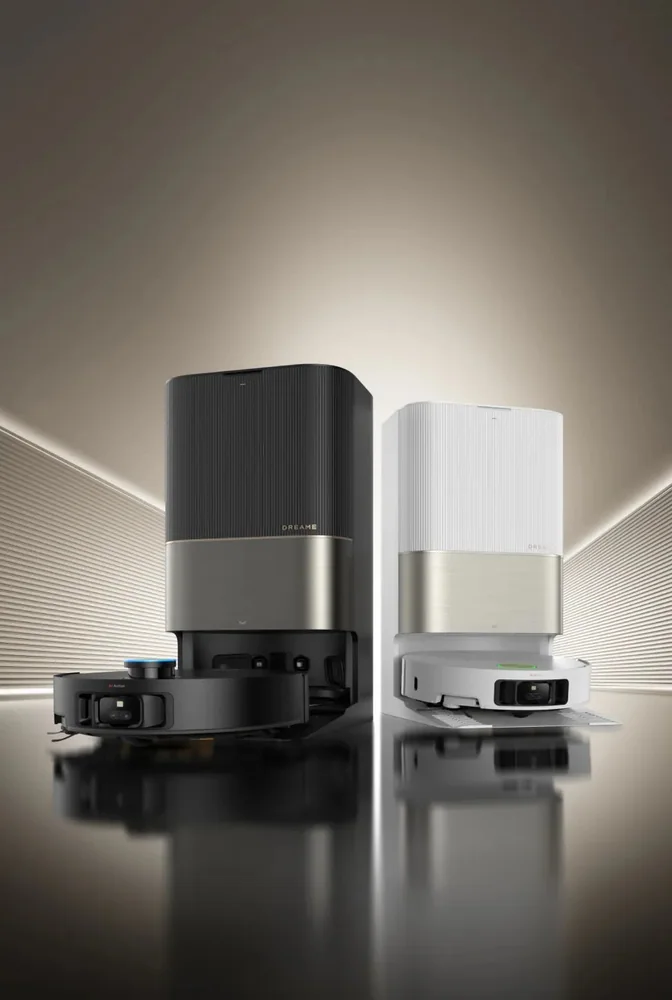 Dreame X50 UltraThe previous flagship, worth considering only when its price is substantially lower
Dreame X60 Max Ultra Complete FAQ
Is the Dreame X60 Max Ultra Complete worth $1,500?
It is worth it in a mixed-floor home with pets, long hair, low furniture, or awkward thresholds, because it solves those problems together and fails fewer runs. A simple, mostly hard-floor home doesn't need to spend this much.
Is the Dreame X60 Max Ultra Complete good for pet hair?
It is exceptional. It removed all of the flattened pet hair from carpet, well above average. That means it pulls fur out of rug fibers rather than just collecting loose clumps.
Does hair wrap around the Dreame X60 brush?
It resists wrapping exceptionally well. Seven-inch hair produced zero wrap in independent testing, and a separate home evaluation found no tangles from hair or string. Any brush can eventually collect something, but this is one of the X60's clearest maintenance strengths.
How well does the Dreame X60 mop?
It mops well enough for daily upkeep. The heated pads lift dried stains effectively, but heavy water use pulls overall efficiency below average, and pads have come loose near rugs. Mopping-first homes should consider a roller mop.
Can the Dreame X60 climb thresholds?
Yes, better than most robots. Dreame rates it for 1.77-inch single steps, and it cleared a 51 mm threshold in independent testing. The 3.47-inch rating requires a compatible two-step transition.
What is the difference between X60 Max Ultra Complete and X60 Ultra?
Both share the low body, suction claim, battery, thermal mops, and threshold climbing. The Max adds a carpet pressure plate, a pet-odor solution tank, multispectral dirt detection, and the spare-supplies bundle.
How much maintenance does the Dreame X60 require?
It needs less than most robots, but not none. You still empty the dirty tank, refill the clean one, and replace bags, pads, brushes, and filters. The Complete bundle covers the first round.
Does the Dreame X60 fit under low furniture?
Usually. At 3.13 inches with its sensor retracted, it reached under furniture that taller robots missed in home evaluations. Measure your lowest sofa or bed gap first.
Should you buy the Dreame X60 Max Ultra Complete?
Yes, if your floors are complicated. The X60 Max Ultra Complete does not earn its place through one giant number. It earns it because pets, long hair, rugs, clutter, low furniture, and raised doorways stop being the reasons your robot quits halfway. In that home, $1,500 buys a robot you can actually leave alone.
In a simple, mostly hard-floor home, keep the money. If you live in a difficult house, this is the robot most likely to finish the job without calling for help.
Sources and research notes
Specifications come from manufacturer documentation. Measured results are attributed to independent evaluations.
- Dreame X60 Max Ultra Complete product pageDreame
Official US specifications, included accessories, dimensions, dock capacities, and manufacturer pricing.
- Dreame X60 Max Ultra Complete user manualDreame Support
Setup, maintenance, operating behavior, and documented product functions.
- Dreame X60 Max Ultra Complete reviewVacuum Wars
Exact-model measurements for carpet cleaning, pet hair, hair wrap, dried-coffee mopping, water use, obstacle avoidance, thresholds, navigation, and estimated coverage per charge.
- Dreame X60 Max Ultra long-term reviewAndroid Authority
Extended home-use observations about water consumption, tangles, pad behavior, under-furniture reach, and routine maintenance.
- Dreame X60 Max Ultra Complete reviewGizmodo
A contrasting home-layout evaluation covering pathing, stranding, hard-floor debris, and wet-spill limitations.