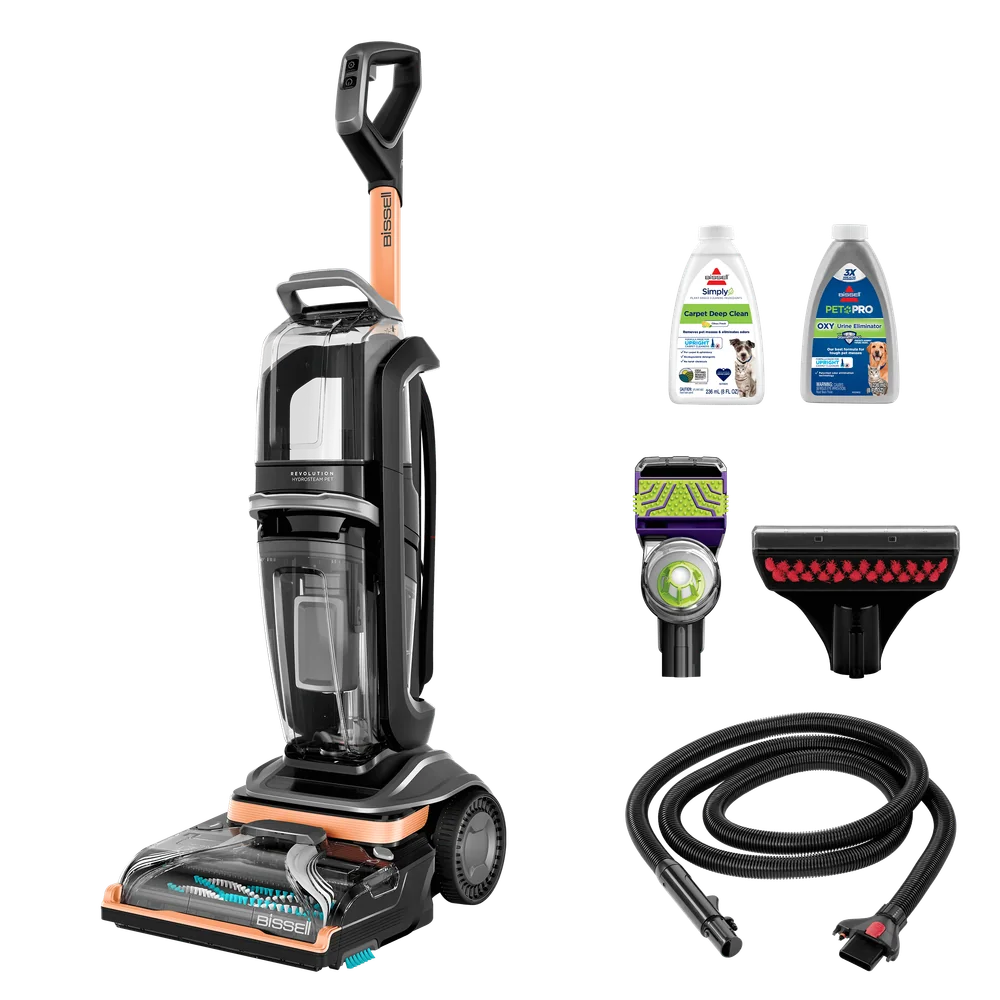
Brush design affects how well a carpet cleaner lifts soil, how safe it is for different fibers, and how much cleanup you will do afterward.
Reading time: 9 minutesBest for: Shoppers comparing upright and portable carpet cleaners who want to understand brush types, fiber safety, and hair wrap.
Rotating vs fixed brushes: what the motion changes
A rotating brush roll is a cylinder with bristles that spins to scrub as you push the machine. This is the most common setup on upright carpet cleaners because it covers a wide cleaning path quickly. A fixed brush (or fixed scrub bar) does not spin. It relies more on the machine's suction and your pushing motion, so it can be gentler but may need more passes on traffic lanes. Some machines let you turn the brush roll on and off, which is useful when you want suction without extra agitation.
Motion matters because carpet fibers behave differently under stress. On plush carpet, rotating brushes can lift the pile and help solution reach down between fibers. On looped carpet (like some berbers), aggressive brushing can snag loops if you catch a loose thread. On area rugs, the backing and edge binding can be more vulnerable than wall to wall carpet. If you clean mixed surfaces, look for a brush system you can control, and plan to test in a small corner first to see how the fibers react.
Counter-rotating and multi-brush decks: when more agitation helps
Counter-rotating brushes are two brush rolls that spin in opposite directions. The idea is to pull carpet fibers in different directions to loosen embedded soil. Multi-brush decks use several smaller brushes instead of one long roll. These designs can improve agitation on stubborn traffic lanes, especially when carpet has oily residue from shoes and skin oils that holds onto dust. They can also help distribute solution more evenly across the cleaning path.
The tradeoff is complexity and cleanup. More brushes means more places for hair, thread, and lint to wrap. It also means more parts to remove and rinse if you want to prevent odor and mildew inside the machine. If you have pets or long hair in the home, pay attention to how the brush area opens, whether the brush rolls lift out without tools, and whether the end caps (where hair often packs in) can be cleaned. Strong agitation is only helpful if the brushes keep spinning freely.
Fiber safety: bristle stiffness, height, and rug edges
Bristle stiffness is a practical spec that rarely gets explained. Stiffer bristles scrub harder, which can help on durable synthetic carpet, but they can be rough on delicate fibers and some rugs. Softer bristles can be safer on mixed piles and may reduce fuzzing, but they may not lift heavy soil as well. Brush height and how much the brush presses into the carpet also matter. A brush that digs in can overwork the pile and make pushing the machine feel heavy.
Edges and transitions are where damage usually happens. Rug fringe, loose binding, and curled corners can get grabbed by a spinning brush. If you clean area rugs, keep the brush away from fringe and edges, and use a hose tool for borders when possible. For looped carpet, avoid scrubbing a snag. Trim the loose loop carefully instead of pulling it, then clean gently. When in doubt, use less agitation and rely on extra extraction passes to remove soil and moisture.
Hair wrap and brush maintenance: keeping agitation consistent
Hair wrap is not just annoying, it reduces cleaning performance. When hair and string build up, the brush roll spins slower, bristles cannot reach the carpet properly, and the machine may start to sound strained. On some designs, hair also blocks solution flow near the brush area, so you end up wetting the carpet without effective scrubbing. If your home has pets, brush access is a buying feature, not a nice extra.
Plan a simple routine after each use. Remove the brush roll if the design allows, cut away wrapped hair, and rinse bristles to remove detergent film. Detergent residue makes hair stick faster next time and can create odors in storage. Let the brush and the brush chamber dry before reassembly when possible. If the machine has a removable nozzle or front cover, rinse that too. Consistent brush performance comes from keeping the moving parts clean, not from using more detergent or pushing harder.
What this guide helps you understand
Choose a brush system that matches your carpet and your tolerance for maintenance, because agitation and brush cleanup drive both results and long-term usability.
Check whether the brush roll can be removed for cleaning, and confirm you can turn brush action down or off for rugs and edges.
Technique notes
If you regularly clean pet hair, budget time after every session to clear the brush area, because hair wrap can quietly cut performance long before the machine "fails."
Safety note: Unplug the machine before clearing hair or debris from the brush area, and keep fingers away from moving parts during operation.