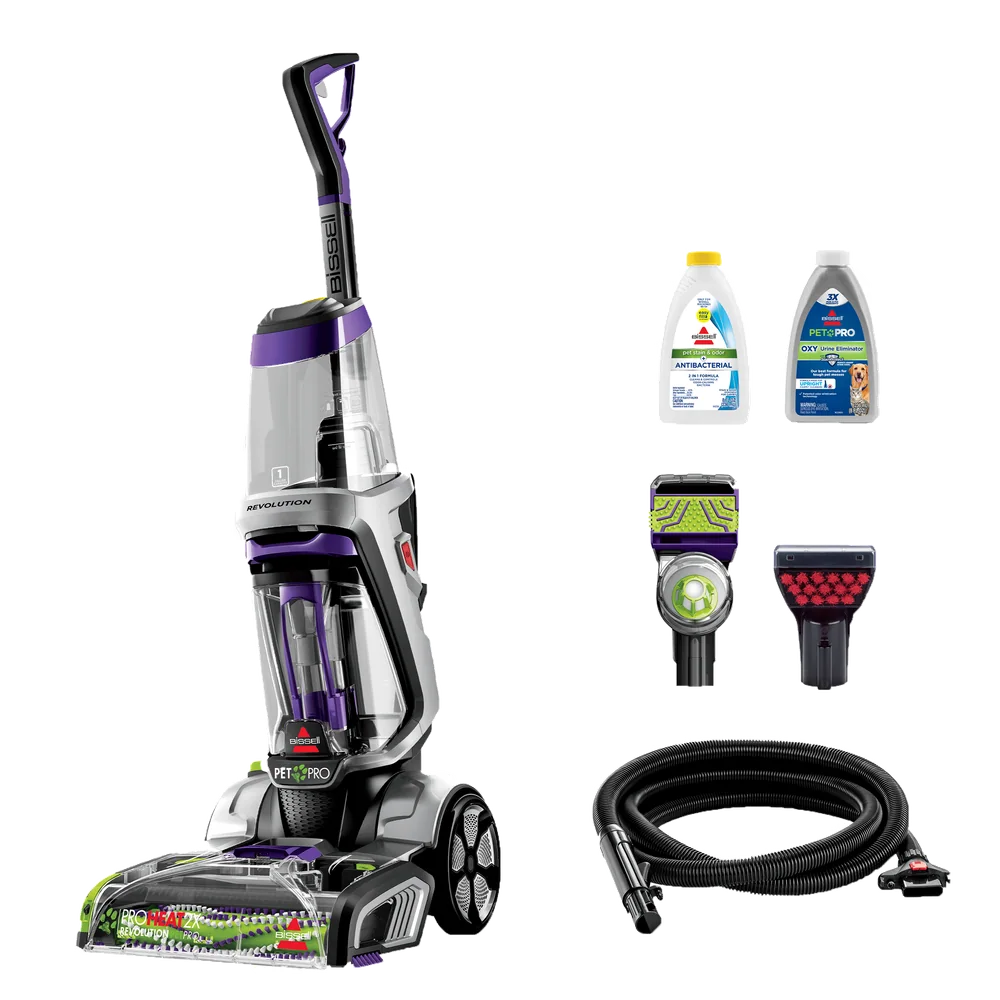
Strong extraction removes more dirty water and detergent from carpet, which shortens drying time and helps prevent sticky residue that attracts soil.
Reading time: 9 minutesBest for: Anyone comparing carpet cleaners and trying to avoid long drying times, residue, and re-soiling after cleaning.
Spray, agitation, and recovery: the three-step clean
Carpet cleaning works best as a sequence. First, the machine sprays a mix of water and cleaner into the carpet. Second, brushes agitate the fibers, which helps loosen soil and lift it toward the surface. Third, the machine recovers the dirty solution through suction, sending it into the dirty tank. If any step is weak, results suffer. For example, strong brushes without good recovery can leave the carpet wet and dirty water sitting deeper in the pile.
Agitation and recovery also need to match the surface. Some carpets respond well to stronger brush action, while delicate rugs or certain fibers can fuzz or distort if scrubbed aggressively. Recovery matters on every surface because leftover moisture can wick soil back up as it dries, leaving a dull "shadow" that looks like the stain returned. Good extraction reduces that risk by removing more of the dirty solution before it has time to migrate.
Dry passes and why they change drying time
A common mistake is doing one slow wet pass and moving on. Most machines need extra dry passes, meaning you stop spraying and simply pull the machine over the same area to suction up more water. This is not busywork. It is how you get closer to a damp carpet instead of a wet carpet. More water left behind means longer drying, and longer drying increases the chance of odor, residue, and tracked-in dirt sticking to the fibers.
A practical routine is to clean a small section, then do additional passes with the spray off until the sound changes and you see less water moving through the nozzle window (if your machine has one). On a portable spot cleaner, it means repeated slow pulls on the tool after you finish scrubbing. Pair this with airflow. Open windows when weather allows, run fans, and avoid walking on the area until it is dry enough to prevent re-soiling.
Detergent residue and the "sticky carpet" problem
Using too much detergent is one of the fastest ways to make a carpet look worse over time. Extra detergent does not magically clean more. It leaves residue that can feel slightly sticky, which grabs and holds soil from shoes and pets. Then the carpet looks dirty again quickly, and it is easy to blame the machine when the real issue is chemistry and rinsing.
Extraction helps, but technique matters too. Measure solution carefully, and consider doing a rinse pass with plain water if your machine allows it, especially in high-traffic lanes. If you are treating pet accidents, remember that odor can be below the surface in padding or subfloor. A surface clean can improve appearance, but persistent odor often requires deeper treatment and thorough drying, not just more soap.
How to judge useful extraction when shopping
Marketing often focuses on heat, "professional" language, or dramatic before-and-after photos. For extraction, look for ownership-friendly clues: a well-sealed dirty tank, a clear path for water to travel, and a suction head that maintains contact with the carpet. If the machine design leaks, foams, or loses suction because the tank is fiddly, extraction suffers even if the motor is strong on paper.
Also consider the tool system. On portables, the hand tool design affects recovery because the nozzle opening and seal against fabric determine how much water gets pulled back. On uprights, the base design and how easily you can keep a steady pace matter. Finally, remember that "heated cleaning" often means maintaining warm tap water or warming airflow, not heating cold water like a boiler. Warm solution can help, but it cannot replace solid extraction and good dry passes.
What this guide helps you understand
Prioritize extraction and use dry passes, because removing more dirty water is what improves drying time and reduces residue and re-soiling.
Plan to do at least one extra dry-only pass for every wet cleaning pass, and reduce detergent to the measured amount rather than guessing.
Technique notes
If the carpet still feels tacky after drying, the usual fix is less detergent next time and an extra rinse and extraction pass, not stronger soap.
Safety note: Avoid over-wetting near wood trim, furniture legs, or seams, and keep the area ventilated so moisture does not linger.