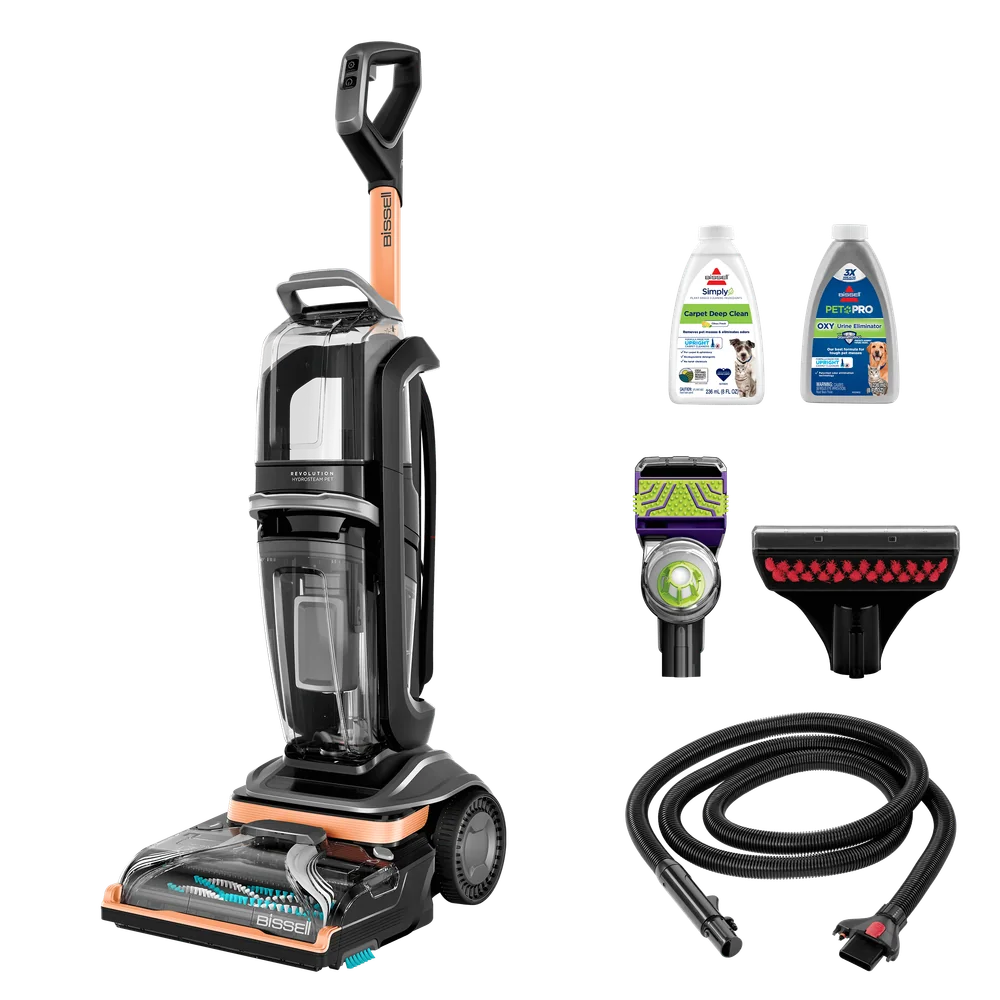
Choose an upright for room-sized cleaning and a portable for stairs, upholstery, and quick spot work, based on where messes actually happen.
Reading time: 9 minutesBest for: Shoppers deciding between a full-size upright carpet cleaner and a portable spot cleaner based on their home layout and typical messes.
Room coverage and cleaning speed
Upright carpet cleaners win on coverage because they have a wider cleaning path and a stable base that keeps the brush and suction head flat on the carpet. That matters on wall-to-wall carpet where you need consistent passes and even extraction. A wider path does not automatically mean better cleaning, but it usually means fewer passes to cover the same area, which reduces fatigue and helps you finish before the carpet stays wet too long.
Portable spot cleaners are intentionally slow for large areas. Their hand tools clean a small rectangle at a time, and you are doing the scrubbing motion yourself. They shine when you can focus on one stain, one stair tread, or one cushion. If you try to clean a whole room with a portable, you will do a lot of refilling and emptying, and you may rush extraction just to be done, which can leave the carpet wetter than it needs to be.
Stairs, upholstery, cars, and tight spaces
Stairs and upholstery are where uprights struggle. Even if an upright includes a hose, the machine body still has to sit nearby, and you are often dragging a heavy base while working one-handed. On stairs, that can feel awkward because you need stable footing, a place to set the machine, and enough hose reach to work without lifting the unit step by step.
Portable spot cleaners are built for these jobs. You carry the whole unit with one hand, set it on a landing or floor mat, and work with a hose tool. For cars, a portable is usually the only practical choice because you can keep the machine outside the vehicle and reach in with the tool. Pay attention to hose length and tool shape, since a short hose or bulky tool makes seats and stair corners harder than they should be.
Tank size, weight, and storage reality
Uprights typically have larger clean and dirty tanks, which means longer stretches of cleaning before you stop to refill or empty. The tradeoff is weight. A carpet cleaner gets heavier once the clean tank is full, and it can feel top-heavy when turning or pulling backward. If you have to carry it up stairs or store it in a tight closet, the "bigger is better" logic can backfire because you avoid using it.
Portables have small tanks, so you refill more often, but the unit is easier to lift, store, and rinse out at a sink. That convenience matters because carpet cleaning is not just the cleaning pass. It is also filling, emptying dirty water, rinsing tanks, and cleaning the tool and hose. If the machine is easy to clean after use, you are more likely to use it quickly when a spill happens, which prevents stains from setting.
When it makes sense to own both
Buying both formats can be practical when you have a mix of wall-to-wall carpet and frequent spot messes. The upright handles periodic deep cleaning of rooms and traffic lanes, while the portable handles the weekly reality of spills, pet accidents, and upholstery touch-ups. This is less about "doubling up" and more about using the right tool so you do not compromise on drying time or effort.
If you plan to own both, prioritize the one that solves your most common problem first. For many homes, that is the portable because it gets used immediately and often. For homes with lots of carpet and allergy or odor concerns tied to overall carpet condition, the upright may come first. Either way, check that your cleaning solutions and tools match your surfaces, and plan where each machine will live so it is actually accessible.
What this guide helps you understand
Match the machine format to where you clean most often: uprights for rooms and portables for stairs, upholstery, cars, and fast spot response.
List your top three cleaning targets (rooms, stairs, upholstery, car, pet spots) and choose the format that covers at least two of them without awkward lifting or slow, tool-by-tool cleaning.
Technique notes
Plan for cleanup time after every use. A machine that is annoying to rinse and dry is the one that ends up stored with dirty water smell and clogged tools.
Safety note: Keep cords and hoses behind you while cleaning to reduce trip risk, and unplug the machine before clearing hair or debris from brushes or tool heads.