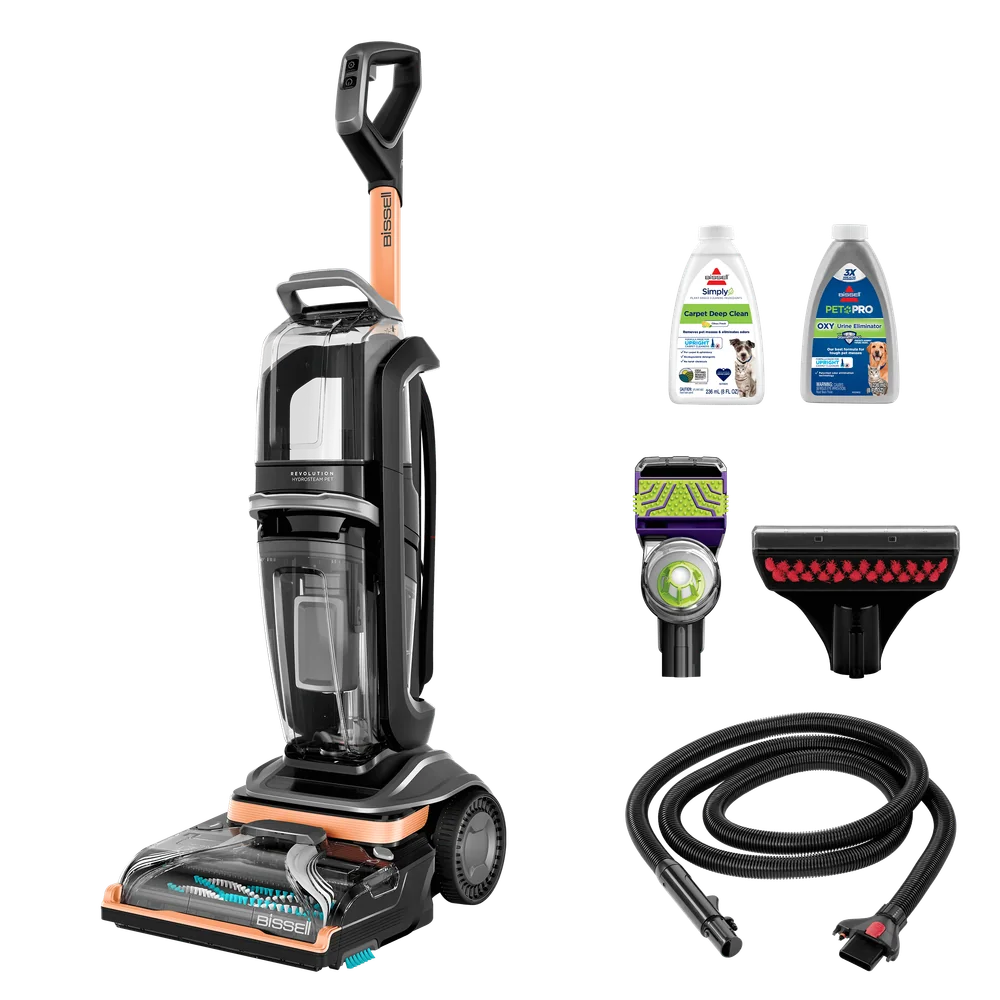
Tank capacity affects how often you refill and empty, but fill lines, usable volume, and added weight matter just as much as the number on the box.
Reading time: 9 minutesBest for: Shoppers trying to choose between carpet cleaners with different tank sizes and understand how that impacts refills, weight, and cleaning sessions.
Clean vs. dirty capacity: why both matter
The clean tank determines how long you can keep spraying solution before you must refill. The dirty tank determines how long you can keep extracting before you must stop and empty. If the dirty tank fills faster than the clean tank empties, you will be interrupting your workflow more than expected. That can happen because carpets release a lot of water, because you are doing extra wet passes, or because the machine picks up pre-existing moisture from previous cleaning or humidity.
Dirty tank behavior is also affected by foam. Some detergents foam more than others, and foam takes up space and can trigger float mechanisms that signal "full" even when there is still room for liquid. That means your "big tank" may not act big in practice. If you expect heavy soil, pet messes, or lots of upholstery cleaning, plan for more frequent dirty-tank emptying and choose a design that is easy to dump and rinse.
Fill lines, markings, and the usable amount
Many tanks have max fill lines, and you should treat those as the real capacity. Overfilling can cause leaks, poor suction, or messy spills when you tilt the machine. Good markings make it easier to mix solution accurately, which helps avoid residue. If markings are hard to see or only printed on one side, you will spend more time guessing, and guessing usually leads to too much detergent.
Usable capacity also depends on how the tank is shaped and how it pours. A tank with a wide opening is easier to fill at a sink and easier to rinse out. A narrow opening can trap grime and hair, which becomes a smell problem if you store the machine without fully cleaning it. When comparing machines, think about the whole routine: fill, carry, install, remove, empty, rinse, and dry. Tank design often matters more than the headline number.
Weight, handling, and when big tanks backfire
Water is heavy, and a larger clean tank means a heavier machine at the start of the session. On an upright, that can make it harder to push, pull, and turn, especially on thick carpet. On a portable, a larger tank can make the unit awkward to carry one-handed while managing a hose. If you have stairs, limited storage, or any reason you need to lift the machine, weight can be the deciding factor.
Bigger tanks can also encourage over-wetting because you feel like you should "use up" the solution. Over-wetting increases drying time and can lead to odor or wicking. A smaller tank can actually support better technique by nudging you to work in smaller sections and focus on extraction. If you clean occasionally, a moderate tank that you can comfortably handle is usually more realistic than a maximum-capacity machine you dread moving.
Estimating real cleaning time and planning sessions
Instead of trying to convert tank size into a perfect square-foot number, plan around interruptions. For a room clean, you will likely stop multiple times to refill, empty, and reposition furniture. For spot cleaning, you will stop to rinse the tool and check progress. A machine that is quick to service between stops can finish faster overall than one with a larger tank but a frustrating emptying and rinsing process.
A practical approach is to break cleaning into zones. Clean one traffic lane or one rug section, then do extra dry passes, then move on. This keeps you from rushing and leaving the carpet too wet. It also helps you manage dirty water before it sits in the tank too long. After the session, budget a few minutes to rinse tanks and run clean water through the hose and tool. That maintenance step is what keeps suction paths from smelling and clogging.
What this guide helps you understand
Choose tank size based on how you will carry, refill, and clean the machine, because usable capacity and handling affect real cleaning time more than the headline number.
Before buying, picture where you will fill and empty the tanks, and confirm you can carry the machine when the clean tank is full without struggling.
Technique notes
Empty and rinse the dirty tank right after use. Letting dirty water sit is the fastest way to create odors and buildup that are hard to remove later.
Safety note: Lift with the tanks removed when possible, and keep water away from electrical outlets and power strips during filling and emptying.