Pet homes need carpet cleaners that handle hair, accidents, and odor control without turning cleanup and machine maintenance into a bigger chore than the mess.
Reading time: 9 minutesBest for: Pet owners deciding between upright and portable carpet cleaners and trying to manage hair, accidents, and odor.
Accidents and timing: why spot tools and hose reach matter
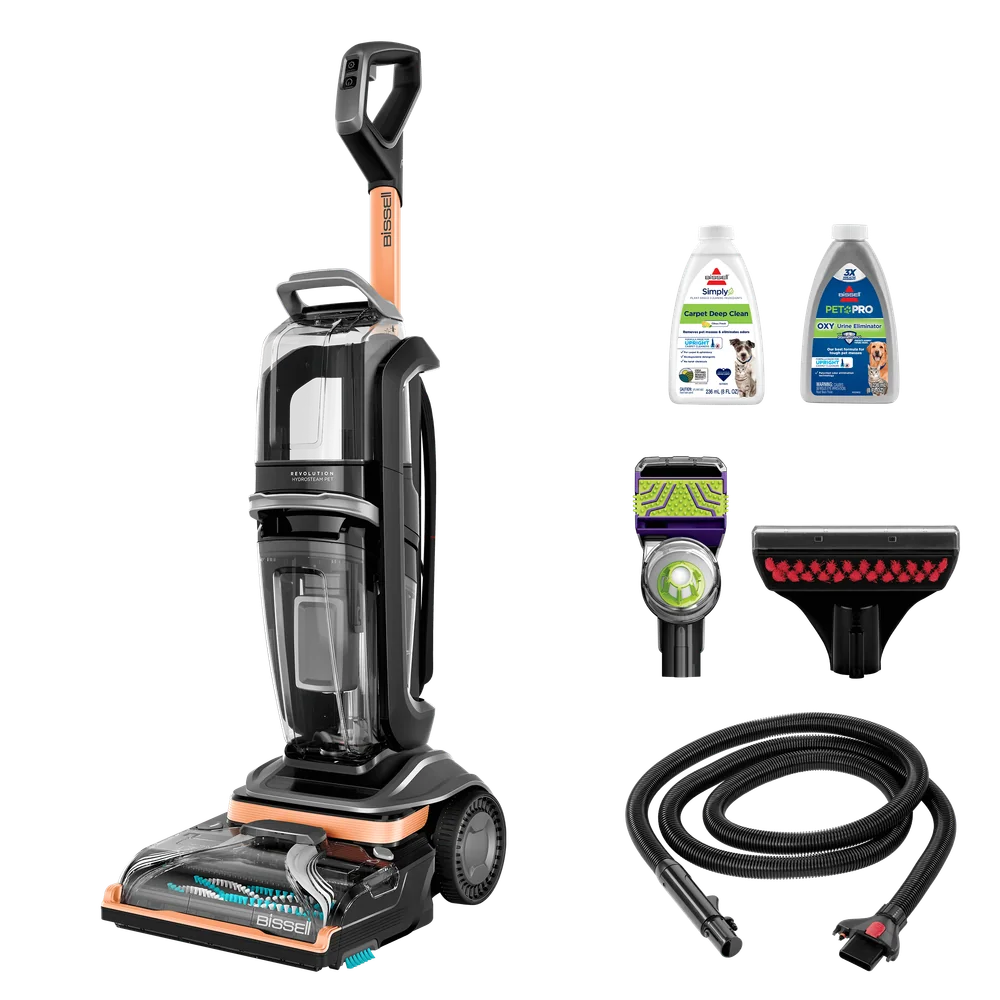
Fresh pet accidents are easiest to remove when you act quickly. Blot first to remove as much liquid as possible, then use a spot tool that lets you control how much solution you apply. A hose and handheld tool are useful because you can clean stairs, edges, and upholstery without balancing an upright machine. Hose reach matters more than it sounds. If the hose is short or stiff, you will drag the machine around and risk tipping it or spilling dirty water.
For repeated accidents in the same area, focus on extraction. Make a wet pass to rinse, then do multiple dry passes to pull moisture back out. If you leave the area too wet, odor can linger and the spot can wick back up as it dries (a stain reappears because residue rises to the surface). A spot tool with a clear head can help you see what you are pulling up, but the real win is a tool that seals well to the carpet and has strong suction.
Hair and dander: brush design, clogs, and pre-vacuuming
Pet hair behaves like thread. It wraps around brush rolls, packs into end caps, and can block air paths. That reduces agitation and suction, which makes you use more water and more passes, which then increases drying time and odor risk. In a pet home, brush access is a core feature. Look for a brush roll that can be removed easily and a nozzle area that opens for rinsing. If the machine has a filter, check how often it needs cleaning and whether it is washable.
Pre-vacuuming is not optional when hair is involved. Carpet cleaners are not designed to pick up piles of dry hair the way a vacuum is. Vacuuming first removes grit and hair so the carpet cleaner can focus on washing and extracting. It also reduces the amount of sludge that ends up in the dirty tank and hose. If you skip this step, you can end up with a machine that smells, clogs, and needs longer cleanup after every use.
Solutions for pet messes: enzymes, dilution, and residue control
Pet-specific solutions often include enzymes. Enzymes are ingredients that help break down organic material like urine proteins. They can help with odor, but they need the right conditions: correct dilution, enough dwell time (time sitting on the stain), and not being drowned in extra detergent. Using more solution than directed can backfire by leaving residue that attracts soil and holds odor. In a carpet cleaner, residue also makes tanks and hoses smell over time.
A practical approach is to rinse more and soap less. Use the recommended amount of cleaning solution, then do an extra pass with plain water when you can, followed by several dry passes. This reduces leftover detergent and helps the carpet feel less sticky after it dries. For strong odors, a targeted pre-treatment on the spot can be more effective than running a whole room with heavy detergent. Always keep solutions meant for carpet separate from anything intended for hard floors or general household cleaning.
Odor below the carpet: padding, subfloor, and realistic expectations
Urine odor can soak through carpet into the pad and sometimes the subfloor. A home carpet cleaner mainly works on the carpet fibers and the upper portion of the pile. Even with good suction, it may not fully remove contamination that has penetrated deeper layers. That is why a stain can look improved but still smell when humidity rises. It is not always a machine problem. It is often a depth problem.
If a spot keeps returning, treat it like a layered issue. Limit how much water you add, extract thoroughly, and dry aggressively with airflow. If the odor persists, you may need to address the pad or the area beneath the carpet, which can mean lifting the carpet edge or replacing padding in severe cases. For routine pet ownership, the best prevention is fast cleanup, controlled moisture, and not storing the machine dirty. A cleaner that is easy to rinse and dry is more likely to stay odor-free between uses.
What this guide helps you understand
Pick a carpet cleaner setup that matches pet mess reality: fast spot access, easy hair removal, controlled detergent use, and strong extraction to reduce lingering odor.
Make sure the machine has a usable hose and spot tool (or plan a separate spot cleaner), and confirm the brush roll and dirty tank are easy to remove and rinse.
Technique notes
After any pet-mess cleanup, empty and rinse the dirty tank promptly, then run clean water through the hose and tool so residue does not sour inside the line.
Safety note: Keep pets away from wet carpet until it is fully dry, and store cleaning solutions out of reach to prevent accidental ingestion.