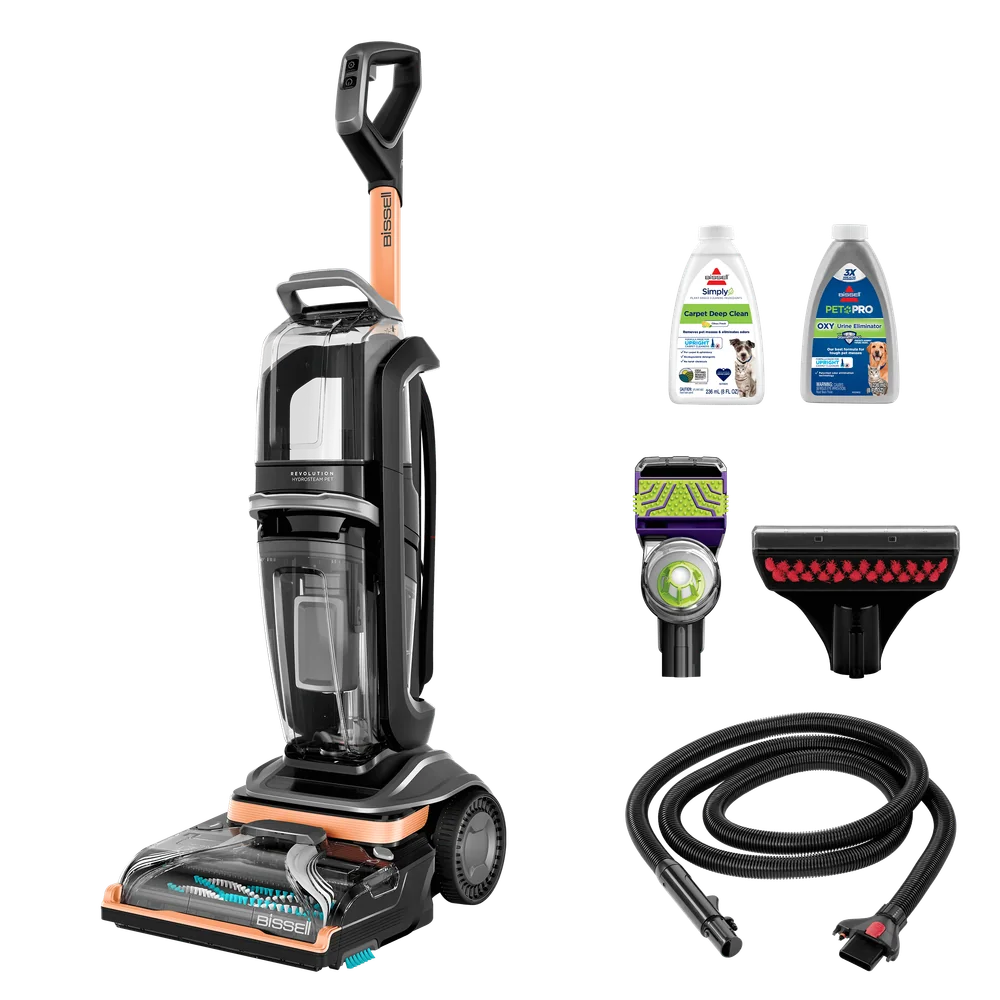
Pick a machine and tools that match your fabric's water tolerance, give you control, and pull moisture back out so cushions dry fast.
Reading time: 9 minutesBest for: People who want to clean sofas, chairs, stairs, and car interiors without over-wetting fabric.
A specific section heading
Start with the fabric's cleaning code, then plan around water. Many upholstered pieces have a tag with a code like W, S, WS, or X. W usually means water-based cleaning is acceptable. S means solvent-only, which is a red flag for using a carpet cleaner because carpet machines use water-based solution. WS means either can be used with care. X typically means vacuum only. If you cannot find a tag, treat the fabric as sensitive and test in a hidden spot first.
Even when water is allowed, upholstery still needs restraint. Spray is what wets the fabric, and recovery is what prevents that moisture from sinking into foam and padding. If a machine's upholstery tool dumps a lot of solution quickly, you can create water rings, loosen dyes, or leave the cushion damp for too long. The safer approach is light spray, more agitation with the tool, then multiple dry passes (suction only) to pull out as much moisture as possible.
A specific section heading
Tool design matters more on upholstery than on wall-to-wall carpet. Look for a dedicated upholstery tool with a clear nozzle so you can see dirty water being recovered. A wider tool covers cushions faster, while a narrow tool fits along piping, tufting, and seams where grime collects. A crevice-style spray tool can help on tight edges, but it can also over-wet if you hold it in one place too long.
Pay attention to how the tool connects and how easy it is to clean afterward. Upholstery pulls up lint, hair, and fine debris that can clog a small nozzle. If the tool comes apart without a fight, you are more likely to rinse it and keep suction strong. Also consider whether the machine lets you stop the spray while keeping suction on. That control makes it easier to do dry passes and avoid soaking delicate areas.
A specific section heading
Hose reach and handling decide whether you will actually use the machine. Measure the distance from where the machine can sit to where you need to clean. Stairs, sectionals, and car interiors often need a hose that reaches without dragging the machine onto the furniture or tipping it over. A longer hose is helpful, but only if it does not kink easily and the machine stays stable when you pull on it.
Weight is not just the number on the box. A carpet cleaner gets heavier when the clean tank is full and the dirty tank starts filling. For upholstery, you will often carry the machine, set it down, move it, and repeat. Portable spot cleaners usually win here. If you choose an upright, check that the hose is easy to deploy and rewind, and that the machine does not require awkward lifting to switch into hose mode.
A specific section heading
Recovery and drying are the difference between "clean" and "musty." Upholstery dries slower than carpet because air does not move through cushions well. Strong recovery helps, but technique matters too. Use short spray bursts, keep the tool moving, and finish each section with several slow dry passes. If the fabric still feels cool and damp, keep extracting before you walk away.
Plan for airflow right after cleaning. Stand cushions on edge if possible, open windows when weather allows, and run a fan across the surface. Avoid putting throw pillows or covers back on until everything is fully dry. If you smell detergent or feel stiffness after drying, that can be residue from using too much solution. Next time, use less detergent, rinse with plain water if your machine allows it, and prioritize extraction over more soap.
What this guide helps you understand
Choose an upholstery-capable carpet cleaner based on fabric water tolerance, tool control, hose reach, and how well it extracts moisture for faster drying.
Find the upholstery cleaning code tag (W, S, WS, X) or plan a hidden-spot test before using any water-based machine.
Technique notes
Budget time for cleanup. Upholstery tools and hoses need rinsing to prevent odor and clogs, especially after pet messes.
Safety note: Do not use a water-based carpet cleaner on "S" or "X" coded upholstery. If a piece is antique, fragile, or bleeding dye in a spot test, stop and choose a different cleaning method.