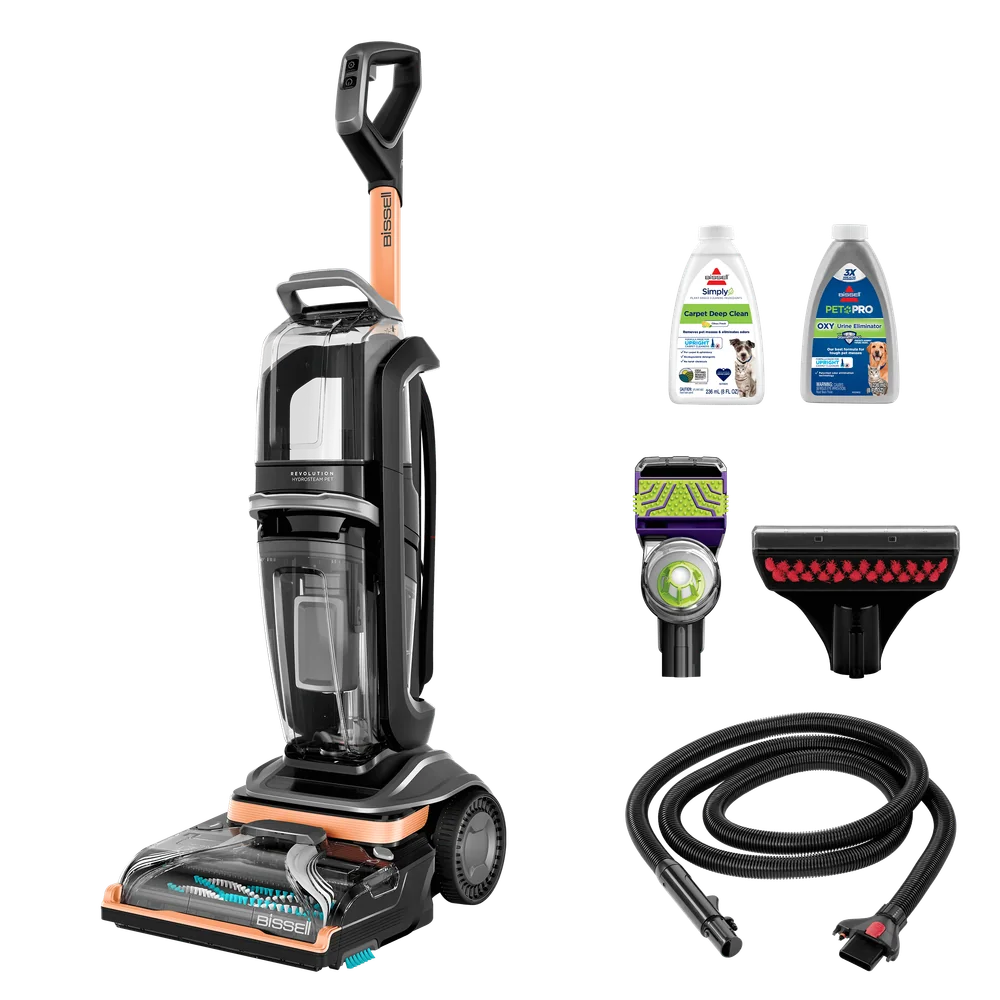
Use the right solution at the right concentration, avoid residue and risky mixing, and set up the room so people and pets stay comfortable while it dries.
Reading time: 9 minutesBest for: Households that want clean carpets without residue, strong odors, or accidental chemical mixing.
A specific section heading
Match the solution to the machine and the job. Carpet cleaners are designed for low-foam formulas that rinse and recover well. Using a random household cleaner can create foam that fills the dirty tank with bubbles instead of liquid, which can reduce suction and leave more moisture behind. For routine traffic lanes, a general carpet detergent is usually enough. For food spills or greasy spots, you may need a formula that targets oils, but it still needs to be carpet-machine safe.
Pay attention to concentration. Many solutions are sold as concentrates, meaning you dilute them with water in the clean tank. If you "eyeball" it and pour extra, you often get worse results: more residue, more rinsing needed, and longer drying. Measure with the cap or a marked cup. If your carpet still looks dingy after drying, it is not always a sign you need more soap. It can mean you need slower passes, more dry passes, or a second cleaning with better extraction.
A specific section heading
Residue is the hidden reason carpets re-soil. Detergent left in the fibers acts like a magnet for dirt. You see it as dark traffic lanes that come back quickly, or a crunchy feel after drying. The fix is usually less solution, not more. Use the recommended dilution, avoid repeated wet passes, and finish with extra suction-only passes to pull out as much water as possible.
Rinsing is a practical tool, especially in homes with pets or heavy foot traffic. Some machines have a rinse mode, but you can also run a tank of plain water after cleaning if your machine allows it. This helps remove leftover detergent and can improve feel and appearance after drying. If you use a pre-spray (a cleaner applied before machine passes), keep it light and do not let it dry on the carpet. Dried cleaner can leave marks and make extraction harder.
A specific section heading
Do not mix products unless the label explicitly says you can. Mixing cleaners can create excessive foam, damage carpet dyes, or produce irritating fumes. A common mistake is combining carpet detergent with bleach, ammonia, or strong bathroom cleaners. Even if nothing dramatic happens, you can end up with a carpet that smells harsh and takes longer to air out. If you want to switch products, empty and rinse the clean tank first.
"Heated cleaning" claims need context. Many machines maintain warm tap water or warm the airflow slightly, but they are not boiling water. Heat can help dissolve oily soil, but it does not replace correct dilution and extraction. Start with warm tap water if your carpet and machine instructions allow it, and focus on technique: slow wet passes to clean, then slow dry passes to recover. If you rush, you leave more moisture and more dissolved soil behind.
A specific section heading
Set up the room for people, pets, and drying. Keep kids and pets out of the area while you are actively cleaning, and until the carpet is dry enough that paws and socks will not pick up damp detergent. Ventilation matters because it speeds drying and reduces lingering odor. Open windows when conditions allow, run fans, and use your HVAC system to keep air moving.
Store and handle concentrates like you would any household chemical. Keep caps tight, wipe drips off the bottle, and do not leave measuring cups where a child or pet can reach them. If a spill happens, blot it up and rinse the area with water rather than adding more cleaner. For pet accidents, remember that surface cleaning may not remove odor if urine reached the pad. In that case, repeated detergent use can make things worse by adding residue without addressing the source.
What this guide helps you understand
Pick a compatible low-foam solution, measure it correctly, avoid mixing, and prioritize extraction and airflow to prevent residue and irritation.
Measure concentrate accurately instead of pouring extra, and plan at least a few suction-only passes to reduce leftover detergent.
Technique notes
If the dirty tank fills with foam, stop and empty it. Foam can reduce recovery and leave the carpet wetter than it needs to be.
Safety note: Never mix carpet solutions with bleach, ammonia, or other household cleaners. Ventilate the room and keep kids and pets away from wet carpet until it is dry.