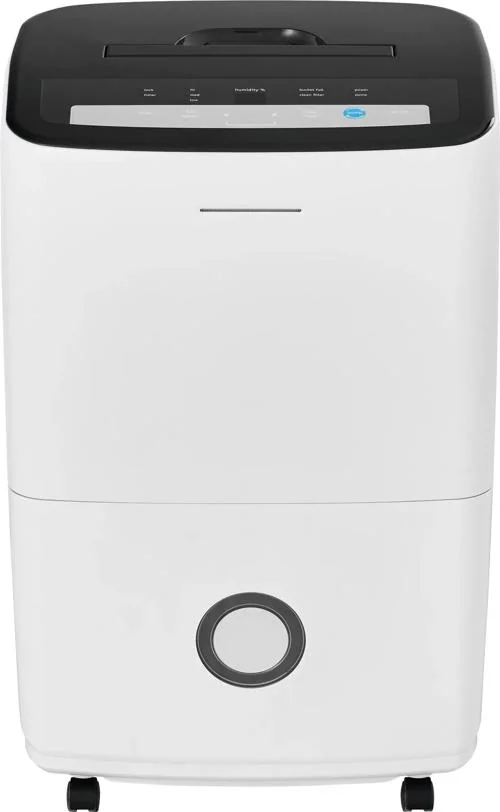
Sizing a dehumidifier starts with how wet and how cool the space is, then you choose a pint-per-day capacity and drainage setup that can keep up.
Reading time: 8 minutesBest for: Anyone choosing a dehumidifier for a basement, laundry room, or humid living area who wants realistic capacity and drainage planning.
Start with dampness
Begin with what you observe, because that tells you how hard the unit must work. Light dampness looks like occasional window condensation, a mild musty smell, or towels that dry slowly. Moderate dampness includes frequent condensation, clammy air, or small mildew spots that return. Heavy dampness includes persistent musty odor, damp walls, wet corners, or water on the floor after rain. The wetter it is, the more capacity you need to pull humidity down and keep it down.
Also consider how often the moisture shows up. A basement that is only humid in summer may need seasonal control. A laundry area with frequent washing adds moisture year round. If you want the space to recover quickly after a humid event, sizing up helps because higher capacity removes more water per hour when conditions are favorable. Oversizing is not automatically bad in this category, but it can be wasteful if you cannot drain it easily or if noise becomes a deal breaker.
Account for temperature
Temperature changes how compressor dehumidifiers perform. Most portable home units are compressor based, meaning they cool a coil so moisture condenses and drips into a bucket or drain. In cooler basements, that coil can frost. When frost forms, the unit has to pause dehumidifying to defrost, which reduces effective water removal. That is why a unit that seems big enough on paper can struggle in a cool space.
If your space is cool for long stretches, pay attention to the stated operating temperature range and how the unit handles defrost. More frequent defrost means longer run time to achieve the same humidity result. In some cool spaces, a desiccant dehumidifier can be a better fit. Desiccant units use moisture absorbing material instead of a cold coil, so they can work differently in lower temperatures, often with different noise and energy tradeoffs.
Think beyond square feet
Square footage is a rough starting point, not a sizing method. Ceiling height matters because taller rooms hold more air. An open stairwell to the rest of the house increases the volume the unit is trying to influence. A basement with many small rooms and closed doors can trap humidity in corners unless you move air between spaces. Storage also matters. Cardboard boxes, fabrics, and unfinished wood can hold moisture and release it slowly, raising the moisture load.
Layout affects placement. A dehumidifier works best when it can pull air in and push air out without obstruction. If you place it behind shelving or tight against a wall, it may only dry a small pocket of air. Plan for clearance around the intake and exhaust, and consider whether you need a fan to move air into dead zones. If the space is large or chopped up, one correctly placed unit can outperform a larger unit stuck in a poor location.
Plan the drain
Drainage is part of sizing because it determines whether you can actually run the unit enough. A bucket only works if someone is there to empty it, and in a damp space that can mean daily emptying. Continuous drainage means a hose runs from the unit to a drain using gravity. Gravity drainage requires a continuous downhill slope, so the drain must be lower than the outlet on the unit and the hose cannot loop upward.
If you do not have a floor drain or sump nearby, consider a unit with a built-in pump. A pump can push water up to a sink, laundry standpipe, or other drain point. Confirm the hose connection size, the routing path, and where the water will discharge. A poor drain plan leads to shutoffs when the bucket fills, which makes even a well sized dehumidifier feel ineffective because it is not running when humidity spikes.
What this guide helps you understand
Pick capacity based on dampness and temperature first, then confirm you can drain the water reliably. A dehumidifier that cannot run unattended often ends up underperforming no matter what the pint rating says.
Measure typical basement temperature and note whether the space is cool enough to trigger frequent defrost on compressor units.
Technique notes
If you are between sizes, choosing the higher capacity often improves recovery time after humid weather, but only if noise and drainage are acceptable.