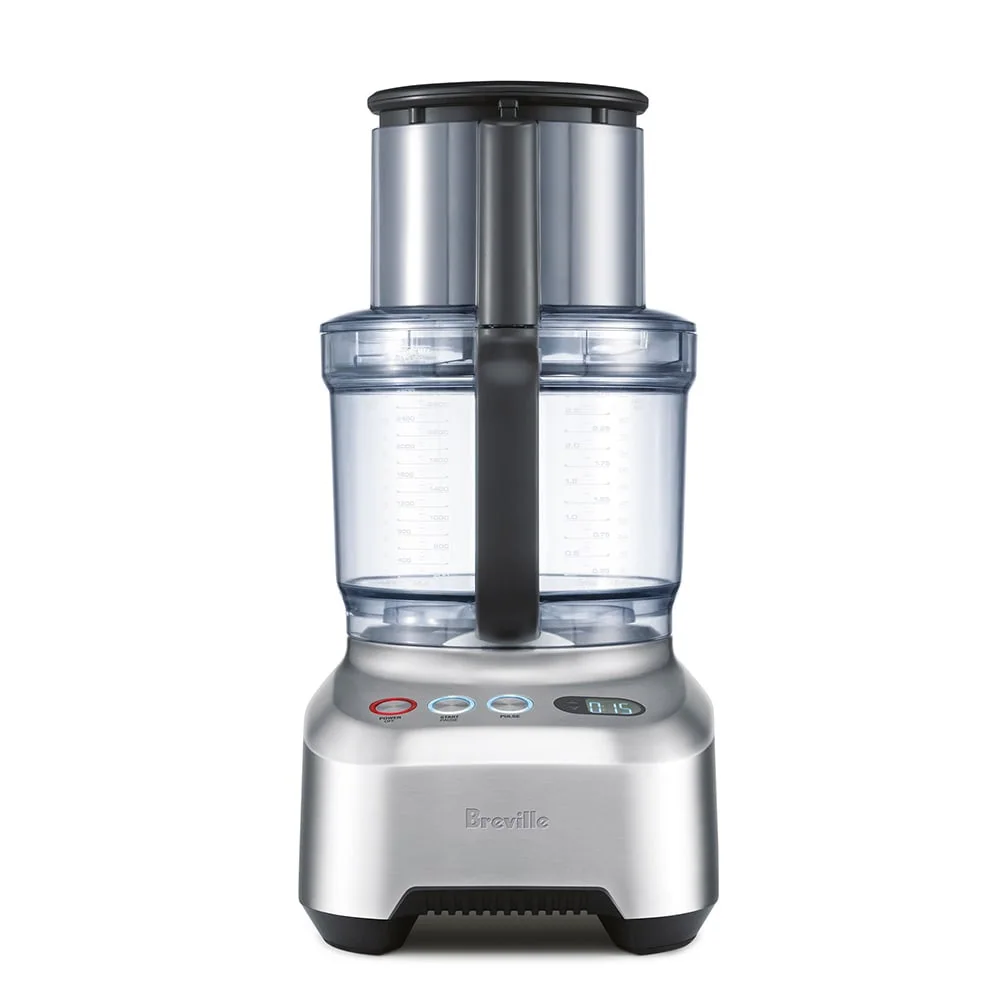
Check the model's method
Some processors specify a plastic dough blade, while some recipes use the multipurpose metal blade. Confirm the approved blade, maximum flour or dough amount, speed, and run time before starting.
Do not infer dough ability from wattage alone. Bowl geometry, blade design, torque protection, and the manufacturer's tested limit all matter.
Measure and add in the stated order
Use a scale when practical and keep the batch within the manual's limit. Many methods combine dry ingredients first and add liquid through the feed tube, but follow the recipe written for the machine.
Very wet, stiff, enriched, or whole-grain doughs can behave differently. Stop if the processor rocks, stalls, smells hot, or exceeds its approved duty cycle.
Stop when the dough comes together
Processor dough often develops in well under the time used by a stand mixer. Watch for the stated visual cue and avoid letting a finished mass circle the bowl longer than necessary.
Check final development by the recipe's method after removing the blade safely. Rest or hand-finish the dough when required rather than adding unnecessary machine time.
Clean before residue dries
Unplug, remove the blade cautiously, and scrape dough with an approved tool. A brief soak can soften residue on washable parts, but never immerse the motor base.
Follow the manual's dishwasher guidance because high heat and crowded racks can affect some bowls, seals, and plastic blades.