

Pickori's Take
- For a carpeted home with shedding pets or long hair, the Dreame L60 Ultra PE is the robot to buy at about $1,000. Mostly hard-floor homes and anyone expecting serious stain mopping should shop elsewhere.
- Carpet cleaning is elite. It removed 94 percent of embedded sand from medium-pile carpet against a 78 percent average, the second-best result among nearly 200 robots at the time.
- Hair is the specialty. Flattened pet fur came up completely and seven-inch strands left zero wrap, so the roller keeps cleaning at full strength between maintenance checks instead of quietly clogging.
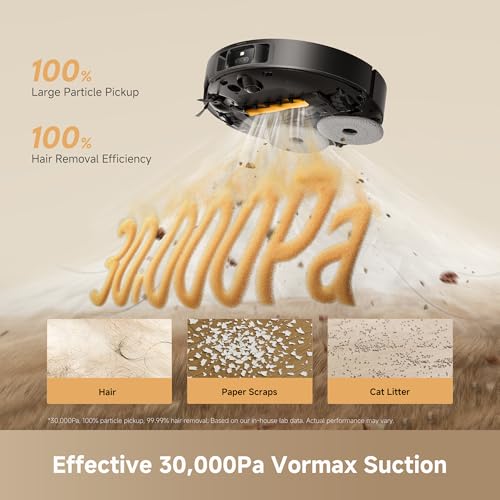
- Ignore the 30,000 Pa headline. The dual-roller floorhead and its floor contact do the real work, which is why below-average bench suction still produced high-end carpet results.
- Avoiding 21 of 24 objects, plus a dock that empties, refills, washes, and hot-air dries, makes it far easier to run on a schedule than a bare-bones carpet robot.
- The mop runs at roughly a quarter of the average robot's water output. It handles footprints and dust but trails the average on dried stains, so buy it for the carpet, not the mop.
A carpet specialist dressed as an all-in-one
On the spec sheet, the L60 Ultra PE wants every job in the house. It has LiDAR mapping, a front camera, spinning pads that reach for baseboards, and a tall dock that empties, refills, washes, and dries. All of it is real. But the robot's best work happens on carpet, and most of the supporting hardware exists to make that carpet cleaning easy to run every day.
Its natural habitat has carpeted bedrooms, a big rug under the couch, hard floors in the kitchen and entry, and a dog or a long-haired family member leaving evidence on all of it. The PE treats the carpet as the main event, keeps hard floors free of crumbs and dust, and gives the kitchen a light pass on the way through. That focus explains its number-eight spot behind broader all-rounders. It also explains why, for this particular house, none of them is the smarter buy.
Why 30,000 Pa is the wrong number to read
Dreame claims 30,000 Pa of maximum suction. Pascals measure pressure, but brands measure them differently, so the number doesn't compare across robots or predict what ends up in the bag. Vacuum Wars' exact-model test suite makes the point: the PE's bench suction score was 0.57 against a 0.99 category average, with airflow of 15 against 17. Then it pulled 94 percent of embedded sand from medium-pile carpet against a 78 percent average.
The floorhead closes that gap. The HyperStream DuoBrush pairs a bristled rubber roller that works into the pile with a soft TPU rubber roller that holds steady contact with the surface. Our read is that tight contact keeps the motor's airflow pulling through the carpet instead of leaking around the brush. Meanwhile, the app's carpet strategies tell the robot when to work harder. Judge a robot by what leaves the floor, not by what the box says about the motor.
How the L60 Ultra PE handles each job in your home
The pattern is simple: the closer a job sits to carpet, hair, and clutter, the better this robot looks. Measured figures come from that same exact-model test suite unless noted, and each row explains what the number changes in daily life.
| Workload | Outlook | What to expect |
|---|---|---|
| Grit buried in medium-pile carpet | Outstanding | It removed 94 percent of embedded sand against a 78 percent category average. That was the second-best result among nearly 200 robots at the time. Foot traffic grinds this kind of grit into a hallway runner, and it stays invisible until the pile turns dull and matted. Pulling it out on a schedule keeps the busiest lanes from aging faster than the rest of the room. Credit the two rollers staying in contact with the pile, not the suction rating. |
| Pet hair pressed into carpet | Outstanding | Flattened two-and-a-half-inch pet hair came up completely, against an 82 percent average. Fur a dog has been lying on all afternoon is the hardest kind to lift because it's worked into the pile rather than resting on top. Run this robot daily and the favorite nap spot never gets the chance to felt into a mat. For pet owners, this is the row that justifies the purchase. |
| Long human hair and brush tangles | Excellent | Seven-inch hair left nothing wrapped around the brush. The average robot ended up with 26 percent of the strands wound around its roller. Dreame pairs a bristled roller with a soft rubber one, and together they keep hair moving toward the bin. Fewer sessions with scissors are the obvious payoff. The quieter one is that an unwrapped roller cleans at full strength all week instead of slowly losing its grip on the floor. |
| Crumbs, edges, and crevices on hard floors | Very good, with small gaps | General debris pickup was strong, and the extending side brush reaches along baseboards and into corners. Fine debris scattered slightly, though, and crevice pickup was only average. Kitchen tile should look clean after a run. Expect the occasional sprinkle of flour to get nudged aside, and expect grout lines and plank seams to come out about as clean as a typical robot leaves them. |
| Mopping, from footprints to dried spills | Fine for upkeep, weak on stains | Pads spinning at 165 RPM with 13 N of pressure sound aggressive, but they run nearly dry: 0.25 grams of water on low and 0.30 on high, against a 1.07-gram average. That explains a dried-stain score of 85 against a 108 average. Footprints, dust, and fresh drips are fine. The pads lift 10.5 mm over carpet, which clears most low-pile rugs; deeper pile needs a no-mop zone or manual pad removal. |
| Toys, socks, and cords on the floor | Strong | It avoided 21 of 24 objects against a 16-object average. A 3D structured-light sensor detects what's ahead while an RGB camera identifies it, and Dreame claims recognition of more than 220 object types. In a lived-in house, pre-cleaning shrinks to cables and anything you'd hate to see dragged, not every slipper in sight. It's still no license to leave a pet accident in its path. The camera also powers pet viewing, so treat it with the same privacy sense as any indoor camera. |
| Large, open floor plans | Slightly above average coverage | The battery is a touch less efficient than average, at 1.49 minutes per percent of charge versus 1.56. The routing wastes little motion, though, covering 0.74 square meters per minute against 0.71. The net estimate was 1,202 square feet per charge versus a 1,170 average. For genuinely large homes, recharge-and-resume matters more than either figure, because the robot tops up at the dock and finishes the job. |
On rugs and wall-to-wall carpet, these results sit near the top of the entire field, which is rare territory for a $1,000 robot. Add the hair handling and obstacle avoidance and you get a machine that can run daily in a messy pet home without much babysitting.
Hard floors are a step down without being a weakness. Crumbs get handled, and the routing doesn't waste battery. The mop freshens rather than scrubs, and turning up the water setting barely changes the output.
So judge this robot by the share of your floor it does best. If carpet and shed hair are the daily headache, its strengths show up on nearly every run and its limitation shows up only in the kitchen. Flip that ratio and you'd be paying $1,000 mostly for the average half of the machine.



Hair, edges, and the smaller stuff
The same two-roller layout explains the hair results, which are the real headline for pet owners. Long strands wrap when they can grip a single bristled tube and spin with it. A smooth rubber roller running alongside gives them far less to hold. Seven-inch hair left zero wrap against a 26 percent average, and flattened two-and-a-half-inch pet hair came off carpet completely against an 82 percent average. A roller that stays clear cleans on Friday the way it did on Monday.
Off carpet, the results are good rather than exceptional. Debris pickup was strong on both surfaces, though fine particles scattered slightly on hard floors and crevice pickup was average. The extending side brush reaches corners and baseboards, where round robots tend to leave a thin gray line. Hard floors will look clean, if not forensically spotless.
What the dock takes over and what still lands on you
Pick the dock's spot before the box arrives. It measures 17.99 by 13.39 by 23.23 inches and weighs 20.31 pounds before water, so it needs a permanent floor-level home with clearance above, since the tanks lift out the top. Once it's placed, it empties the 250 ml onboard dust box into a 3.2-liter bag, washes the pads in water up to 212°F, and hot-air dries them so they don't sour. It also refills the robot and cleans its AceClean DryBoard washboard. Dreame claims up to 100 days per bag. Two shedding dogs will shorten that, and the small onboard bin means more frequent, noisy emptying trips.
The chores shrink without vanishing. You'll fill and empty the dock's 4.5-liter and 4.0-liter clean and dirty tanks. Rinse the dirty one properly rather than just dumping it, or stale mop water will announce itself. Bags and filters need replacing, and hair or grit still collects around moving parts.
Low furniture and tall lips
Measure the sofa first. At 4.09 inches tall, the PE won't fit under lower sofas, beds, and media cabinets, which is exactly where pet hair hides. If the main couch sits lower than that, plan on a stick vacuum for the strip underneath or a slimmer robot.
Thresholds deserve a closer read than the marketing invites. Dreame rates EasyLeap for a 0.87-inch (22 mm) single-layer threshold. The headline 1.57-inch (40 mm) figure applies only when that height is split across two tiers, not to one 40 mm step. In testing, the robot crossed 19 mm and failed at 25 mm. Ordinary thresholds and rug edges are fine. A single abrupt lip near an inch tall, such as a raised marble saddle or a sunroom step-up, deserves a tape measure.
The mop handles upkeep, not stains
On paper the mop sounds aggressive: two pads spinning at 165 RPM under 13 N of pressure, with one swinging out 40 mm toward baseboards. The limit is water. Output measured 0.25 grams on low and 0.30 on high against a 1.07-gram average, so turning it up barely helps. Pressure can't loosen dried residue with a nearly dry pad. That's why the dried-stain score landed at 85 against a 108 average, while the combined mopping score (30.4 versus 30.8) stayed essentially ordinary. Dust, footprints, and fresh light spills suit it. A sticky kitchen doesn't.
When the robot detects carpet, it raises its damp mop pads by 10.5 mm. That is usually enough to keep them off an ordinary low-pile rug, but not a thick, high-pile one. Mark thicker rugs as no-mop zones in the app or remove the pads before cleaning. The L60 Ultra PE cannot leave its mop pads behind at the dock, so taking them off is a manual job.
Cleaning solution needs a separate bit of attention. Some retail listings imply that the dock measures and adds detergent automatically, but Dreame's own comparison chart does not list that feature for this model. Assume you will add any approved floor cleaner yourself rather than relying on automatic detergent dosing.
L60 Ultra PE or L60 Ultra FE: what the extra $150 buys
The names suggest a trim-level tweak. The FE ($849.99) keeps the battery, LiDAR, spinning pads, mop lift, and hot-water dock. Its savings come from the parts that define the PE. It uses a TriCut brush, 10 N of mop pressure, and structured-light avoidance without the RGB camera. It also drops EasyLeap and carries a lower 0.78-inch threshold rating. In the same test suite, the FE scored 80 versus 94 percent on embedded sand, 51 versus 100 percent on flattened pet hair, and 7 versus zero percent on hair wrap. It avoided two of 24 objects to the PE's 21.
Avoiding two of 24 means clearing the floor before nearly every run, which undoes the point of scheduling. The FE does mop dried stains better (137 versus 85) and uses more water, so it fits a tidy, mostly hard-floor home without shedding pets. Every carpet or pet household should spend the extra $150 on the PE.
Carpet-first design or a roller-mop all-rounder?
Roller-mop and track-mop robots make a different bet. They put mopping near the top of the job description and spread competence across surfaces. That breadth is why the robots above the PE in our guide sit there, but it only pays when your floors use it. If carpet and rugs make up most of the weekly coverage, mop quality touches a small share of the floor, while carpet pickup and hair handling matter on every run.
Then ask which mess repeats. Pets shed daily, while kitchens produce dried spills only occasionally. If the recurring problem is sticky residue by the high chair or food bowls, buy the all-rounder. If it's fur ground into the living-room rug, buy the PE. In that home, it's the best purchase in the guide. In a split home, follow where people and pets actually spend their time, and keep a hand mop for the kitchen.
Who this product fits
Two shedding dogs and carpeted bedrooms
This is the home the L60 Ultra PE was built for. Daily runs lift fur from the dogs' favorite spots before it mats into the pile, the rollers stay clear, and avoidance keeps chew toys from ending the job early. Budget for bags, though. Two shedders will fill them well ahead of Dreame's 100-day estimate.
Long hair, hardwood floors, and big area rugs
A strong match. Long hair usually strangles a brush roll, and this one is designed to stay clear. The hardwood gets thorough vacuuming plus a light wipe, while the rugs get the deep clean. Check that the rugs sit low enough for the 10.5 mm mop lift, or mark them as no-mop zones.
A tile-heavy home with a toddler's kitchen
Wrong robot. Dried juice and dropped food are the daily mess here, and these pads run too dry to scrub them away. A mopping-focused all-rounder will spare you more time on your knees, even if it gives up carpet strength this home would rarely use.
An older house with low sofas and a raised doorway
Measure first. At 4.09 inches tall, the robot won't fit under low sofas or bed frames. A single raised lip is also a real limit. The robot cleared 19 mm but stalled at 25 mm in Vacuum Wars' testing, because the 1.57-inch rating covers only two-step transitions. If both problems guard rooms you care about, buy a slimmer robot.
What else to compare
Carpet isn't every home's biggest problem. If your floors are mostly hard surfaces, your messes dry sticky, or your furniture sits low, these robots put their engineering into different strengths.
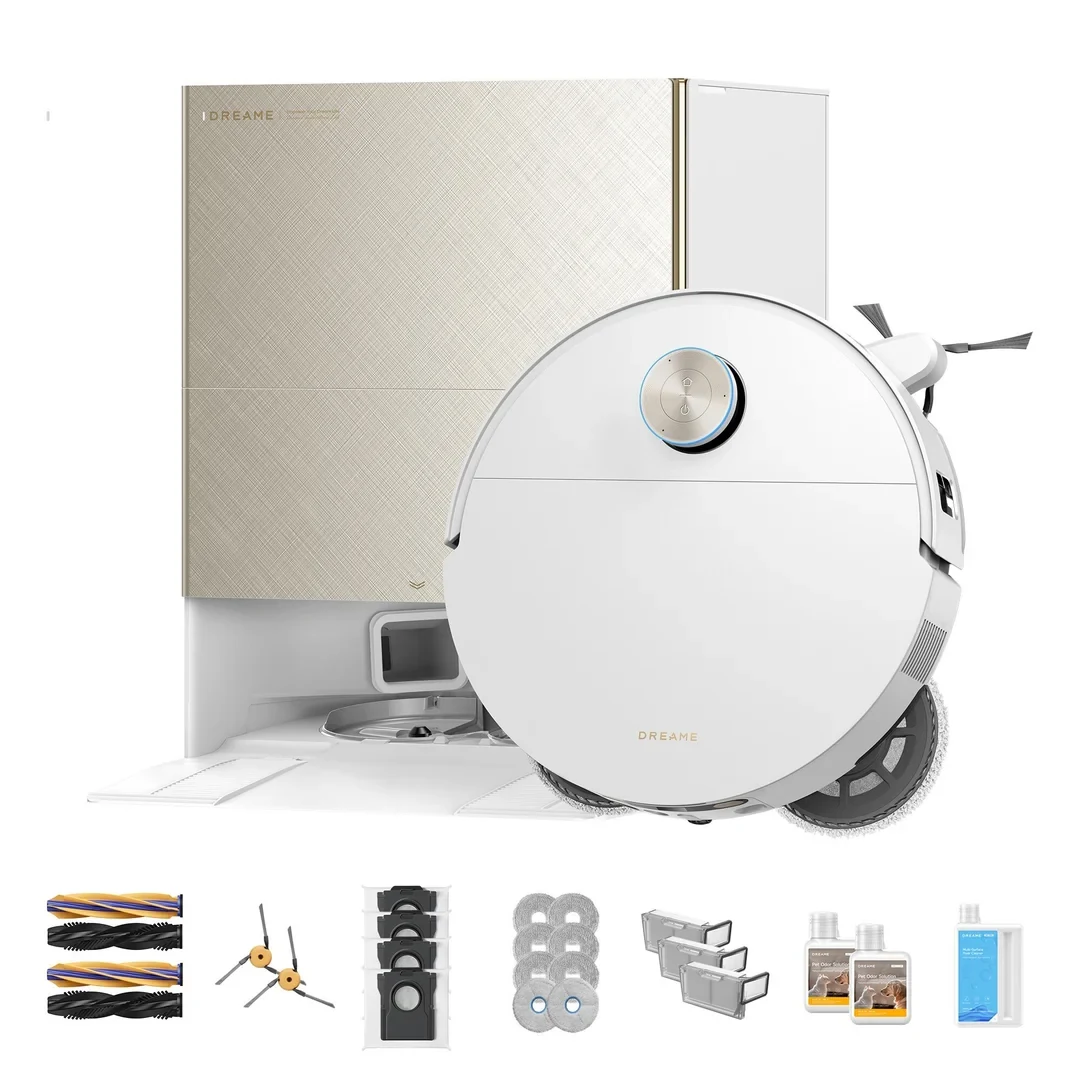 Dreame X60 Max Ultra CompleteThe premium Dreame for difficult thresholds, low furniture, and buyers who want stronger all-around hardware rather than the L60 PE's carpet-first value
Dreame L60 Ultra PE FAQ
Is the Dreame L60 Ultra PE good for pet hair?
Pet hair is its defining strength. In published testing, it removed 100 percent of flattened pet hair from carpet against an 82 percent average, and seven-inch strands left no wrap, so the brush keeps working between cleanings.
Does 30,000 Pa of suction make it better than other robot vacuums?
Not by itself. Brands measure pascals differently, and this robot's bench suction came in below average while its carpet results landed near the top. The dual-roller floorhead does the cleaning. The headline number doesn't explain it.
Can the L60 Ultra PE clean dried kitchen stains?
Not reliably. The pads run on roughly a quarter of the average robot's water, and its measured dried-stain score was 85 against a 108 average. Use it for dust, footprints, and fresh spills, and keep a hand mop for anything sticky.
Will the Dreame L60 Ultra PE fit under my couch?
Only if the clearance is taller than 4.09 inches. The robot can't reach anything lower, so those spots will need a stick or handheld vacuum now and then.
What door thresholds can the L60 Ultra PE climb?
Dreame rates it for a 0.87-inch single threshold. The 1.57-inch rating applies only when the height is split into two tiers. Ordinary thresholds are fine, but a tall, abrupt lip is not.
Does it remove its mop pads before vacuuming carpet?
No. It lifts the pads 10.5 mm, which clears many low-pile rugs, but the dock can't detach them. For plush or high-pile carpet, set no-mop zones or take the pads off by hand.
Does the dock add detergent automatically?
Don't count on it. Dreame's own L60 comparison doesn't list automatic solution refilling for the PE, so plan to handle floor cleaner yourself. Emptying, water refills, and pad washing and drying are automated.
Does the L60 Ultra PE work with Matter and voice assistants?
Yes. Dreame lists Matter compatibility alongside its onboard voice assistant and third-party voice control. Room and zone cleaning, schedules, and no-go zones are set in the Dreame app.
Should a carpet-heavy home spend $1,000 on the L60 Ultra PE?
Yes, if that carpet comes with fur or long hair. The L60 Ultra PE puts its best hardware where pet homes struggle most, deep in the pile and around the brush roll. It backs that hardware with the avoidance and dock that make daily runs realistic. At $999.99, that focus is money well spent.
Let your floors make the final call. Hard surfaces and sticky messes deserve a better mopper. Carpet and a shedding pet deserve this robot.
Sources and research notes
Specifications come from manufacturer documentation. Measured results are attributed to independent evaluations.