
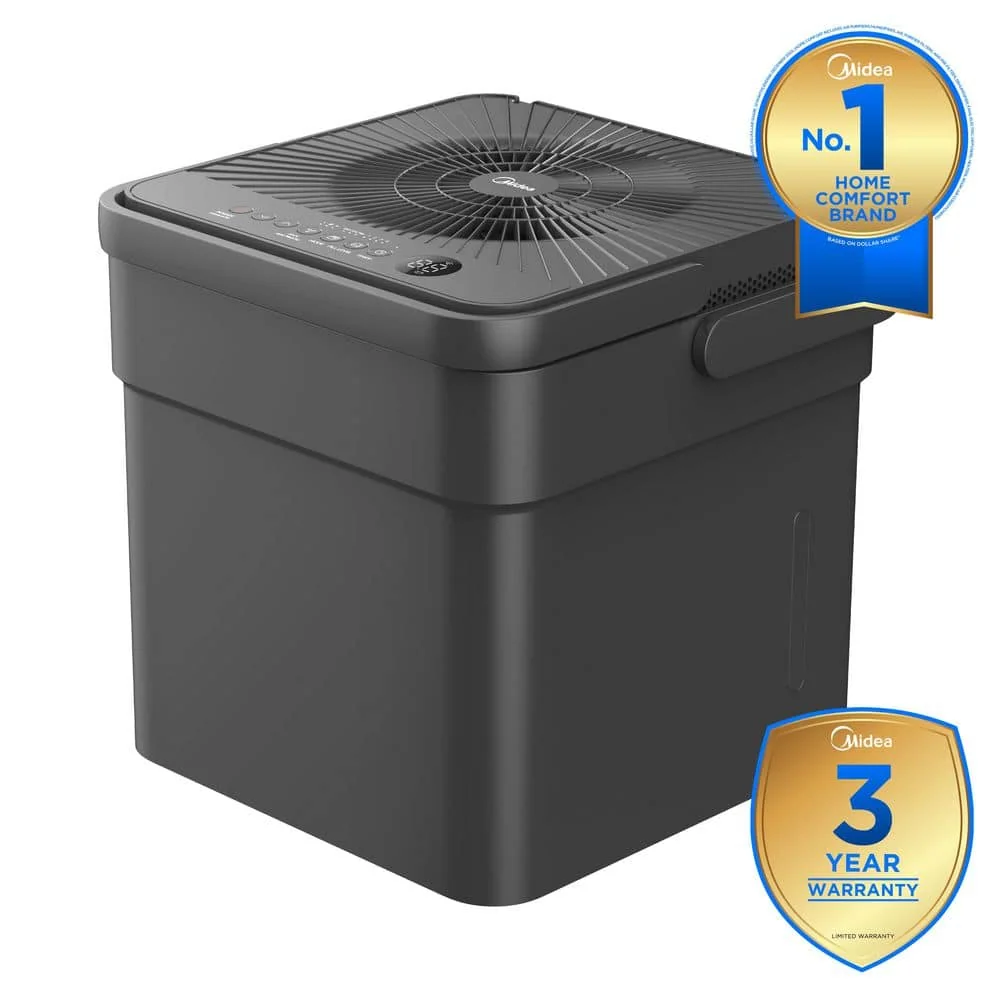
What to know first
- 50-pint capacity is aimed at serious moisture problems, not just a slightly muggy bedroom.
- The standout feature is the oversized tank (about 4 gallons), which means fewer manual empties.
- Manual emptying requires lifting the top compressor section off the tank first.
- Supports continuous drainage via hose, which is the best way to run it unattended.
- Wi-Fi/app control is included, but connectivity can be picky (2.4 GHz networks are supported).
What the Midea Cube is
The Midea Cube is a compressor-based dehumidifier designed for large rooms and basements. It pulls moisture out of the air and collects the water in a removable reservoir, helping you keep indoor humidity at a more comfortable level during humid weather or in naturally damp spaces.
What makes it different is the two-piece, stackable design. The working “top” (the compressor and controls) sits on a large tank that acts like the water reservoir. When you’re storing it, the top can nest into the tank so it takes up less space than a typical tall, boxy dehumidifier.
In day-to-day use, the Cube is meant to reduce the most annoying part of owning a dehumidifier: emptying. Instead of a small bucket that fills quickly, it uses a much larger reservoir, and it can also be set up to drain continuously with a hose when you have a good place for the water to go.
Why it stands out
The tank is the reason to buy the Midea Cube. In the 50-pint class, it can collect about 4.25 gallons of water, which is roughly twice what many standard 50-pint dehumidifiers hold. In plain terms, that can mean days of runtime between empties in the right conditions, instead of checking the bucket constantly.
It’s also built around flexibility. If you can run a hose to a drain, you can skip manual emptying altogether and let it run through long humid stretches. That matters most in basements, storage rooms, and other places where you want the air dried out but you don’t want to keep walking back to check a bucket.
Smart features are part of the package. The Cube is Wi-Fi equipped and can be monitored and controlled through an app, which is useful when the unit lives in a corner of the basement. Just know that app setup can be buggy for some people, and Wi-Fi support is limited to 2.4 GHz networks.
What it is like to own
Setup is straightforward if you’re using it as a bucket unit: place it, set your target humidity, and let it run. Where you’ll want to think ahead is drainage. Gravity draining works best when you have a clear downhill path to a floor drain or sink. If you can do that, the Cube becomes a lot more hands-off.
If you’re emptying manually, the Cube’s workflow is different from most dehumidifiers. You don’t slide out a front bucket. You lift the top compressor unit off the reservoir to access the tank. That design helps it store neatly and hold more water, but it also means you need to be comfortable lifting the top section regularly.
The tank itself is designed to be easier to move than a typical small bucket. Instead of carrying a sloshing container by a thin handle, you’re dealing with a larger reservoir that’s meant to be rolled to a sink for emptying. That’s a real quality-of-life upgrade if you’ve ever dumped a dehumidifier bucket multiple times a day.
On controls, the Cube uses large, tactile buttons and a clear display on the unit, plus app control when you want it. For most people, the on-device controls will handle daily adjustments, and the app is mainly for checking in remotely or changing settings without walking downstairs.
What to know before you buy
The biggest practical downside is lifting. The top section is heavy, and you have to remove it to empty the tank. If you have back or shoulder issues, or you simply don’t want to deal with lifting a bulky component, plan to use continuous drainage or choose a dehumidifier with a lighter, slide-out bucket design.
Be skeptical of “covers thousands of square feet” style claims in general. With dehumidifiers, moisture load, temperature, and airflow matter more than floor area alone. A 50-pint unit like the Midea Cube is a strong choice for big, damp spaces, but it will remove less water in cooler or less humid rooms than its headline rating suggests.
Finally, if you’re buying the Cube specifically for unattended draining, confirm your real-world setup: where the drain is, whether you can keep a hose sloped correctly, and whether you need to move water upward. The Cube can do continuous drainage, but the details of your room decide whether it’s effortless or annoying.
The specs that matter
This is the standard high-capacity class for basements and large rooms. The rating is a comparison tool under warm, humid conditions, not a promise for every cool basement.
A bigger tank means fewer interruptions. If your space is very damp, this can cut down how often you have to deal with collected water.
It stores more neatly than many tall dehumidifiers and enables the oversized tank, but it also changes how you empty it.
This is the make-or-break ownership detail. If you can’t lift it comfortably, you’ll want to use a hose drain or pick a different style.
Continuous drainage is how you run a dehumidifier unattended during long humid stretches. It only works well if you have a drain location and a reliable downhill hose path.
Useful when the unit lives in a basement or storage room. Network limitations and occasional app setup issues can be a hassle if you expect a flawless smart-home experience.
Who this product fits
You have a damp basement and you’re emptying a small bucket constantly
The Midea Cube’s oversized reservoir is built for this. You’ll go longer between empties, and if you can run a hose to a floor drain, you can stop thinking about the bucket entirely.
You want a dehumidifier you can stash away more easily in the off-season
The Cube’s top nests into the tank for storage, so it can be easier to tuck into a closet or corner than a tall, fixed-body unit.
You need remote check-ins on humidity in an out-of-the-way space
With Wi-Fi and app control, you can monitor and adjust settings without walking down to the basement every time you want to see what it’s doing.
You want high capacity but you can’t lift heavy parts
This is where the Cube may not fit. Manual emptying requires lifting the top off the tank. If you can’t set up a hose drain, a dehumidifier with a slide-out bucket will be less frustrating.
What else to compare
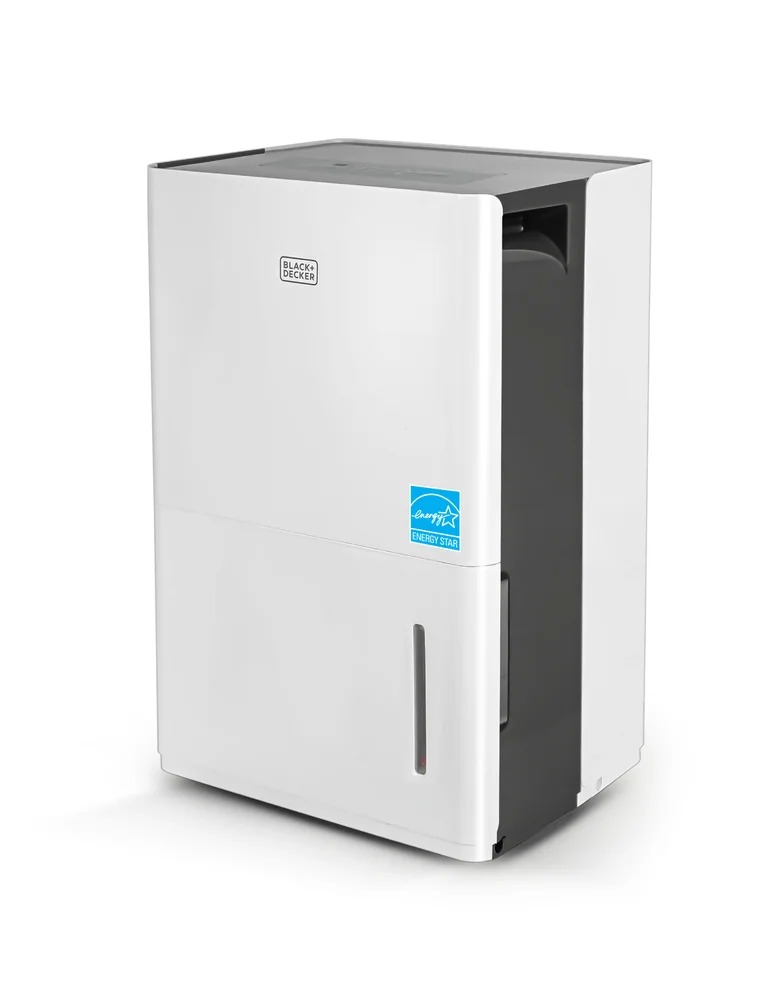
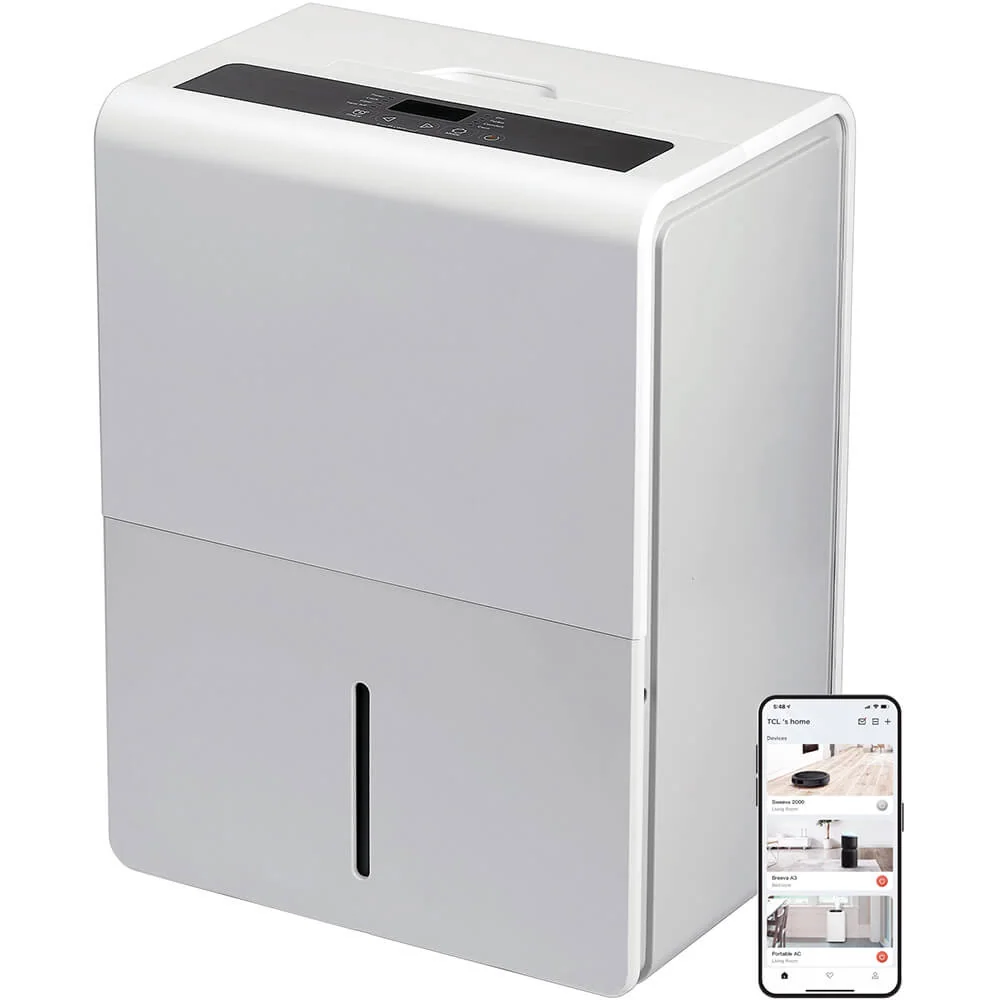
If you like the idea of the Cube but want a different balance of noise, capacity, or value, these are the closest options to consider.
Midea Cube FAQ
Is the Midea Cube good for basements?
Yes, it’s designed for large, damp spaces like basements, with a 50-pint rating and an oversized reservoir. Just remember that cooler basements can reduce real-world water removal compared with the headline rating.
Do you have to empty the Midea Cube by hand?
Not necessarily. It supports continuous drainage with a hose, which is the best way to run it unattended. If you do empty it manually, you’ll need to lift the top compressor unit off the reservoir first.
How big is the Midea Cube’s water tank?
The 50-pint Cube’s reservoir is about 4.25 gallons. That’s much larger than many standard 50-pint dehumidifiers, which is why people buy it to empty less often.
Does the Midea Cube have an app?
Yes, it’s Wi-Fi equipped and can be monitored and controlled through an app. Wi-Fi support is limited to 2.4 GHz networks, and app setup can be finicky for some users.
What does “50 pints per day” actually mean?
It’s a standardized capacity rating under warm, humid conditions. In real homes, especially cooler basements, the actual amount of water removed per day can be lower, so use the number mainly to compare models.
Should you buy the Midea Cube?
Buy the Midea Cube if your main problem is day-to-day hassle. The oversized tank and the option to drain continuously are the features that change your routine, especially in a basement where humidity stays high for weeks at a time.
Skip it if you know you’ll be emptying by hand and you don’t want to lift the top unit. In that case, you’ll be happier with a dehumidifier that has a lighter, slide-out bucket, or you should plan your setup around a hose drain so the Cube can do what it does best.