
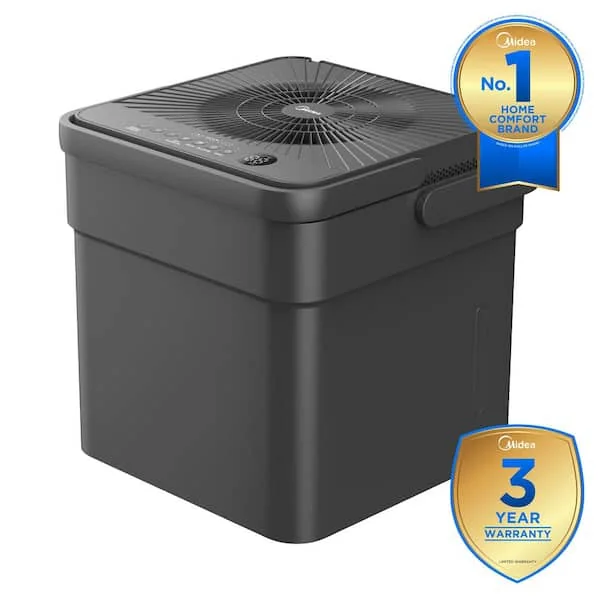
What to know first
- The big reason to buy it is the tank: 4.25 gallons, about twice typical for a 50-pint unit, so you empty it less often.
- It’s a strong performer at lowering humidity and it’s notably quiet for a large-room dehumidifier.
- Manual emptying is awkward and heavy because the compressor section has to come off to access the tank.
- Wi-Fi is included, but it’s 2.4 GHz only and app setup can be finicky.
- If you can run a drain hose to a floor drain or sink, the Cube becomes much more hands-off.
What the Midea 50 Pint Cube is
The Midea 50 Pint Cube is a compressor-style dehumidifier built for the jobs most people buy a dehumidifier for in the first place: basements, big living spaces, and other areas that get persistently muggy or musty. “50 pint” is the standard capacity class for serious home use, meaning it’s designed to remove a lot of moisture under warm, humid conditions.
What makes this model different is the Cube format. Instead of a typical tall box with a small slide-out bucket, the Cube uses a stackable design where the compressor unit sits on top of a larger reservoir. In use, that reservoir can hold 4.25 gallons of water, which is roughly double what’s common in this size category.
It also includes Wi-Fi connectivity and carries an Energy Star Most Efficient rating. In plain terms, it’s meant to run for long stretches without being obnoxiously loud or wildly expensive to operate, while cutting down the most annoying chore: emptying the bucket.
Why it stands out
The tank capacity is the headline feature because it changes how often you have to deal with the machine. In a damp basement, a typical 50-pint dehumidifier can fill its bucket quickly, which turns humidity control into a daily errand. The Midea 50 Pint Cube’s 4.25-gallon reservoir is built to stretch the time between emptying, so you’re not constantly checking the fill line.
It’s also easier to keep running in spaces where you still want the room to feel livable. This model is widely recognized as notably quiet for its class, which matters because dehumidifiers tend to run for long periods when humidity is high. If the sound drives you crazy, you stop using it, and then the musty smell and clammy walls come right back.
Reliability is the other reason this model earns its spot as a default recommendation. Dehumidifiers have a long-standing reputation for mechanical failures across brands. The Midea Cube line stands out as a safer bet than many competitors, which is exactly what you want in an appliance that may run day after day through humid months.
Finally, the Cube design is practical when you’re not using it. If you only run a dehumidifier seasonally, the ability for the upper unit to nest into the reservoir makes it less awkward to stash than many traditional, tall units.
What it is like to own
Day to day, you’ll use the Midea 50 Pint Cube in one of two ways: manual emptying or continuous drainage. Manual emptying is where the Cube’s design can be a love it or hate it situation. To access the tank, you lift off the upper compressor unit, which weighs 38 pounds. Then you’re dealing with a full bucket that can weigh about 40 pounds. That’s manageable for some people, but it’s absolutely not the kind of “quick dump” routine you get with a lighter, slide-out bucket.
If you can set up a gravity drain hose to a floor drain or a sink, the Cube makes a lot more sense. Continuous drainage is what turns a dehumidifier into a mostly unattended appliance during long humid stretches. Just remember that gravity drainage needs a consistent downhill path to the drain.
On the smart side, Wi-Fi control is included, but it’s not flawless. The wireless connection works only on 2.4 GHz networks, and the app connection can be buggy. If you love remote control features, you may find this part more frustrating than helpful. If you just want the machine to run and keep the space comfortable, you can treat Wi-Fi as optional.
Storage is a real quality of life win. When the season ends, the Cube format is designed to be easier to put away than many bulky, box-shaped 50-pint dehumidifiers.
What to know before you buy
First, don’t shop by square footage claims alone. Dehumidifiers are heavily affected by how damp the space is, how warm it is, and how air moves through the area. A basement with cool temperatures and constant moisture intrusion is a tougher job than a warm upstairs room, even if the floor area is smaller.
Second, be honest about the lifting. The Cube’s big tank is great, but the manual-empty routine requires lifting a 38-pound top section to get to the reservoir. If you can’t or don’t want to do that, plan your setup around continuous drainage from day one.
Third, treat “50 pints per day” as a comparison tool, not a promise for every basement. That rating is based on standardized warm, humid conditions. In cooler basements, real-world water removal can be lower, and the unit may need to pause periodically for defrost cycles depending on conditions.
The specs that matter
This is the mainstream size for basements and large rooms. It’s built to remove a lot of moisture, but the real amount depends on temperature and how humid the space is.
A bigger tank usually means fewer emptying trips. This is about twice the typical capacity for a 50-pint dehumidifier, which is the Cube’s biggest day-to-day advantage.
It’s not a simple slide-out bucket. The trade is less frequent emptying, but a more physical emptying process when you do it.
If you’re not using a drain hose, this is the practical reality of ownership. It can be a dealbreaker for anyone who can’t safely lift and carry heavy loads.
If your home network is 5 GHz only, you may not be able to use the smart features without changing your setup.
Dehumidifiers can run for long stretches. Higher efficiency helps keep operating costs more reasonable when humidity is high for weeks.
Who this product fits
You have a musty basement and you’re sick of emptying a bucket every day
The Midea 50 Pint Cube is built to stretch the time between emptying thanks to its 4.25-gallon reservoir. If you can set up a gravity drain, it can run for long humid stretches with very little attention.
You need a dehumidifier for a big living space where noise matters
This model is known for being notably quiet for a large-room dehumidifier, so it’s easier to leave running in a family room or open basement without feeling like you’re living next to a utility appliance.
You only run a dehumidifier part of the year and hate storing bulky appliances
The Cube’s stackable design is meant to be easier to stash than a traditional tall unit. If you put your dehumidifier away between seasons, that shape can make ownership feel less annoying.
You want reliability in a category that can be a headache
Dehumidifiers are notorious for mechanical failures across brands. The Midea Cube line stands out as a safer all-around bet if you want one machine to run for long stretches without drama.
What else to compare
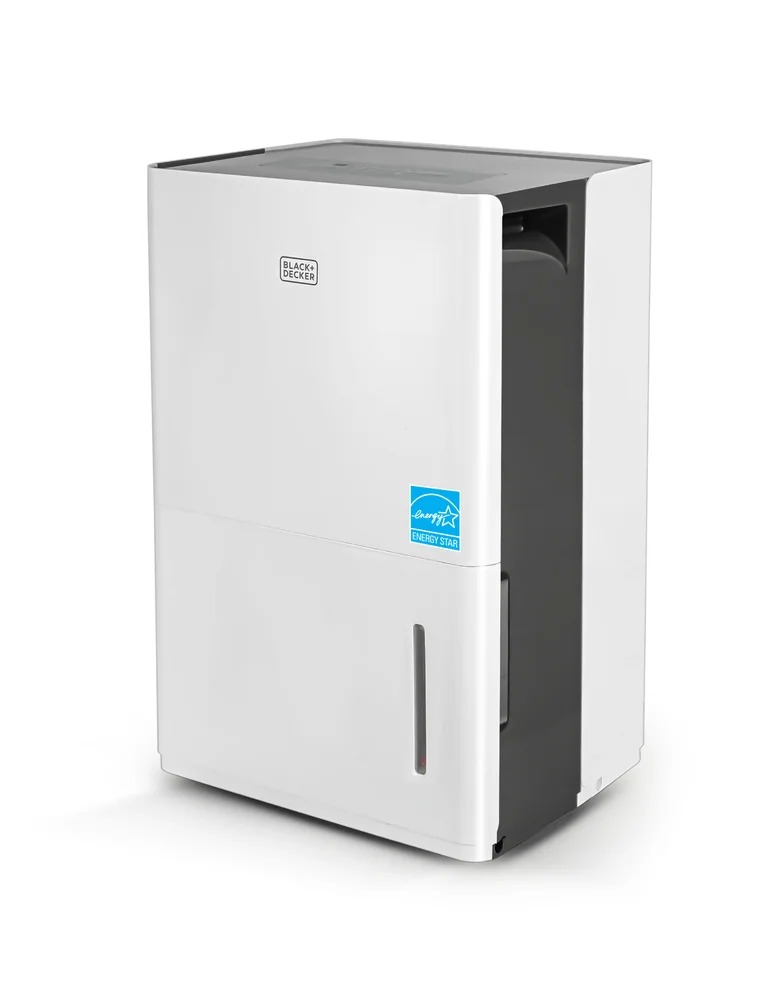
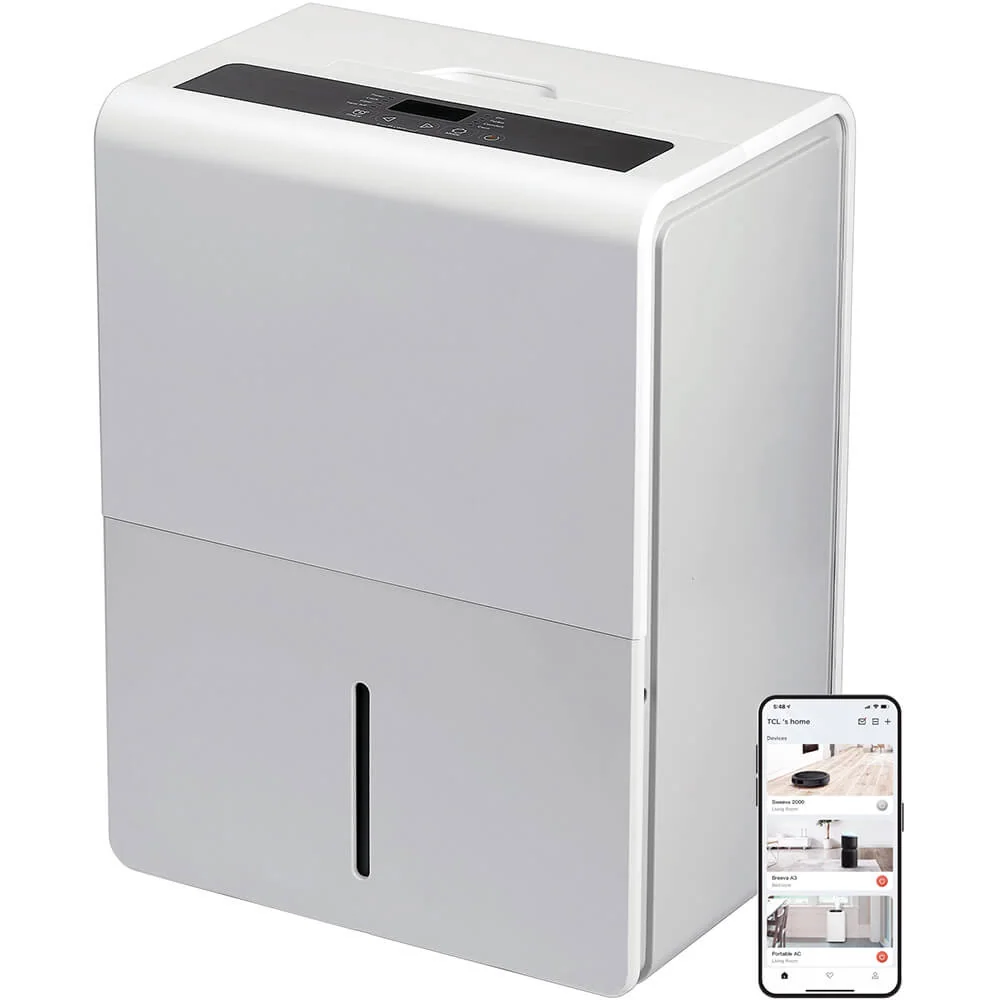
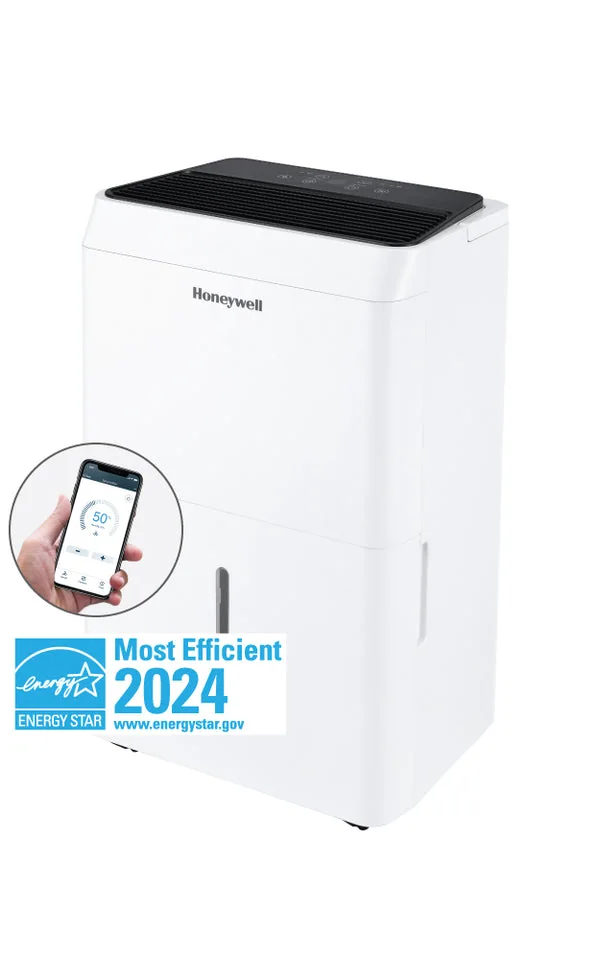
If the Cube’s lifting routine or app quirks don’t fit your home, these alternatives make more sense.
Midea 50 Pint Cube FAQ
How big is the Midea 50 Pint Cube’s water tank?
It holds 4.25 gallons of water. That’s about twice the typical tank capacity for a 50-pint dehumidifier, which is why it can usually run longer between emptying.
Do you have to lift the top off the Midea Cube to empty it?
Yes. To access the reservoir for manual emptying, you lift off the upper compressor unit. That top section weighs 38 pounds, and a full bucket can weigh about 40 pounds.
Can the Midea 50 Pint Cube run with a hose for continuous drainage?
Yes, it can drain passively via a hose. For gravity drainage to work well, you need a continuous downhill run to a floor drain, sink, or other drain point.
Is the Midea 50 Pint Cube actually quiet?
For a large-room dehumidifier, it’s known for standout low-noise operation. That matters because these machines often run for long periods, and a quieter unit is easier to keep on.
Does the Midea 50 Pint Cube work with 5 GHz Wi-Fi?
No. Its wireless connectivity works only with 2.4 GHz networks, so you may need a compatible network setup to use the app features.
What does “50 pints per day” really mean for a basement?
It’s a standardized rating under warm, humid conditions. In cooler basements, real-world water removal can be lower, so use the number to compare models rather than as a guarantee for every space.
Should you buy the Midea 50 Pint Cube?
Yes, if you want one dehumidifier that can handle real humidity problems and make the routine less annoying. The Midea 50 Pint Cube’s oversized 4.25-gallon tank is the rare feature that changes daily life, and its quiet operation makes it easier to keep running in spaces you actually use.
Skip it if you’ll be stuck manually emptying and you can’t safely lift the 38-pound top section. In that case, either plan on continuous drainage from the start or choose a more conventional 50-pint model with a simpler slide-out bucket. If the lifting is workable or avoidable, the Midea 50 Pint Cube is the cleanest all-around buy in the category.